Best Child Sports Injury Treatment in Indore (बच्चों में खेल की चोटें)
Pediatric Sports Injuries
बच्चे की growth plate ligament से कमज़ोर होती है | "बस मोच है" सबसे महँगी ग़लती | वापसी शर्तों से, तारीख़ से नहीं | Indore
A child's growth plate is weaker than the ligaments | "Only a sprain" is the costliest phrase | Return decided by criteria, not the calendar | Indore
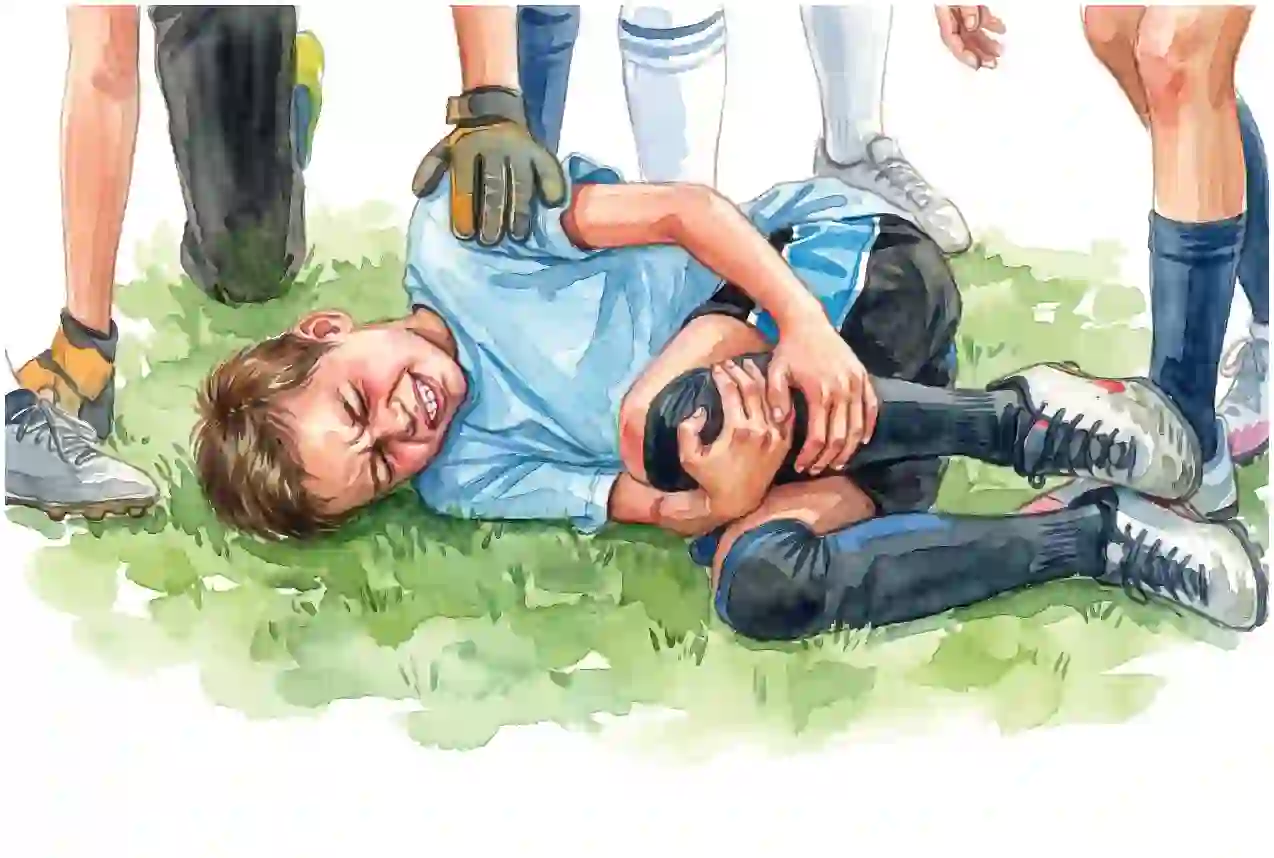
बच्चों की चोट बड़ों जैसी नहीं होती
A Child's Injury is Not a Small Adult's Injury
बढ़ते बच्चे की हड्डी में growth plate होती है — और वह हड्डी के आसपास के ligament और tendon से कमज़ोर होती है। इसका सीधा नतीजा यह है कि जिस चोट में एक बड़े व्यक्ति का ligament फटता, उसी चोट में बच्चे की growth plate टूट जाती है।
A growing bone has a growth plate, and that plate is weaker than the ligaments and tendons around it. The consequence is direct: the same twist that tears an adult's ligament will often break a child's growth plate instead.
🎯 सबसे ज़रूरी बात🎯 The one thing to remember
बच्चे में "बस मोच है" कह देना सबसे आम और सबसे महँगी ग़लती है। हड्डी के सिरे पर सटीक दर्द (bony tenderness) वाली हर चोट को growth plate की चोट मानकर जाँचा जाता है, जब तक X-ray और जाँच से कुछ और साबित न हो — क्योंकि छूटी हुई growth plate की चोट आगे चलकर हड्डी टेढ़ी या छोटी कर सकती है।"It's only a sprain" is the commonest and costliest thing said about a child's injury. Any injury with tenderness right on the bone end is treated as a growth plate injury until examination and X-ray say otherwise — because a missed physeal injury can leave a bone crooked or short.
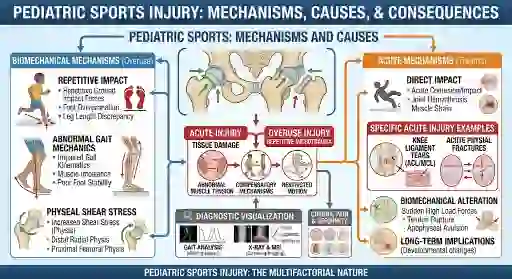
सबसे आम चोटें
The Injuries We See Most
Apophysitis — Osgood-Schlatter, Sever'sApophysitis - Osgood-Schlatter and Sever's
घुटने के नीचे या एड़ी के पीछे उस जगह दर्द जहाँ tendon हड्डी से जुड़ता है। यह growth के दौर की चोट है, और खेल की मात्रा घटाने तथा stretching से संभलती है।Pain where a tendon pulls on the growing bone, below the knee or behind the heel. An injury of the growing years, settled by lowering the load and stretching.
Growth plate की चोटेंPhyseal (growth plate) fractures
Salter-Harris types। हल्के प्रकार plaster से ठीक होते हैं; जोड़ तक पहुँचने वाले प्रकारों में सटीक operation ज़रूरी होता है, वरना growth बिगड़ सकती है।The Salter-Harris types. The simpler ones heal in a cast; those crossing into the joint need precise fixation, or growth itself can go wrong.
Little League elbow और shoulderLittle League elbow and shoulder
गेंद फेंकने वाले खेलों में बार-बार के दबाव से कोहनी और कंधे की growth plate पर चोट। इलाज की पहली शर्त — कुछ समय के लिए throwing पूरी तरह बंद।Repetitive throwing stresses the growth plates at elbow and shoulder. The first condition of treatment is stopping throwing altogether for a period.
ACL और meniscusACL and meniscus tears
बच्चों में भी अब आम। Growth plate को बचाते हुए (physeal-sparing) ACL reconstruction की जाती है, ताकि घुटना स्थिर हो और हड्डी की growth भी सुरक्षित रहे।Now common in children too. Reconstruction is done in a physeal-sparing way, so the knee is stabilised without putting growth at risk.
टखने की चोटAnkle injuries
बच्चों में "मोच" अक्सर distal fibula की growth plate की चोट होती है। हड्डी पर सटीक दर्द इसका सबसे बड़ा सुराग़ है।In children an "ankle sprain" is very often an injury to the growth plate of the lower fibula. Tenderness right on the bone is the giveaway.
Stress fractureStress fractures
अचानक बढ़ी हुई training से हड्डी में महीन दरार। दर्द जो गतिविधि के साथ बढ़े और आराम से घटे — और X-ray शुरुआत में सामान्य हो सकता है।A hairline break from a sudden jump in training. Pain that rises with activity and eases with rest - and an X-ray that can look normal at first.
कब तुरंत डॉक्टर के पास
When to Go the Same Day
ज़्यादातर खेल की चोटें घर पर संभल जाती हैं। पर कुछ संकेत ऐसे हैं जिन पर इंतज़ार करना ठीक नहीं।
Most sports knocks are managed at home. A few signs, though, are not ones to sleep on.
🚨 इनमें से कुछ भी हो तो उसी दिन दिखाएँ
- पैर पर वज़न न डाल पाना या जोड़ को हिला न पाना
- जोड़ का दिखने लायक़ टेढ़ा होना या हड्डी का उभरना
- चोट के तुरंत बाद जोड़ में तेज़ी से सूजन — यह अंदर ख़ून बहने का संकेत हो सकता है
- जोड़ का बीच में अटक जाना (locking) — meniscus या cartilage का टुकड़ा फँस सकता है
- सुन्नपन, झुनझुनी या ठंडा-पीला पंजा
- सिर की चोट के बाद उलझन, उल्टी, याददाश्त में गड़बड़ी या बेहोशी — उसी दिन खेल में वापसी बिल्कुल नहीं
- रात का दर्द या आराम में दर्द, और बुखार के साथ जोड़ का दर्द
🚨 Any of these means the same day
- Unable to bear weight, or unable to move the joint
- A visibly crooked joint or a bone standing out under the skin
- Rapid swelling within an hour of the injury — that is usually blood inside the joint
- The joint locking — a fragment of meniscus or cartilage may be caught
- Numbness, tingling, or a cold pale foot or hand
- After a head knock: confusion, vomiting, memory gaps or loss of consciousness — and no return to play that day under any circumstances
- Night pain or pain at rest, and joint pain with fever
सिर की चोट पर एक बात पक्की: concussion का शक हो तो बच्चा उसी दिन दोबारा नहीं खेलेगा — चाहे वह कितना भी ठीक महसूस करे। यह नियम बहस का विषय नहीं है।
On head injuries, one rule is absolute: a child suspected of concussion does not go back on the field that day, however well they say they feel. That one is not negotiable.
इलाज — पहले घंटे से खेल में वापसी तक
Treatment - from the First Hour to the Return
🧊 पहले 48 घंटे — POLICE🧊 The first 48 hours - POLICE
पुराने RICE की जगह अब POLICE कहा जाता है: Protect (बचाव), OL — Optimal Loading (पूरा आराम नहीं, बल्कि सही मात्रा में हरकत), Ice (बर्फ़, 15–20 मिनट), Compression (हल्की पट्टी), Elevation (ऊँचा रखना)। पूरा आराम अब सलाह नहीं दी जाती — नियंत्रित हरकत ऊतकों को बेहतर भरने में मदद करती है।POLICE has replaced the old RICE: Protect, Optimal Loading - controlled movement rather than complete rest - Ice for 15 to 20 minutes, Compression, and Elevation. Complete rest is no longer advised; tissue heals better with the right amount of load.
Growth plate की चोटPhyseal fractures
हल्के प्रकार 3–6 हफ़्ते plaster में; जोड़ तक जाने वाले प्रकारों में सटीक reduction और fixation। इसके बाद 1–2 साल तक growth पर नज़र रखी जाती है।The simpler types spend three to six weeks in a cast; those crossing the joint need accurate reduction and fixation. Growth is then watched for a year or two.
ApophysitisApophysitis
गतिविधि की मात्रा घटाना, quadriceps और calf की stretching, बर्फ़, और धीरे-धीरे वापसी। खेल छोड़ना ज़रूरी नहीं — मात्रा संभालनी है।Lower the load, stretch the quadriceps and calf, ice, and return gradually. Giving up the sport is rarely necessary; managing the dose is.
Throwing की चोटेंThrowing injuries
पूरी तरह throwing बंद, फिर rotator cuff और scapula की मज़बूती, और उसके बाद चरणबद्ध interval throwing programme।Complete cessation of throwing, then rotator cuff and scapular strengthening, then a staged interval throwing programme.
ACL reconstructionACL reconstruction
Growth plate को बचाते हुए की जाने वाली तकनीक, और उसके बाद 9–12 महीने का सुनियोजित rehabilitation — जल्दबाज़ी दोबारा चोट का सबसे बड़ा कारण है।A physeal-sparing technique, followed by nine to twelve months of structured rehabilitation. Rushing it is the single biggest cause of re-injury.
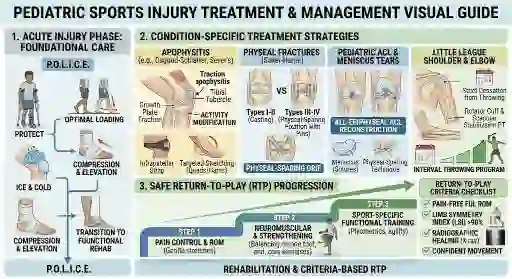
खेल में वापसी — चार शर्तें
Return to Play - the Four Conditions
"कितने दिन में?" का जवाब कैलेंडर नहीं देता। वापसी शर्तों से तय होती है, तारीख़ से नहीं — और यही दोबारा चोट से बचाने का सबसे भरोसेमंद तरीक़ा है।
"How many days?" is the wrong question. A safe return is decided by criteria, not by the calendar — and that is what protects a child from the second injury.
चोट से बचाव — जो सचमुच काम करता है
Prevention That Actually Works
- हफ़्ते में अभ्यास के घंटे बच्चे की उम्र (वर्षों में) से ज़्यादा न हों — यह सरल नियम overuse चोटों को काफ़ी घटाता है
- हफ़्ते में कम से कम 1–2 दिन पूरा आराम, हर हफ़्ते
- साल में 2–3 महीने उस खेल से ब्रेक — दूसरा खेल खेलें, बंद न करें
- Training एक बार में 10% से ज़्यादा न बढ़ाएँ — अचानक बढ़ोतरी ही stress fracture और apophysitis की सबसे आम वजह है
- एक ही खेल में बहुत जल्दी विशेषज्ञता न कराएँ — कई खेल खेलने वाले बच्चों में चोटें कम होती हैं
- नींद पूरी — कम नींद और चोट का सीधा संबंध है
- सही जूते और सुरक्षा उपकरण, और उन्हें समय पर बदलना
- दर्द के साथ खेलना बंद — "खेलते-खेलते ठीक हो जाएगा" बच्चों में सही नहीं है
- Keep weekly training hours below the child's age in years — a simple rule that measurably cuts overuse injuries
- At least one or two full rest days every week
- Two to three months off that sport each year — play something else rather than nothing
- Increase training by no more than about ten percent at a time — sudden jumps cause most stress fractures and apophysitis
- Avoid early single-sport specialisation — children who play several sports get hurt less
- Protect sleep — short sleep and injury rates travel together
- Correct shoes and protective gear, replaced when worn
- Do not train through pain — "playing it off" does not apply to growing bones
भ्रम बनाम सच्चाई
Myths vs Facts
"बच्चा है, जल्दी ठीक हो जाएगा — खेलने दो।"
बच्चों की हड्डी जल्दी जुड़ती है, पर growth plate की छूटी हुई चोट हड्डी को टेढ़ा या छोटा कर सकती है। जल्दी जुड़ना और सुरक्षित होना दो अलग बातें हैं।
"X-ray सामान्य है तो कुछ नहीं है।"
शुरुआती stress fracture और growth plate की कई चोटें X-ray पर नहीं दिखतीं। हड्डी पर सटीक दर्द हो तो जाँच जारी रखी जाती है, चाहे film सामान्य हो।
"एक ही खेल पर ध्यान देने से बच्चा बेहतर बनेगा।"
बहुत जल्दी एक ही खेल में विशेषज्ञता overuse चोटों और थकान (burnout) दोनों को बढ़ाती है। कई खेल खेलने वाले बच्चे अक्सर आगे जाकर बेहतर करते हैं।
"सिर पर हल्की चोट लगी है, थोड़ी देर में खेल सकता है।"
Concussion का शक हो तो उसी दिन खेल में वापसी नहीं — यह नियम सख़्त है। दूसरी चोट पहले से कहीं ज़्यादा गंभीर हो सकती है।
"Children heal fast, let him play."
Children's bones do heal fast, but a missed growth plate injury can leave the bone crooked or short. Healing quickly and healing safely are not the same thing.
"The X-ray is normal, so nothing is wrong."
Early stress fractures and many physeal injuries do not show on a first film. Tenderness right on the bone keeps the assessment going regardless.
"Specialising early makes a better athlete."
Early single-sport specialisation raises both overuse injuries and burnout. Children who play several sports often do better in the long run.
"It was only a light knock on the head."
If concussion is suspected, there is no return to play that day. A second impact before recovery can be far more serious than the first.
Indore में जाँच — क्या साथ लाएँ
Getting Checked in Indore - What to Bring
खेल की चोट में सबसे क़ीमती चीज़ है सही जाँच और सही समय पर वापसी की योजना। Dr. Gaurav Jain (MBBS, D.Ortho, DNB Orthopaedics, MNAMS; बच्चों की हड्डी रोग और स्पाइन सर्जरी में फेलोशिप) Indore में बच्चों और किशोरों की खेल-चोटों का इलाज करते हैं — growth plate की चोटों, apophysitis, ACL और खेल में सुरक्षित वापसी की योजना सहित।
In a sporting injury the valuable things are an accurate diagnosis and a properly staged return. Dr. Gaurav Jain (MBBS, D.Ortho, DNB Orthopaedics, MNAMS; fellowship-trained in pediatric orthopedics and spine surgery) treats sports injuries in children and adolescents in Indore - growth plate injuries, apophysitis, ACL injuries and the plan for getting safely back on the field.
- चोट कैसे लगी — किस हरकत में, आवाज़ आई थी या नहीं, तुरंत सूजन आई थी या बाद में
- चोट के तुरंत बाद का video या तस्वीर, अगर हो
- पहले की X-ray, MRI या रिपोर्ट
- खेल का ब्यौरा — कौन सा खेल, हफ़्ते में कितने घंटे, कब से, और पिछले महीने में क्या बदला
- खेल के जूते और कोई brace या tape जो इस्तेमाल हो रहा है
- How it happened — the movement, whether anything popped, and whether swelling came in minutes or hours
- Any video or photograph taken just after it happened
- Previous X-rays, MRI scans or reports
- The sporting picture — which sport, weekly hours, for how long, and what changed last month
- The sports shoes, and any brace or taping being used
अक्सर पूछे जाने वाले सवाल
Frequently Asked Questions
बच्चों की चोट अलग क्यों होती है? / Why are children's injuries different?
क्योंकि बढ़ती हड्डी की growth plate आसपास के ligament और tendon से कमज़ोर होती है। जिस चोट में बड़े का ligament फटता है, बच्चे में अक्सर growth plate टूटती है।
Because in a growing bone the growth plate is weaker than the ligaments and tendons around it. The force that tears an adult's ligament often breaks a child's physis instead.
"बस मोच है" — क्या यह सही हो सकता है? / Could it really be just a sprain?
हो सकता है, पर बच्चों में यह मान लेना जोखिम भरा है। हड्डी के सिरे पर सटीक दर्द हो तो growth plate की चोट मानकर जाँच की जाती है — छूट जाने पर हड्डी टेढ़ी या छोटी रह सकती है।
It can be, but assuming so in a child is risky. Tenderness right on the bone end is treated as a physeal injury until proved otherwise, because missing one can leave the bone crooked or short.
कब तुरंत अस्पताल ले जाएँ? / When is it an emergency?
वज़न न डाल पाना, जोड़ का टेढ़ा दिखना, चोट के तुरंत बाद तेज़ सूजन, जोड़ का अटक जाना, सुन्नपन, या सिर की चोट के बाद उलझन और उल्टी — इनमें देर नहीं करनी चाहिए।
Inability to bear weight, a visibly crooked joint, rapid swelling within the hour, a locked joint, numbness, or confusion and vomiting after a head knock. None of those should wait.
बर्फ़ लगाएँ या गर्म सिकाई? / Ice or heat?
चोट के पहले 48 घंटों में बर्फ़ — 15–20 मिनट, दिन में कई बार, कपड़े में लपेटकर। गर्म सिकाई शुरुआती चोट में सूजन बढ़ा सकती है।
Ice in the first 48 hours - fifteen to twenty minutes at a time, wrapped in cloth. Heat early on tends to increase the swelling.
क्या पूरा आराम ज़रूरी है? / Is complete rest necessary?
आमतौर पर नहीं। अब POLICE तरीक़ा अपनाया जाता है, जिसमें "optimal loading" यानी नियंत्रित हरकत शामिल है। पूरी तरह हिलना-डुलना बंद कर देने से मांसपेशियाँ कमज़ोर होती हैं और वापसी में देर लगती है।
Usually not. The POLICE approach includes optimal loading - controlled movement. Complete immobility weakens muscle and lengthens the road back.
Osgood-Schlatter में खेल छोड़ना पड़ेगा? / Does Osgood-Schlatter mean stopping sport?
आमतौर पर नहीं। मात्रा घटाना, stretching, बर्फ़ और धीरे-धीरे वापसी काफ़ी होती है। यह growth के दौर की स्थिति है और growth पूरी होने पर शांत हो जाती है।
Usually not. Reducing the volume, stretching, ice and a graded return are generally enough. It is a condition of the growing years and settles as growth finishes.
खेल में कब लौट सकते हैं? / When can my child play again?
जब चार शर्तें पूरी हों: दर्द बिल्कुल न हो, पूरी movement लौट आए, दोनों तरफ़ की ताक़त लगभग बराबर हो, और खेल-विशेष अभ्यास बिना झिझक हो सके। तारीख़ नहीं, शर्तें तय करती हैं।
When four things are true: no pain, full movement, near-symmetrical strength, and sport-specific drills done without hesitation. Criteria decide it, not the calendar.
दोबारा चोट क्यों लग जाती है? / Why do re-injuries happen?
सबसे आम कारण है जल्दी वापसी — जब ताक़त पूरी तरह नहीं लौटी होती। ताक़त की जाँच सबसे ज़्यादा नज़रअंदाज़ की जाने वाली शर्त है, और दोबारा चोट की सबसे बड़ी वजह भी।
The commonest reason is going back too soon, before strength has fully returned. Strength testing is the most skipped of the criteria, and the biggest single cause of a second injury.
बच्चों को weight training करनी चाहिए? / Should children do strength training?
उचित देखरेख में हाँ — यह चोटों से बचाव करता है। हल्के वज़न, सही तकनीक और अनुभवी coach ज़रूरी हैं; बहुत भारी वज़न उठाना growth plate के लिए ठीक नहीं।
Supervised, yes - it protects against injury. Light loads, correct technique and an experienced coach are the conditions; very heavy lifting is not kind to growth plates.
अभ्यास कितना होना चाहिए? / How much training is right?
एक सरल नियम: हफ़्ते में अभ्यास के घंटे बच्चे की उम्र (वर्षों में) से ज़्यादा न हों, हफ़्ते में 1–2 दिन पूरा आराम, और साल में 2–3 महीने उस खेल से ब्रेक।
A simple guide: keep weekly training hours below the child's age in years, take one or two full rest days a week, and two to three months off that sport each year.
सिर की चोट के बाद क्या करें? / What about a knock on the head?
खेल तुरंत बंद, और उसी दिन वापसी नहीं — चाहे बच्चा ठीक महसूस करे। उलझन, उल्टी, सिरदर्द बढ़ना या याददाश्त में गड़बड़ी हो तो तुरंत डॉक्टर को दिखाएँ।
Off the field at once, and no return that day whatever the child says. Confusion, vomiting, a worsening headache or memory gaps mean seeing a doctor straight away.
किसे दिखाएँ? / Which specialist should we see?
बच्चों की हड्डी रोग विशेषज्ञ, क्योंकि growth plate की चोटों की पहचान और उनका इलाज अलग होता है। Indore में Dr. Gaurav Jain (MBBS, D.Ortho, DNB Orthopaedics, MNAMS) यह इलाज करते हैं।
A pediatric orthopedic surgeon, because growth plate injuries are recognised and treated differently. In Indore, Dr. Gaurav Jain (MBBS, D.Ortho, DNB Orthopaedics, MNAMS) looks after these children.
📞 खेल में चोट लगी है? सही जाँच करवाएँ — Dr. Gaurav Jain
📞 Injured on the field? Get it assessed properly - Dr. Gaurav Jain
Indore के Pediatric Orthopedic Surgeon | Growth plate की चोटें, ACL और खेल में सुरक्षित वापसीPediatric Orthopedic Surgeon in Indore | Growth plate injuries, ACL and safe return to play
📞 अभी Call करें 📞 Call Nowचोट कैसे लगी — यह जानकारी X-ray जितनी ही क़ीमती है, इसलिए ब्यौरा ज़रूर बताएँ।How it happened is worth as much as the X-ray, so bring the detail with you.