Best Osteoarthritis & Joint Replacement in Indore
घुटने और कूल्हे के दर्द का स्थायी समाधान, रोबोटिक सर्जरी, और रिकवरी की पूरी जानकारी।
Osteoarthritis & Advanced Joint Replacement
Comprehensive guide to knee/hip arthritis, robotic surgery solutions, and recovery timelines.
ऑस्टियोआर्थराइटिस: गहराई से समझें
Understanding Osteoarthritis (OA)
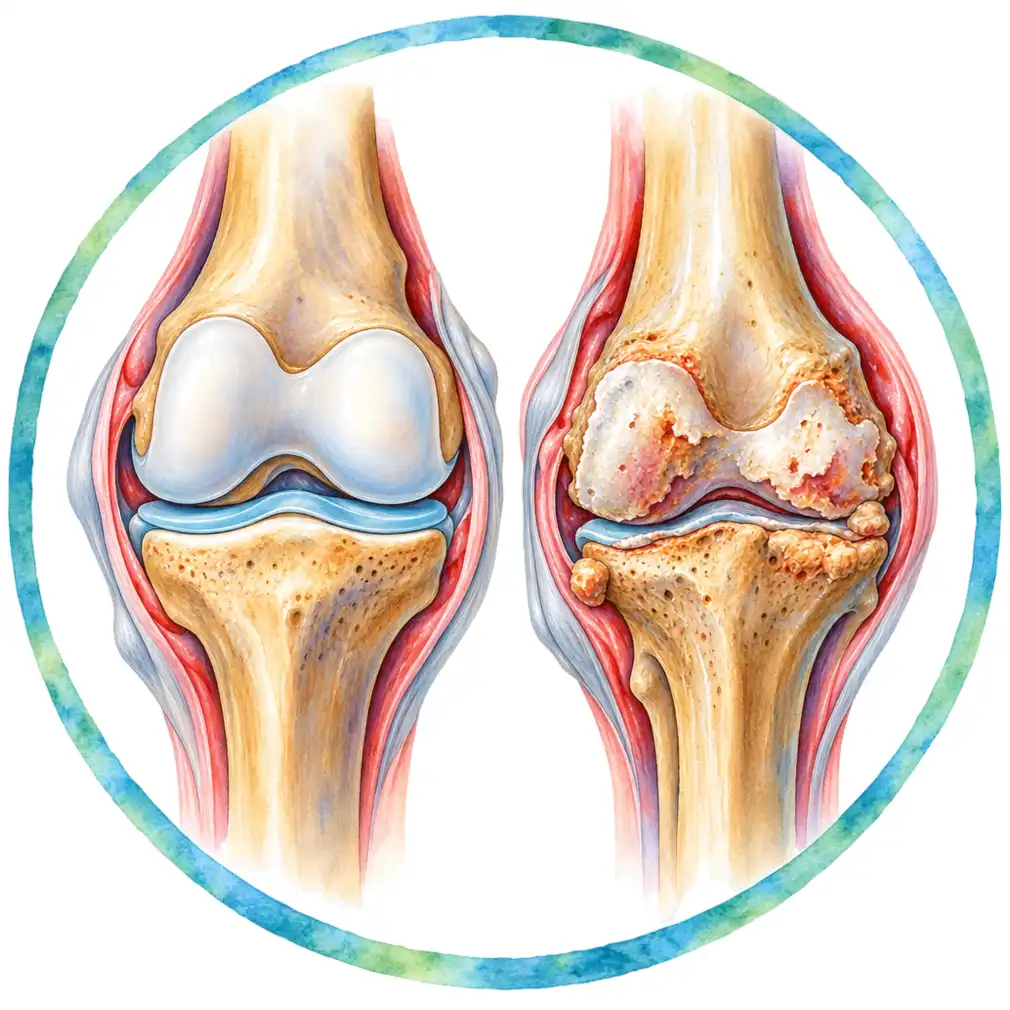
ऑस्टियोआर्थराइटिस (OA) केवल "हड्डियों का घिसना" नहीं है। यह पूरे जोड़ की विफलता है। स्वस्थ जोड़ में, हड्डियों के सिरे एक सख्त, फिसलन वाले ऊतक से ढके होते हैं जिसे कार्टिलेज (Cartilage) कहते हैं। OA में:
- कार्टिलेज खुरदरा हो जाता है और टूटने लगता है।
- जोड़ का चिकनाई वाला तरल (Synovial fluid) अपनी गुणवत्ता खो देता है।
- हड्डियां एक-दूसरे से रगड़ खाने लगती हैं, जिससे बोन स्पर्स (Bone Spurs) या अतिरिक्त हड्डी बन जाती है।
Osteoarthritis (OA) is not just "wear and tear"; it is a failure of the entire joint. In a healthy joint, bone ends are coated with a tough, slippery tissue called Cartilage. In OA:
- The cartilage becomes rough and breaks down.
- The joint's lubricating fluid (Synovial fluid) loses its quality.
- Bones begin to rub against each other, causing the formation of Bone Spurs (Osteophytes).
ऑस्टियोआर्थराइटिस के कारण (Causes)
Causes of Osteoarthritis
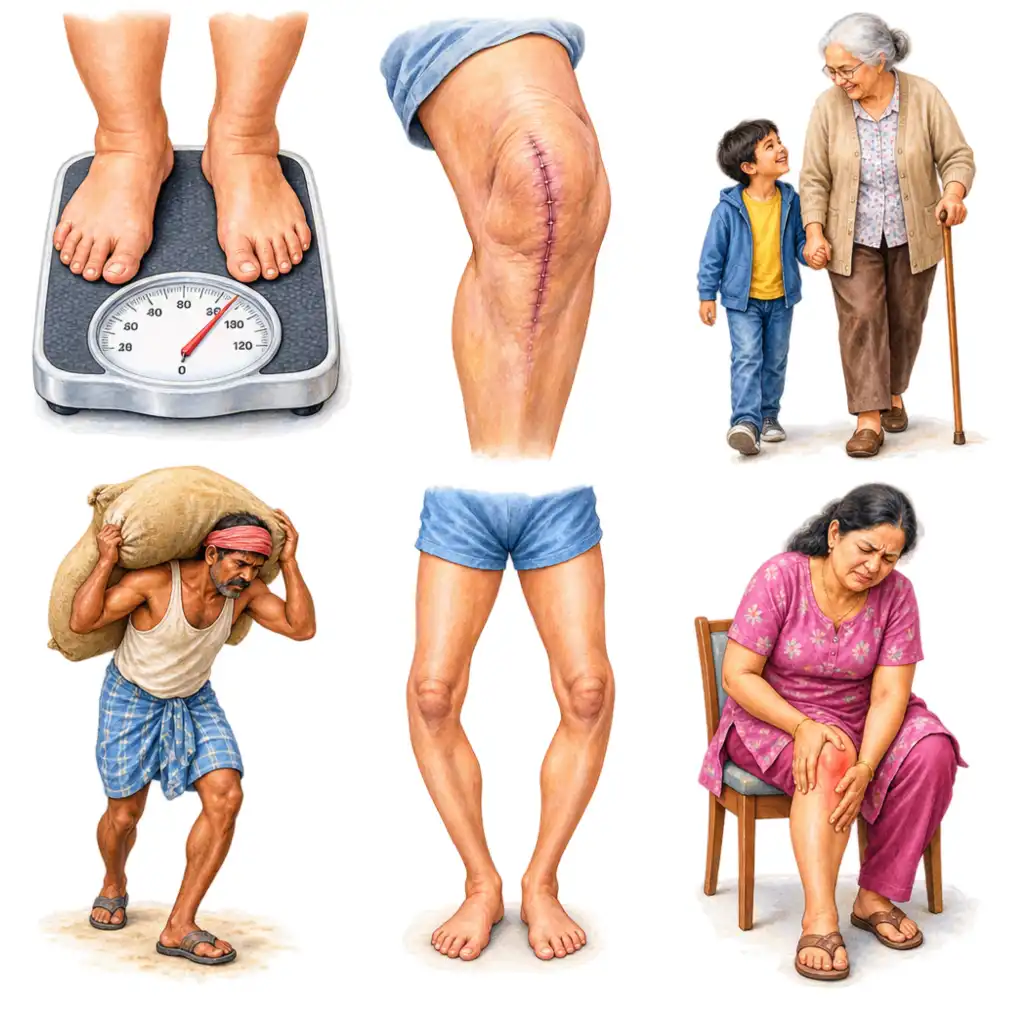
OA केवल "उम्र का प्रभाव" नहीं है। कई कारक मिलकर इसे पैदा करते हैं:
मोटापा (Obesity)
घुटने पर 4 किलो अतिरिक्त वजन का दबाव 16 किलो के बराबर होता है। हर 1 किलो वजन घटाने से जोड़ पर 4 किलो दबाव कम होता है।
पुरानी चोटें (Old Injuries)
पुराने फ्रैक्चर, लिगामेंट टियर (ACL), या बार-बार मोच जोड़ के संतुलन को बिगाड़ देते हैं।
आनुवंशिकता (Genetics)
यदि माता-पिता को OA था, तो बच्चों में जोड़ों के आकार में जन्मजात दोष हो सकते हैं।
अधिक उपयोग (Overuse)
भारी कामगारों, धावकों, या एथलीट्स में जोड़ों का तेजी से घिसाव होता है।
गलत बॉडी मैकेनिक्स
घुटने का आउटवर्ड घुमाव (Bow Legs), एक पैर छोटा होना, या रीढ़ की विकृति (Scoliosis)।
हॉर्मोनल परिवर्तन
महिलाओं में मेनोपॉज के बाद एस्ट्रोजन कम होने से कार्टिलेज का संरक्षण कम हो जाता है।
OA is not just "old age." Multiple factors contribute:
Obesity
4kg extra weight puts 16kg stress on knees. Every 1kg lost = 4kg less pressure on joints.
Old Injuries
Past fractures, ligament tears (ACL), or repeated sprains destabilize the joint.
Genetics
Family history can cause congenital joint shape abnormalities.
Overuse
Heavy laborers, runners, and athletes experience accelerated joint wear.
Bad Body Mechanics
Bow legs, leg length discrepancy, or spinal deformities (Scoliosis).
Hormonal Changes
Post-menopause estrogen drop reduces cartilage protection in women.
लक्षण: दर्द के अलावा और क्या?
Symptoms: Beyond Just Pain
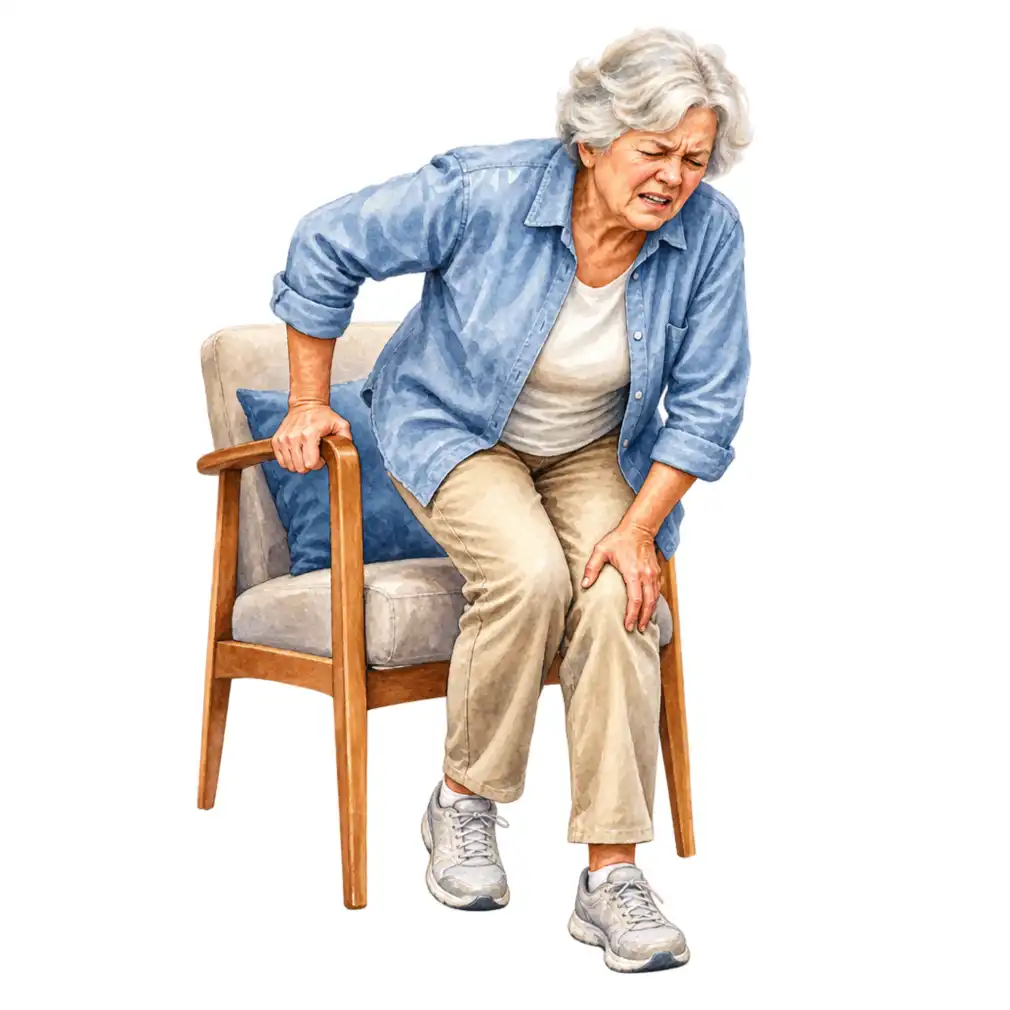
शुरुआती दर्द (Start-up Pain)
लंबे समय तक बैठने के बाद जब आप पहली बार चलते हैं, तो तेज दर्द होता है, जो चलने पर थोड़ा कम हो जाता है।
Start-up Pain
Sharp pain when you first start moving after sitting for a while, which eases as you walk.
लचीलापन खोना (Loss of Flexibility)
आप अपने घुटने या कूल्हे को पूरी तरह से सीधा या मोड़ नहीं पाते हैं।
Loss of Range of Motion
Inability to fully straighten or bend your knee/hip due to mechanical blockage.
गांठें बनना (Bone Spurs)
जोड़ के आसपास सख्त गांठें महसूस होना, जो असल में अतिरिक्त हड्डी होती हैं।
Bone Spurs
Hard lumps may form around the affected joint, which are actually extra bits of bone.
सूजन (Swelling)
ज्यादा काम करने के बाद जोड़ में पानी भरना या सूजन आना।
Effusion (Swelling)
Accumulation of fluid in the joint after activity causing puffiness.
बीमारी के 4 चरण (Detailed Stages)
The 4 Stages of Osteoarthritis
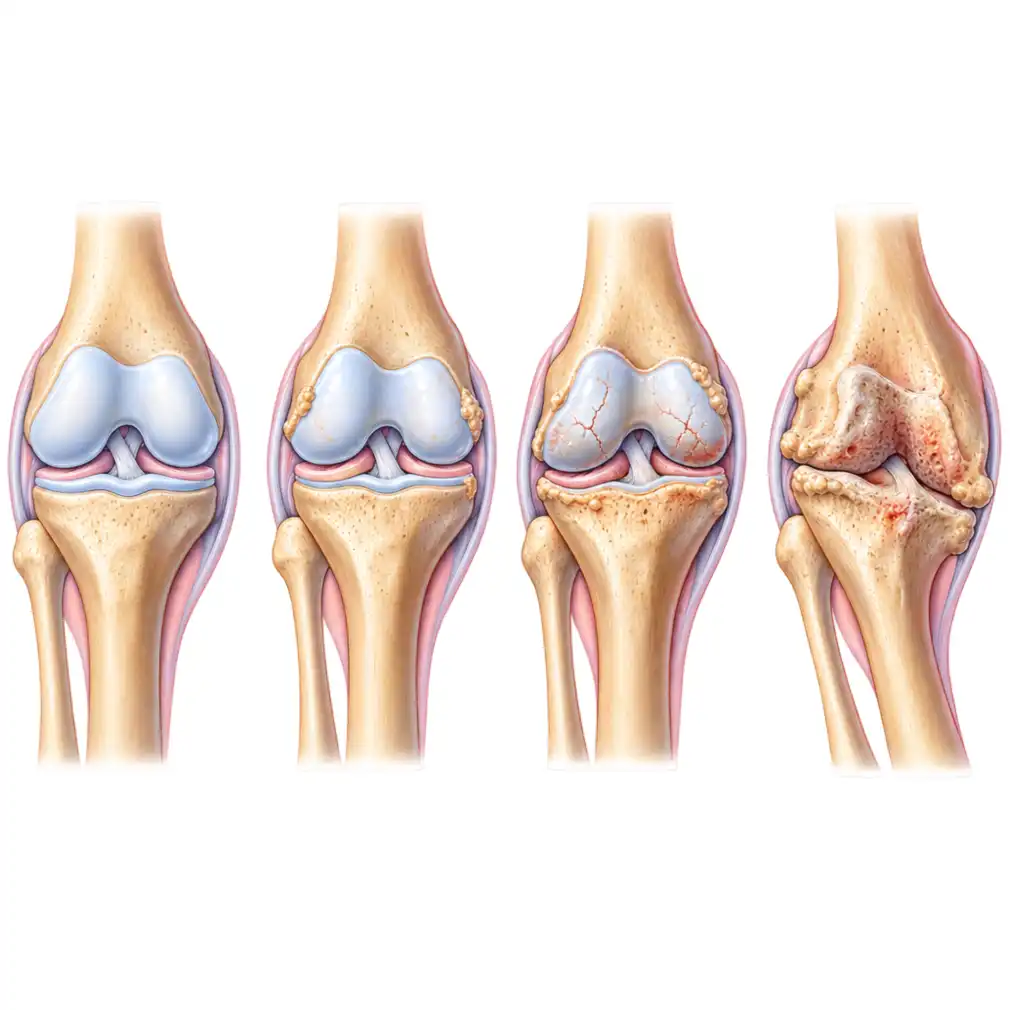
Stage 1: संदेहजनक
कार्टिलेज में बहुत मामूली घिसाव (10%)। दर्द बहुत कम या नहीं। एक्स-रे अक्सर नॉर्मल।
Stage 1: Doubtful
Very minor cartilage wear (10%). Little to no pain. X-rays often look normal.
Stage 2: हल्का (Mild)
हड्डी के स्पर्स दिखने लगते हैं। कार्टिलेज टूटना शुरू। दौड़ने या खेलने के बाद दर्द।
Stage 2: Mild
Bone spurs visible. Cartilage breakdown begins. Pain after running/sports.
Stage 3: मध्यम (Moderate)
कार्टिलेज में दरारें। हड्डियों के बीच की जगह (Gap) कम हो जाती है। सीढ़ियां चढ़ने में दर्द।
Stage 3: Moderate
Deep cracks in cartilage. Joint space narrows visible on X-ray. Pain on stairs.
Stage 4: गंभीर (Severe)
60% से ज्यादा कार्टिलेज खत्म। हड्डी से हड्डी टकराती है। जोड़ विकृत (Deformed) हो जाता है।
Stage 4: Severe
60%+ cartilage lost. Bone-on-bone friction. Joint deformity. Constant agony.
निदान और बिना सर्जरी इलाज
Diagnosis & Non-Surgical Care
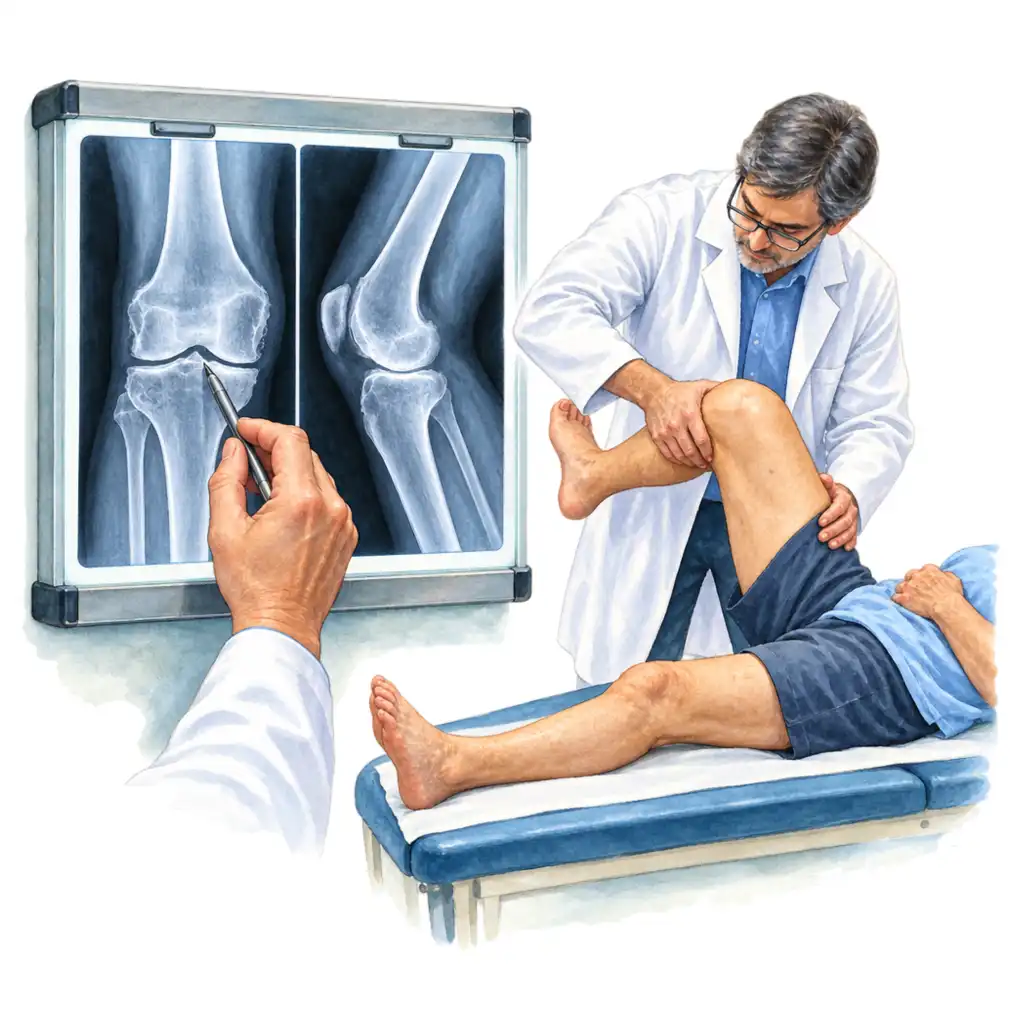
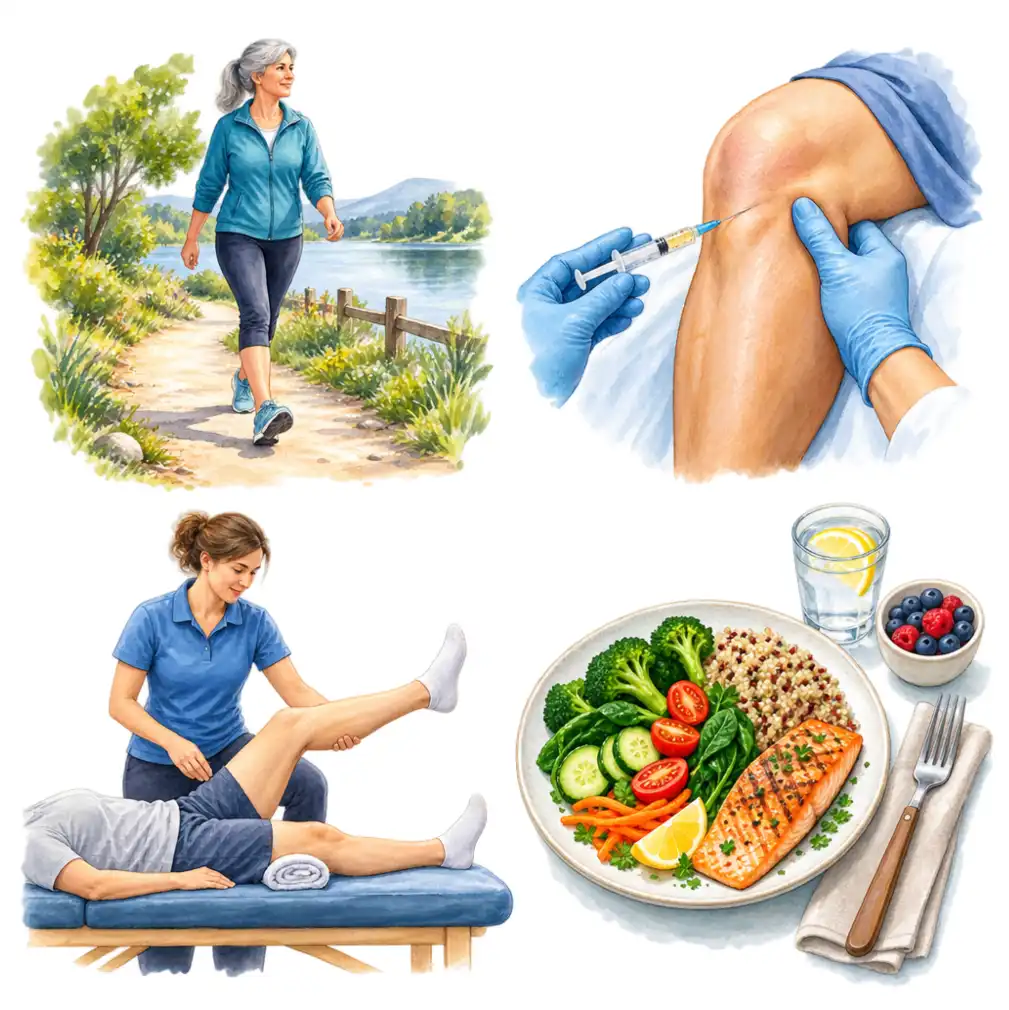
निदान (Diagnosis): डॉक्टर एक्स-रे (हड्डियों के बीच गैप देखने के लिए) और शारीरिक परीक्षा (Physical Exam) से इसकी पुष्टि करते हैं। कभी-कभी MRI की जरूरत होती है।
सर्जरी से पहले के उपाय (Conservative Treatment)
💊 दवाएं (Medication)
NSAIDs (दर्द निवारक), ग्लूकोसामाइन सप्लीमेंट्स, और दर्दनिवारक मलहम।
💉 इंजेक्शन (Injections)
Corticosteroids: तत्काल सूजन कम करने के लिए।
Hyaluronic Acid: जोड़ में चिकनाई (Gel) भरने के लिए।
🏋️ फिजियोथेरेपी
घुटने/कूल्हे के आसपास की मांसपेशियों (Quadriceps) को मजबूत बनाना ताकि जोड़ पर भार कम पड़े।
Diagnosis: Doctors use X-rays (to see joint space narrowing) and Physical Exams (to check flexibility). MRI is occasionally used for soft tissue checks.
Conservative Treatment (Before Surgery)
💊 Medication
NSAIDs (anti-inflammatories), Glucosamine supplements, and topical gels.
💉 Injections
Corticosteroids: For immediate inflammation relief.
Hyaluronic Acid: Gel injections to lubricate the joint.
🏋️ Physiotherapy
Strengthening muscles (Quadriceps/Hamstrings) to offload pressure from the bone.
घुटने के व्यायाम (Knee Exercises)
Knee Strengthening Exercises
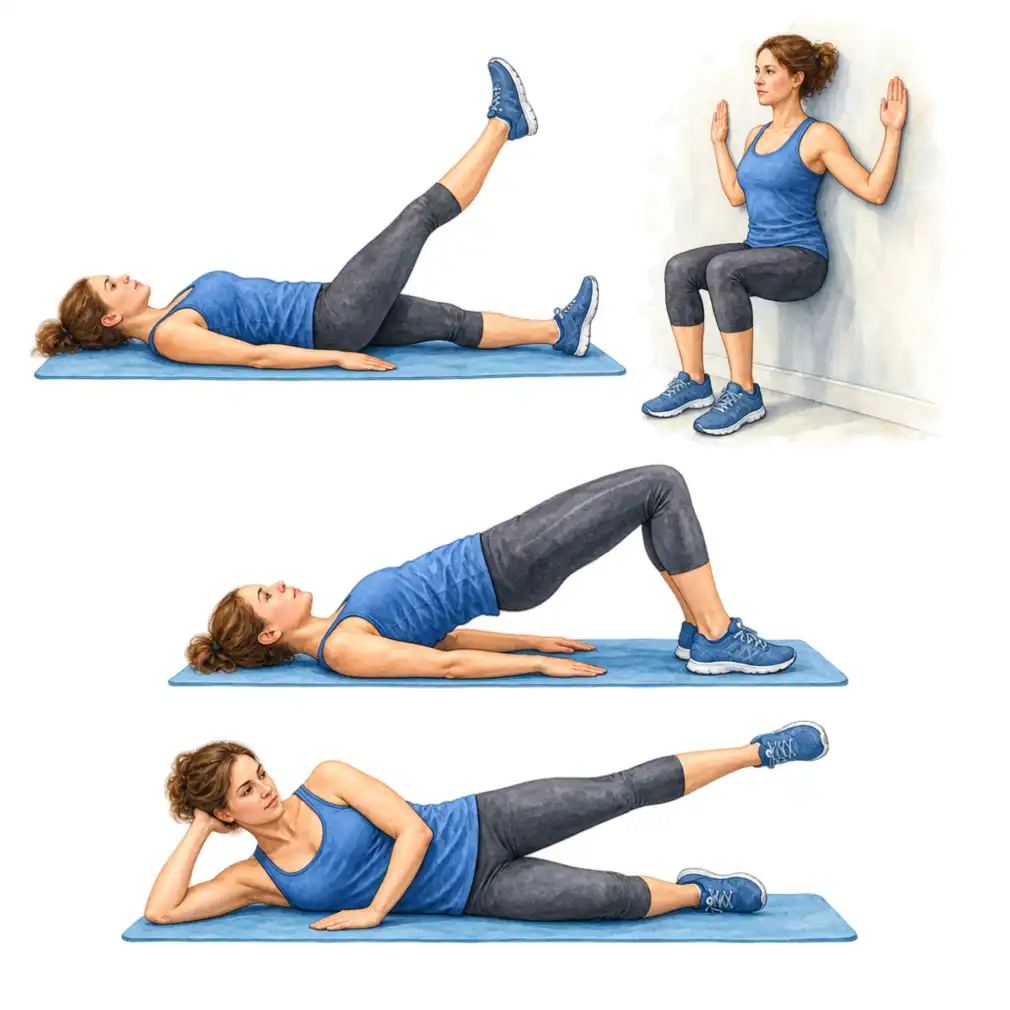
🎯 लक्ष्य: घुटने के आसपास की मांसपेशियों को मजबूत करना ताकि जोड़ पर भार कम पड़े। रोज़ 15-20 मिनट करें।
1. स्ट्रेट लेग रेज़ (Straight Leg Raise)
कैसे करें: पीठ के बल लेटें। एक घुटना सीधा रखें। धीरे से ऊपर उठाएं (45 डिग्री)। 10 सेकंड होल्ड करें। 10 बार दोहराएं।
लाभ: क्वाड्रिसेप्स मांसपेशी मजबूत होती है।2. वॉल स्लाइड्स (Wall Slides)
कैसे करें: दीवार से पीठ लगाकर खड़े हों। घुटनों को 60 डिग्री मोड़ें। 5 सेकंड होल्ड। 10 बार।
लाभ: घुटने की गति (Range of Motion) बढ़ती है।3. ब्रिज एक्सरसाइज़ (Bridge)
कैसे करें: पीठ के बल लेटें। घुटनों को मोड़ें। नितंबों को ऊपर उठाएं। 5 सेकंड होल्ड। 15 बार।
लाभ: ग्लूट्स और हैमस्ट्रिंग्स मजबूत होती हैं।4. साइड लेग लिफ्ट्स (Side Leg Lifts)
कैसे करें: बगल में लेटें। ऊपरी पैर सीधा करके ऊपर उठाएं। 10 बार प्रत्येक तरफ।
लाभ: हिप अबडक्टर्स मजबूत होकर घुटने को स्थिर करते हैं।🎯 Goal: Strengthen muscles around the knee to reduce joint stress. Do 15-20 minutes daily.
1. Straight Leg Raise
How: Lie on back. Keep one knee straight. Lift leg to 45°. Hold 10s. 10 reps.
Benefit: Builds Quadriceps strength.2. Wall Slides
How: Stand against wall. Bend knees to 60°. Hold 5s. 10 reps.
Benefit: Improves knee range of motion.3. Bridge Exercise
How: Lie on back. Bend knees. Lift hips. Hold 5s. 15 reps.
Benefit: Strengthens Glutes and Hamstrings.4. Side Leg Lifts
How: Lie on side. Lift top leg straight up. 10 reps each side.
Benefit: Hip abductors stabilize the knee.कूल्हे के व्यायाम (Hip Exercises)
Hip Strengthening Exercises
🎯 लक्ष्य: कूल्हे के जोड़ को स्थिर करना और दर्द कम करना।
1. क्लैम शेल्स (Clamshells)
कैसे करें: बगल में लेटें। घुटने मोड़ें। ऊपरी घुटने को खोलें बिना पैर घुमाए। 15 बार प्रत्येक तरफ।
लाभ: बाहरी हिप मसल्स मजबूत होती हैं।2. हिप एबडक्शन (Hip Abduction)
कैसे करें: खड़े होकर एक पैर को बगल में उठाएं। रबर बैंड का उपयोग करें। 12 बार प्रत्येक तरफ।
लाभ: कूल्हे की स्थिरता बढ़ती है।3. हिप फ्लेक्सन (Hip Flexion)
कैसे करें: बैठकर एक घुटने को सीने की ओर लाएं। 10 बार प्रत्येक पैर।
लाभ: हिप फ्लेक्सर मसल्स मजबूत होती हैं।4. ब्रिज विद सिंगल लेग (Single Leg Bridge)
कैसे करें: ब्रिज पोजीशन में एक पैर ऊपर करें। 8 बार प्रत्येक तरफ।
लाभ: ग्लूट मसल्स की ताकत बढ़ती है।🎯 Goal: Stabilize hip joint and reduce pain.
1. Clamshells
How: Lie on side. Bend knees. Open top knee without rotating hip. 15 reps/side.
Benefit: Strengthens outer hip muscles.2. Hip Abduction
How: Stand and lift leg sideways. Use resistance band. 12 reps/side.
Benefit: Improves hip stability.3. Hip Flexion
How: Sit and lift knee toward chest. 10 reps/leg.
Benefit: Strengthens hip flexors.4. Single Leg Bridge
How: Bridge position with one leg raised. 8 reps/side.
Benefit: Builds glute strength.जॉइंट रिप्लेसमेंट सर्जरी: संपूर्ण जानकारी
Joint Replacement Surgery: Complete Guide
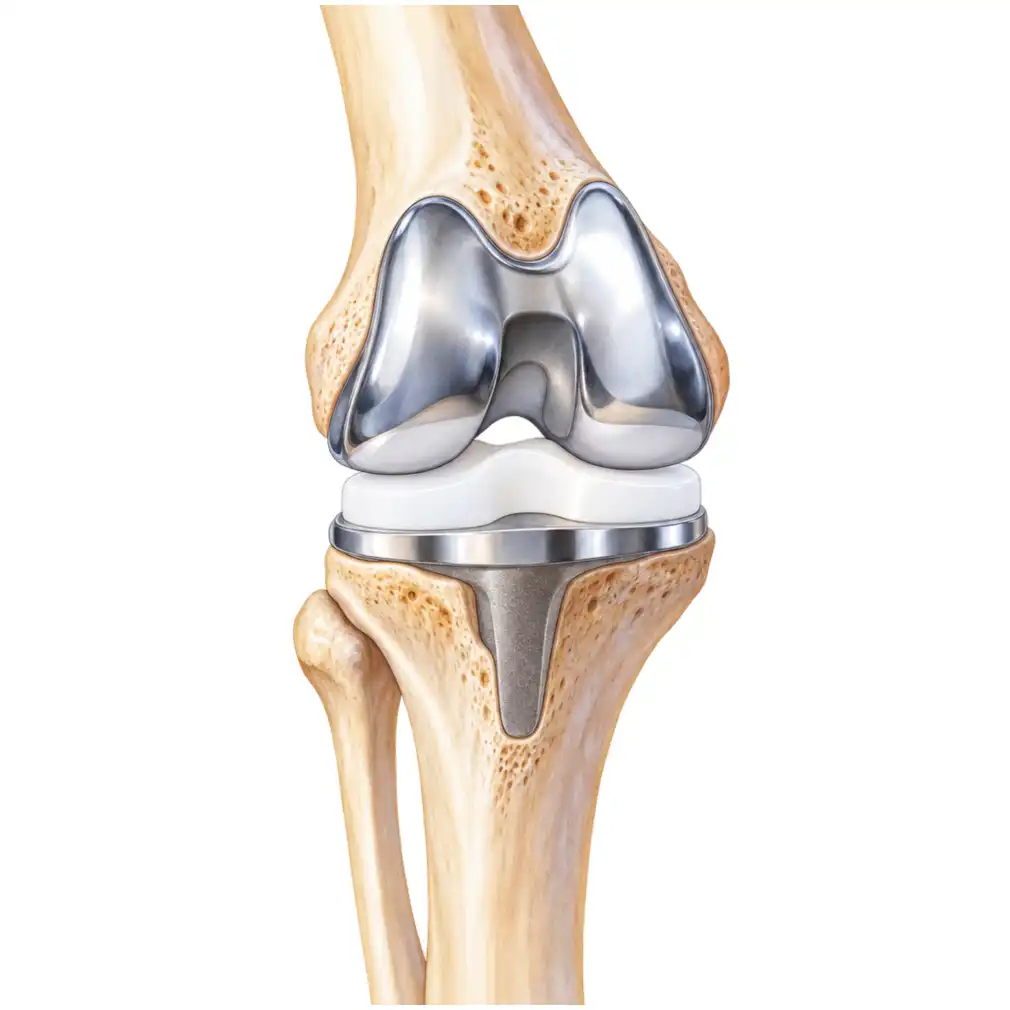
1. टोटल नी रिप्लेसमेंट (TKR)
घुटने के खराब हिस्से को धातु और प्लास्टिक के इम्प्लांट से बदला जाता है। यह "घुटने बदलना" नहीं, बल्कि "घुटने की सतह बदलना" (Resurfacing) है।
- प्रकार: पूरा घुटना (Total) या केवल खराब हिस्सा (Partial/Unicondylar)।
- तकनीक: आजकल हम रोबोटिक सर्जरी और कंप्यूटर नेविगेशन का उपयोग करते हैं, जिससे सटीकता 100% होती है।
2. टोटल हिप रिप्लेसमेंट (THR)
कूल्हे के 'बॉल' (Ball) और 'सॉकेट' (Socket) दोनों को बदला जाता है। यह सबसे सफल सर्जरीज में से एक है।
- इम्प्लांट: सिरेमिक (Ceramic) या उच्च गुणवत्ता वाला प्लास्टिक जो 20-25 साल चलता है।
🎥 सर्जरी प्रक्रिया (Visual Guide)
Step 1: तैयारी
खराब कार्टिलेज को बहुत पतली परत (8-9mm) में हटाया जाता है।
Step 2: फिटिंग
धातु की कैप हड्डी पर फिट की जाती है। बीच में प्लास्टिक लाइनर लगाया जाता है।
Step 3: मूवमेंट
नया जोड़ चिकनाई से काम करता है। दर्द तुरंत गायब हो जाता है।
1. Total Knee Replacement (TKR)
It is technically "Knee Resurfacing". We remove the damaged cartilage surface and cap it with metal and plastic implants.
- Types: Total Knee (TKR) or Partial Knee (Unicondylar) if only one compartment is damaged.
- Tech: We use Robotic Assistance and Computer Navigation for 100% alignment accuracy.
2. Total Hip Replacement (THR)
Both the 'Ball' (Femoral head) and 'Socket' (Acetabulum) are replaced. It is one of the most successful surgeries in medical history.
- Implants: Ceramic-on-Ceramic or Ceramic-on-Poly cross-linked liners that last 20-25 years.
🎥 The Surgery Process (Visual Guide)
Step 1: Resurfacing
Damaged cartilage is shaved off (only 8-9mm) to prepare the bone.
Step 2: Implanting
Metal caps are fixed. A medical-grade plastic spacer acts as the new cartilage.
Step 3: Movement
The new joint glides smoothly. Bone-on-bone pain vanishes instantly.
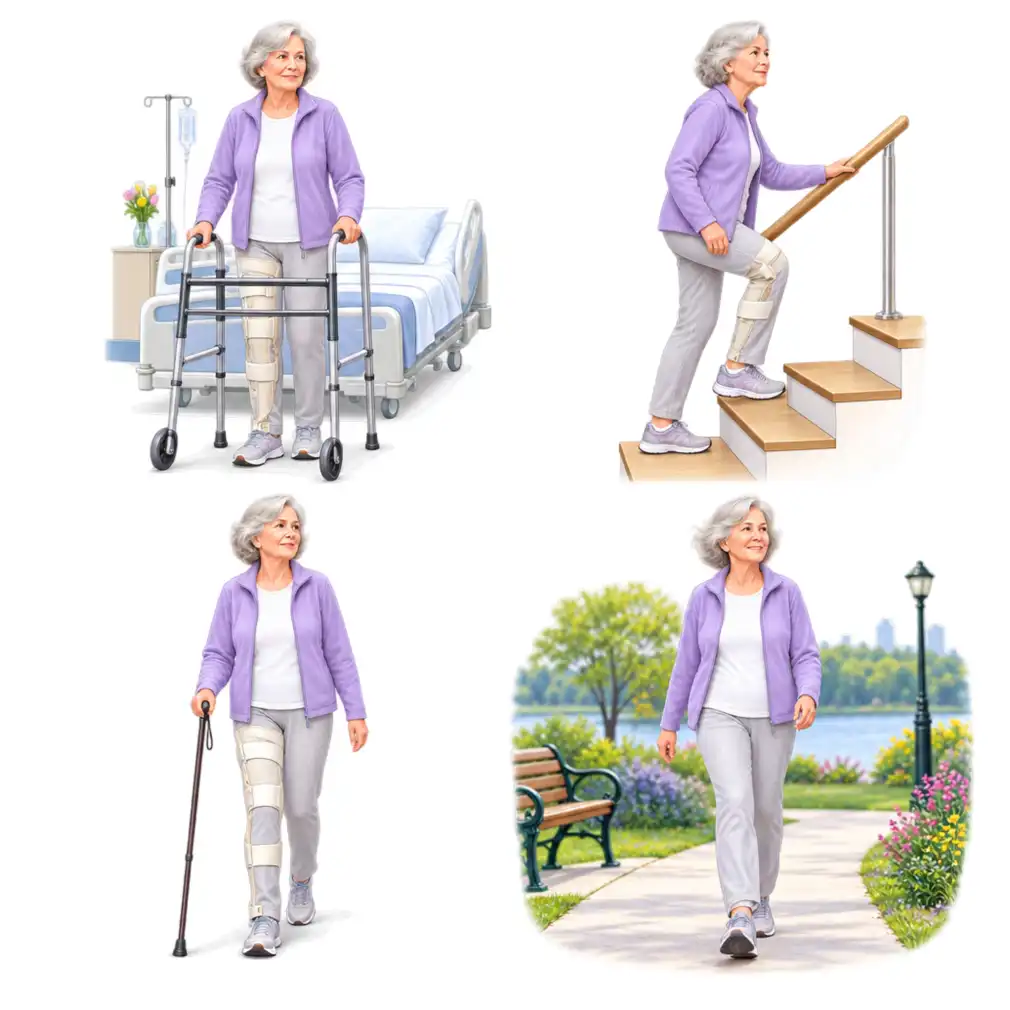
रिकवरी टाइमलाइन: सर्जरी के बाद क्या होगा?
Recovery Timeline: What to Expect?
विशेष सावधानियां (Precautions)
Special Precautions
🚫 व्यायाम न करें अगर:
- दर्द बहुत तेज हो जाए
- जोड़ में सूजन आ जाए
- तापमान बढ़ जाए (Fever)
- रात में नींद न आए
✅ रोज़ करें:
- गर्म सिकाई (Heat Therapy) 15 मिनट
- वजन कम करने की कोशिश (Diet + Walk)
- सही जूते पहनें (Shock Absorbing)
- सीढ़ियों की बजाय लिफ्ट का उपयोग
❌ कभी न करें:
- भारी वजन उठाना
- दौड़ना या कूदना
- गहरी स्क्वाट्स या लंजेस
- जोड़ को जबरदस्ती मोड़ना
🚫 Stop Exercises If:
- Pain becomes severe
- Joint swells up
- Temperature rises (Fever)
- Sleep is disturbed at night
✅ Do Daily:
- Heat therapy for 15 minutes
- Weight loss efforts (Diet + Walk)
- Wear shock-absorbing shoes
- Use elevator instead of stairs
❌ Never Do:
- Lifting heavy weights
- Running or jumping
- Deep squats or lunges
- Forcing the joint to bend
गलत धारणाएं और सत्य (Myths vs Facts)
Myths vs Facts
"OA उम्र का प्रभाव है, कुछ नहीं हो सकता।"
"OA is just old age, nothing can be done."
सही इलाज से दर्द 90% कम हो सकता है और जॉइंट रिप्लेसमेंट से नया जीवन मिलता है।
Proper treatment can reduce pain by 90% and joint replacement gives a new life.
"सर्जरी के बाद कभी सामान्य नहीं चल सकते।"
"You can never walk normally after surgery."
90% मरीजों को सर्जरी के बाद दर्दमुक्त जीवन मिलता है।
90% patients get pain-free life after surgery.
"इम्प्लांट 5-7 साल में खराब हो जाता है।"
"Implants wear out in 5-7 years."
आधुनिक इम्प्लांट 15-25 साल चलते हैं।
Modern implants last 15-25 years.
20 महत्वपूर्ण प्रश्न (FAQ)
20 Critical FAQs
नहीं। 70% लोगों में OA के लक्षण नहीं होते। मोटापा, चोटें, और गलत जीवनशैली मुख्य कारण हैं।
No. 70% people never develop OA symptoms. Obesity, injuries, and lifestyle are primary causes.
नहीं ठीक तो नहीं, लेकिन 10 किलो वजन घटाने से घुटने का दर्द 50% कम हो जाता है।
No, but losing 10kg can reduce knee pain by 50%.
शुरुआती OA में हल्का आराम मिल सकता है, लेकिन उन्नत OA में कोई फायदा नहीं। डॉक्टर से पूछें।
May help in early OA, but ineffective in advanced stages. Consult doctor.
हाँ, लेकिन "अच्छा पैर पहले, बुरा पैर बाद में"। सीढ़ी चढ़ने से घुटने पर 3 गुना दबाव पड़ता है।
"Good leg up, bad leg down." Stairs put 3x pressure on knees.
5-10 किलो तक सामान्य वजन उठाना सुरक्षित। 20 किलो से ऊपर भारी सामान न उठाएं।
5-10kg normal weight is safe. Avoid lifting >20kg heavy items.
नहीं। आधुनिक इम्प्लांट्स मैग्नेटिक फील्ड का सामना कर लेते हैं। इम्प्लांट कार्ड हम दे देते हैं।
No. Modern implants are MRI-safe. We provide implant cards for security.
हाँ। इम्प्लांट वाटरप्रूफ होता है। नहाना, तैरना सब सुरक्षित है।
Yes. Implants are waterproof. Showering/swimming is safe.
हाँ, यदि हृदय/फेफड़े स्वस्थ हैं। इससे एक ही सर्जरी में दोनों पैर ठीक हो जाते हैं।
Yes, if medically fit. One surgery fixes both legs.
ऑपरेटेड पैर दाहिना हो तो 6 हफ्ते बाद। बायाँ हो तो 2 हफ्ते बाद।
Right knee operated: 6 weeks. Left knee: 2 weeks.
हाँ, सभी प्रकार के एक्स-रे, CT, और MRI सुरक्षित हैं।
Yes, all X-rays, CT, and MRI are completely safe.
बहुत कम। आधुनिक "Cementless" इम्प्लांट्स हड्डी के साथ एक हो जाते हैं। ढीलापन 1% मामलों में होता है।
Very rare. Modern cementless implants fuse with bone. Loosening occurs in <1% cases.
सरकारी अस्पतालों में ₹1.5-2 लाख। प्राइवेट में ₹2.5-4 लाख। रोबोटिक सर्जरी ₹5-6 लाख।
Government hospital: ₹1.5-2L. Private: ₹2.5-4L. Robotic: ₹5-6L (approx).
हाँ। 3 महीने बाद सामान्य चढ़ाई सुरक्षित। रेलिंग पकड़कर धीरे-धीरे।
Yes. After 3 months, normal climbing with railing is safe.
हाँ, लेकिन पहले डॉक्टर को बताएं। कुछ हर्बल्स इम्प्लांट के साथ प्रतिक्रिया कर सकते हैं।
Yes, but inform your doctor first. Some herbs may interact with implants.
3 हफ्ते बाद छोटी यात्रा, 6 हफ्ते बाद लंबी। पैर ऊंचा रखें और हर घंटे उठकर चलें।
Short flights after 3 weeks, long after 6 weeks. Keep leg elevated and walk hourly.
साइकिल (Cycle) हाँ। मोटरसाइकिल (Bike) 3 महीने बाद, यदि पैर दाहिना नहीं है।
Stationary cycling yes. Motorcycle after 3 months (if right leg not operated).
6 हफ्ते बाद हाँ। घाव पूरी तरह भर जाने के बाद।
Yes after 6 weeks once wound fully healed.
हाँ। सभी आधुनिक इम्प्लांट्स MRI Compatible हैं।
Yes. All modern implants are MRI safe.
1 माह, 3 माह, 6 माह, फिर सालाना। एक्स-रे हर साल।
1 month, 3 months, 6 months, then annually with X-rays.
नहीं। रिप्लेसमेंट वाले जोड़ में OA नहीं होता क्योंकि कार्टिलेज तो हट ही गया है। दूसरे जोड़ों का ध्यान रखें।
No. Replaced joint cannot get OA as cartilage is removed. Watch other joints.
Strengthen Your Bones Today!
Consult Dr. Gaurav Jain – Orthopedic & Spine Specialist in Indore
Book Appointment