Best Plantar Fasciitis Treatment in Indore (प्लांटर फैसाइटिस)
एड़ी के दर्द से राहत पाएं - विशेषज्ञ इलाज
Plantar Fasciitis
Get Relief from Heel Pain - Expert Treatment
प्लांटर फैसाइटिस क्या है?
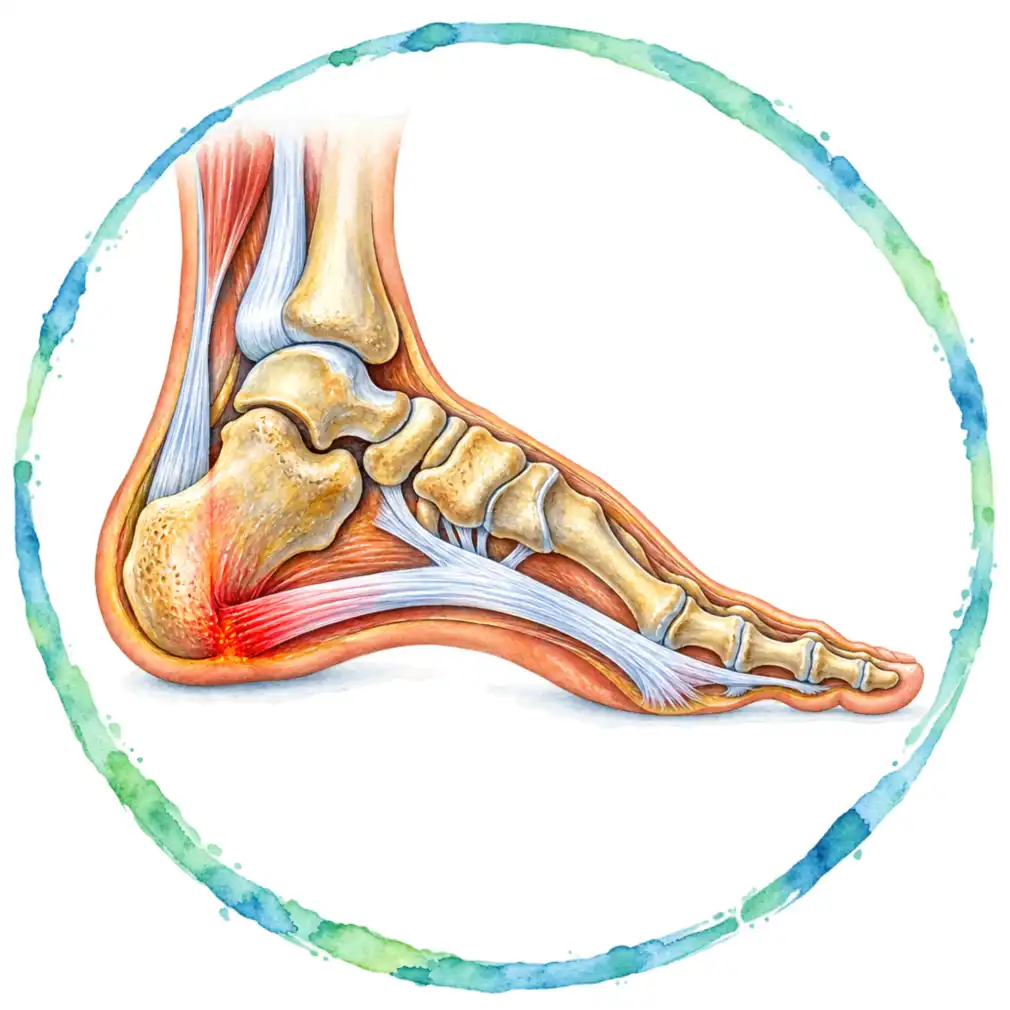
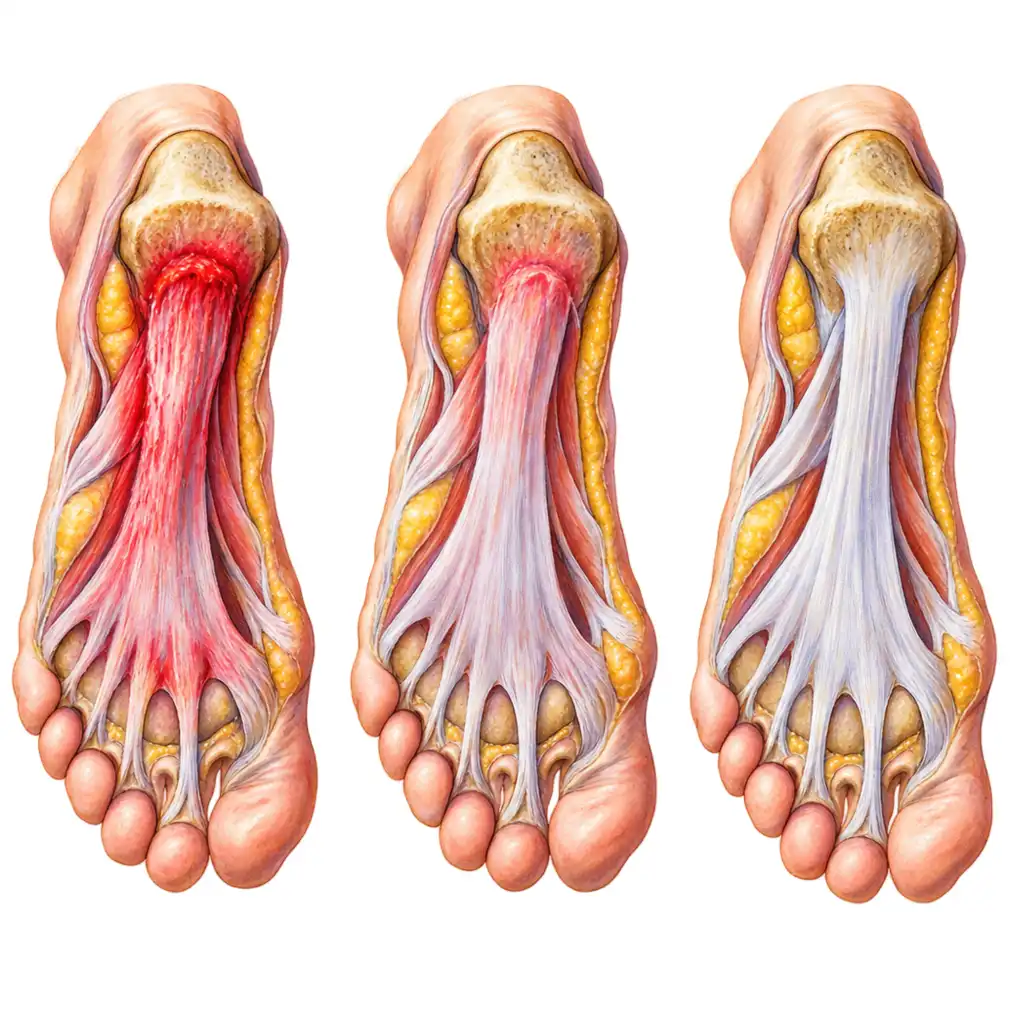
प्लांटर फैसाइटिस एड़ी के दर्द का सबसे आम कारण है। यह तब होता है जब पैर के तलवे में मौजूद प्लांटर फैसिआ नामक मोटे ऊतक की पट्टी में सूजन या जलन हो जाती है।
यह ऊतक की पट्टी एड़ी की हड्डी को पैर की उंगलियों से जोड़ती है और पैर के आर्च (चाप) को सहारा देती है। जब इस पट्टी पर बहुत अधिक दबाव या खिंचाव पड़ता है, तो छोटे-छोटे घाव बन जाते हैं जो सूजन और दर्द का कारण बनते हैं।
📌 महत्वपूर्ण तथ्य
समय पर इलाज बहुत जरूरी है: ज्यादातर मामले 3-12 महीने में ठीक हो जाते हैं, लेकिन केवल सही इलाज से। अगर इलाज न किया जाए, तो दर्द बढ़ सकता है और चलने-फिरने में समस्या हो सकती है।
What is Plantar Fasciitis?
Plantar fasciitis is the most common cause of heel pain. It occurs when the plantar fascia, a thick band of tissue running across the bottom of your foot, becomes inflamed or irritated.
This tissue connects your heel bone to your toes and supports the arch of your foot. When too much pressure or tension is placed on this band, small tears develop, causing inflammation and pain.
📌 Important Fact
Timely treatment is crucial: Most cases heal within 3-12 months, but only with proper treatment. Without treatment, pain can worsen and affect your daily activities and mobility.
प्लांटर फैसाइटिस को समझें
यहाँ प्लांटर फैसाइटिस के बारे में सबसे महत्वपूर्ण जानकारी है:
Understanding Plantar Fasciitis
Here's the most important information about plantar fasciitis:
लंबे समय तक खड़े रहना, दौड़ना, मोटापा, गलत जूते पहनना
Long standing, running, obesity, wrong footwear
सुबह उठने पर एड़ी में तेज दर्द, लंबे समय बैठने के बाद दर्द
Sharp heel pain in morning, pain after long sitting
डॉक्टर द्वारा जांच, एक्स-रे, अल्ट्रासाउंड या एमआरआई
Doctor's examination, X-ray, ultrasound or MRI
आराम, स्ट्रेचिंग, फिजियोथेरेपी, दवा, इंजेक्शन, सर्जरी (दुर्लभ)
Rest, stretching, physiotherapy, medicine, injection, surgery (rare)
सही जूते, नियमित स्ट्रेचिंग, वजन नियंत्रण, अचानक गतिविधि से बचें
Right shoes, regular stretching, weight control, avoid sudden activity
टॉवेल स्ट्रेच, काफ स्ट्रेच, मार्बल पिकअप, आइस बॉटल रोलिंग
Towel stretch, calf stretch, marble pickup, ice bottle rolling
प्लांटर फैसाइटिस के कारण
प्लांटर फैसाइटिस कई कारणों से हो सकता है। यहाँ सबसे आम कारण हैं:
Causes of Plantar Fasciitis
Plantar fasciitis can occur due to many reasons. Here are the most common causes:
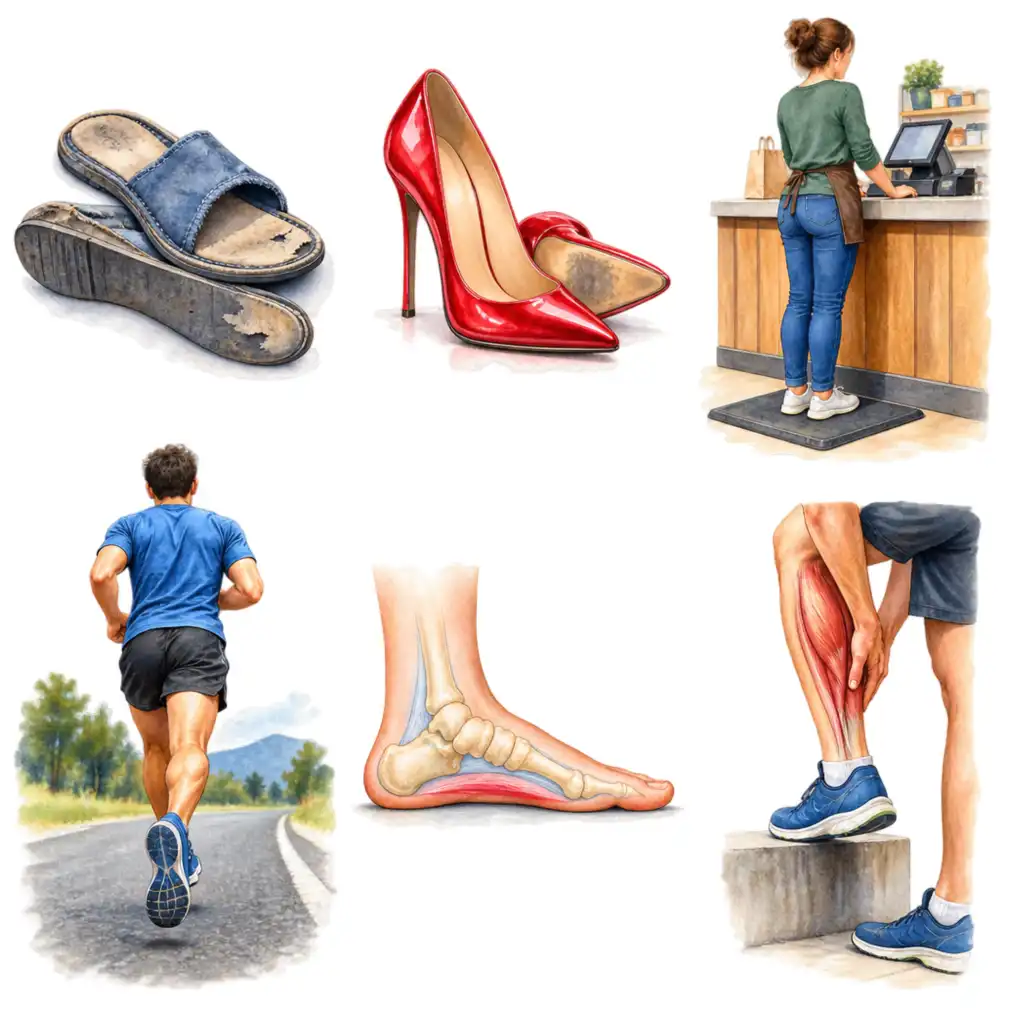
पुराने या खराब जूते पहनना, जिनमें एड़ी का सहारा न हो या तलवा बहुत पतला या सख्त हो। फ्लैट चप्पल या बहुत ऊंची एड़ी वाले जूते भी नुकसानदायक हैं।
Wearing old or poor shoes that lack heel support or have very thin or hard soles. Flat slippers or very high heels are also harmful.
लंबे समय तक खड़े रहना, बहुत ज्यादा दौड़ना या चलना, अचानक व्यायाम बढ़ाना, कठोर सतह पर दौड़ना या कूदना।
Standing for long periods, excessive running or walking, suddenly increasing exercise, running or jumping on hard surfaces.
अधिक वजन या मोटापा होने से पैर पर अतिरिक्त दबाव पड़ता है, जिससे प्लांटर फैसिआ पर तनाव बढ़ जाता है। गर्भावस्था के दौरान भी यह समस्या हो सकती है।
Being overweight or obese puts extra pressure on feet, increasing tension on plantar fascia. This can also occur during pregnancy.
सपाट पैर (फ्लैट फीट), बहुत ज्यादा चाप वाले पैर, या असामान्य चाल से चलने की वजह से प्लांटर फैसिआ पर असमान दबाव पड़ता है।
Flat feet, very high arches, or abnormal walking pattern causes uneven pressure on plantar fascia.
40-60 साल की उम्र में यह समस्या सबसे ज्यादा होती है। उम्र बढ़ने के साथ प्लांटर फैसिआ कमजोर होता जाता है और उसकी लचीलापन कम होती है।
This problem is most common between 40-60 years. With aging, plantar fascia weakens and loses flexibility.
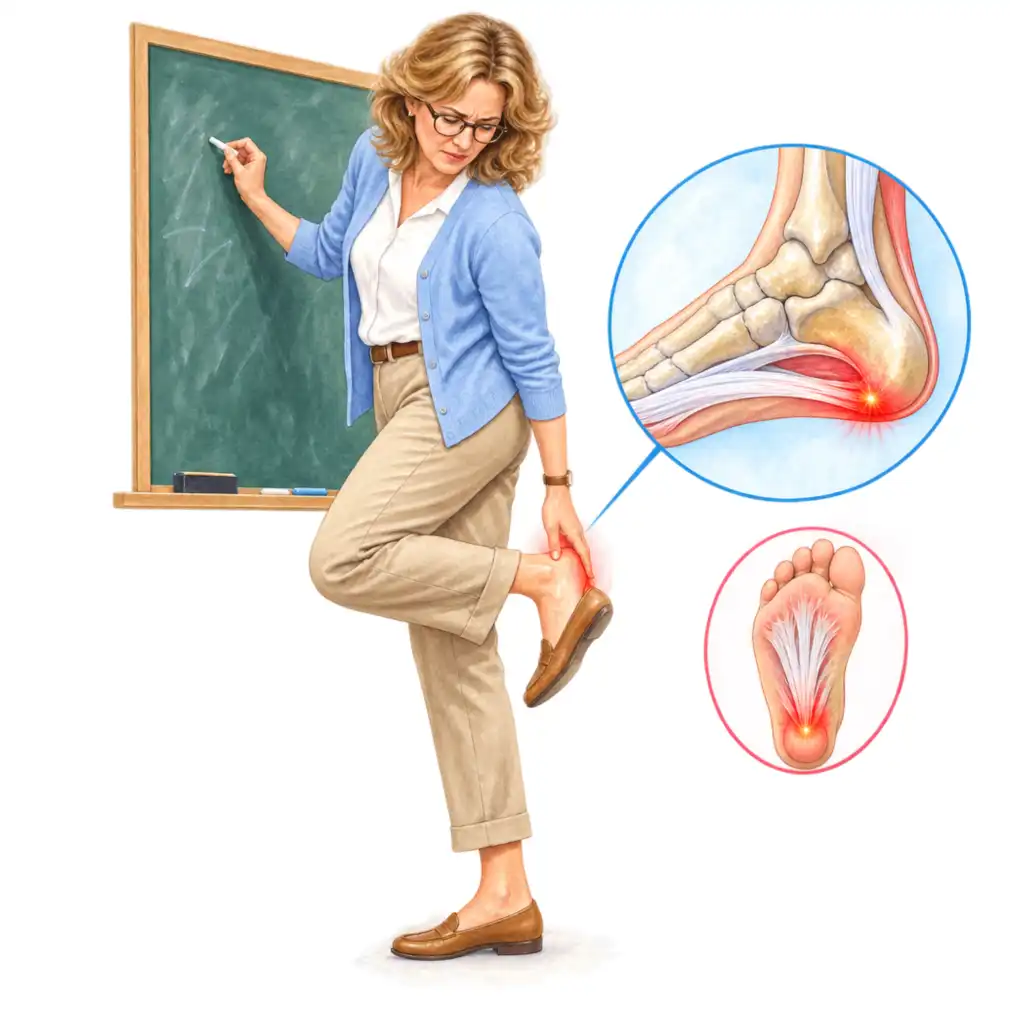
ऐसे काम जिनमें लंबे समय तक खड़े रहना पड़े या कठोर सतह पर चलना-फिरना पड़े - जैसे शिक्षक, फैक्ट्री कर्मचारी, नर्स आदि।
Jobs requiring long standing or walking on hard surfaces - like teachers, factory workers, nurses etc.
पिंडली (काफ) की मांसपेशियों में कसाव या एच्लीज टेंडन का टाइट होना। यह लचीलेपन को कम करता है और एड़ी पर दबाव बढ़ाता है।
Tightness in calf muscles or Achilles tendon. This reduces flexibility and increases pressure on heel.
अचानक नया खेल शुरू करना, व्यायाम की तीव्रता या अवधि बहुत तेजी से बढ़ाना, लंबे समय बाद फिर से दौड़ना शुरू करना।
Suddenly starting new sports, increasing exercise intensity or duration too quickly, restarting running after long break.
लक्षण और संकेत
प्लांटर फैसाइटिस के मुख्य लक्षण इस प्रकार हैं:
Symptoms and Signs
The main symptoms of plantar fasciitis are:
-
सुबह का दर्द (सबसे आम)
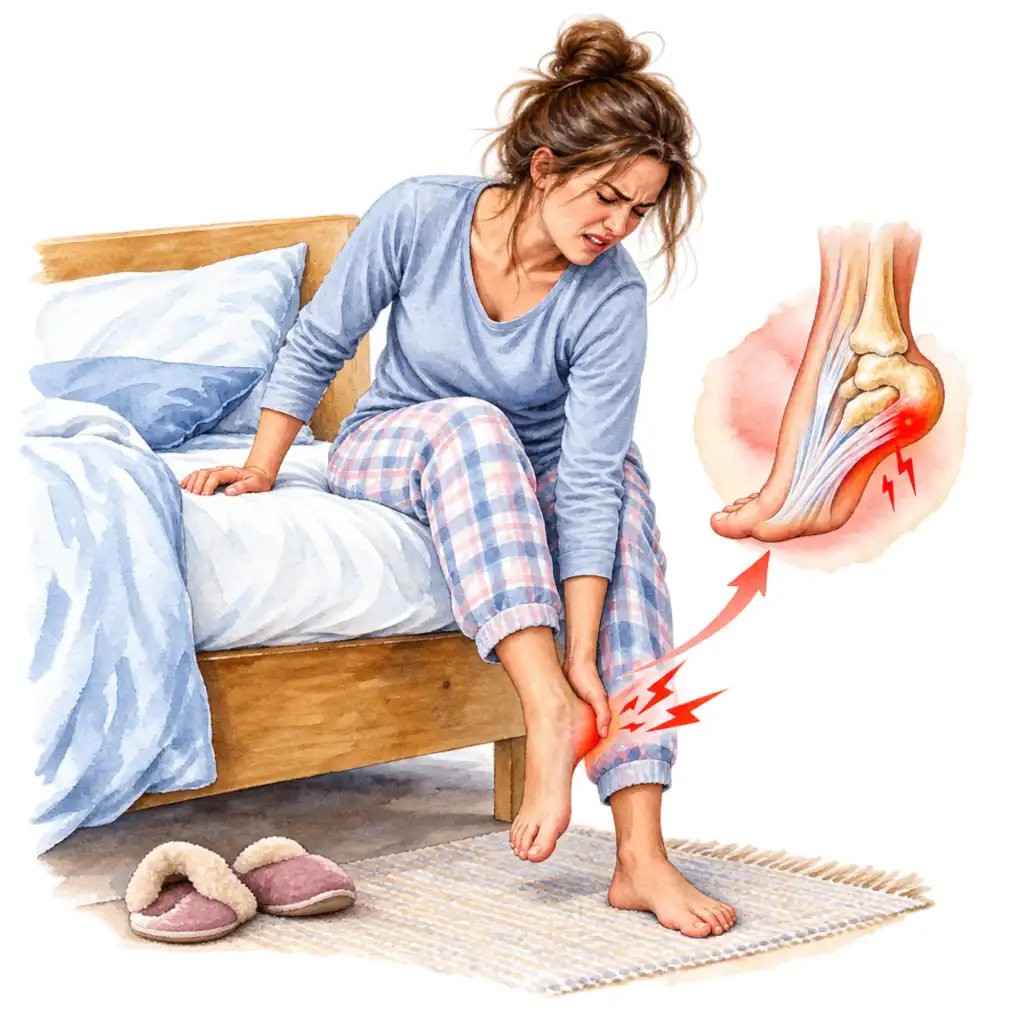
सुबह बिस्तर से उठकर पहले कदम रखने पर एड़ी में तेज, चुभने वाला दर्द होता है। यह दर्द इतना तेज हो सकता है कि आप ठीक से चल नहीं पाते। कुछ कदम चलने के बाद दर्द थोड़ा कम हो सकता है।
Morning Pain (Most Common)Sharp, stabbing pain in heel when taking first steps after getting out of bed. This pain can be so severe that you can't walk properly. Pain may decrease after a few steps.
-
बैठने के बाद दर्द
लंबे समय तक बैठने या आराम करने के बाद जब उठते हैं तो एड़ी में दर्द होता है। यह दर्द सुबह के दर्द जैसा ही होता है।
Pain After SittingPain in heel when getting up after sitting or resting for long periods. This pain is similar to morning pain.
-
दर्द की जगह
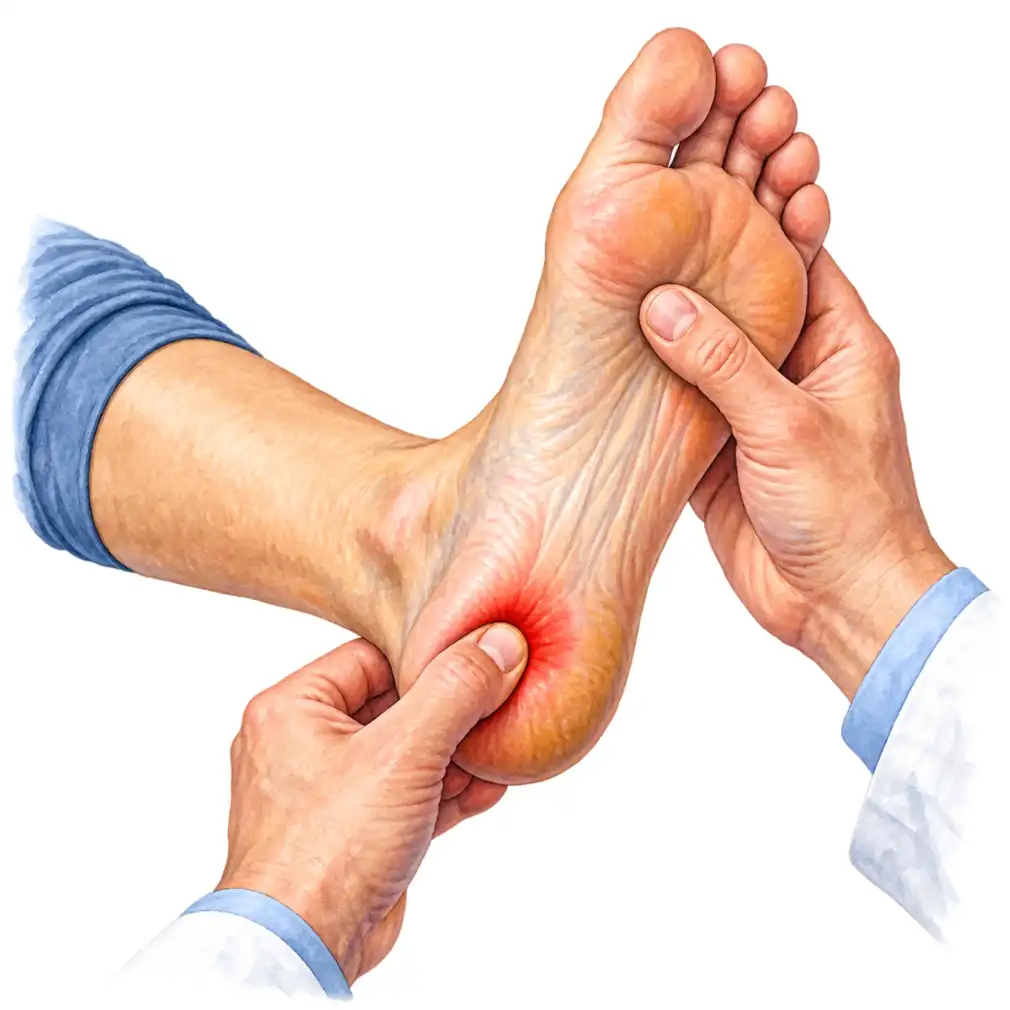
दर्द आमतौर पर एड़ी के नीचे, बीच में या थोड़ा अंदर की तरफ होता है। कभी-कभी पैर के चाप (आर्च) तक भी दर्द फैल सकता है।
Pain LocationPain usually occurs at bottom of heel, in middle or slightly inside. Sometimes pain can spread to foot arch.
-
गतिविधि के बाद बढ़ना
लंबे समय तक खड़े रहने, चलने या दौड़ने के बाद दर्द बढ़ जाता है। गतिविधि के दौरान दर्द कम हो सकता है, लेकिन बाद में फिर से बढ़ जाता है।
Increases After ActivityPain increases after standing, walking or running for long periods. Pain may decrease during activity but increases again afterwards.
-
छूने पर दर्द
एड़ी के नीचे वाले हिस्से को दबाने या छूने पर दर्द होता है। कभी-कभी हल्की सूजन भी हो सकती है।
Pain on TouchPain when pressing or touching bottom part of heel. Sometimes there may be mild swelling.
-
नंगे पैर चलने में कठिनाई
बिना जूते के, खासकर कठोर सतह पर चलना बहुत दर्दनाक हो सकता है। सीढ़ियां चढ़ना भी मुश्किल हो सकता है।
Difficulty Walking BarefootWalking without shoes, especially on hard surfaces can be very painful. Climbing stairs may also be difficult.
जांच और पहचान
प्लांटर फैसाइटिस की पहचान के लिए डॉक्टर निम्नलिखित तरीके अपनाते हैं:
शारीरिक जांच
डॉक्टर आपके पैर की जांच करेंगे और:
- दर्द वाली जगह को दबाकर देखेंगे
- आपके चलने के तरीके की जांच करेंगे
- पैर की मांसपेशियों की ताकत और लचीलापन देखेंगे
- पैर के आर्च (चाप) की जांच करेंगे
इमेजिंग टेस्ट
कभी-कभी अन्य समस्याओं को नकारने के लिए ये जांच की जा सकती हैं:
- एक्स-रे: हील स्पर (एड़ी में कांटा) या फ्रैक्चर देखने के लिए
- अल्ट्रासाउंड: प्लांटर फैसिआ की मोटाई और सूजन देखने के लिए
- एमआरआई: अन्य गंभीर समस्याएं देखने के लिए (दुर्लभ)
Diagnosis and Detection
To diagnose plantar fasciitis, doctors use following methods:
Physical Examination
Doctor will examine your foot and:
- Press on painful area to check
- Examine your walking pattern
- Check strength and flexibility of foot muscles
- Examine foot arch
Imaging Tests
Sometimes these tests may be done to rule out other problems:
- X-ray: To check for heel spur or fracture
- Ultrasound: To check thickness and inflammation of plantar fascia
- MRI: To check for other serious problems (rare)
इलाज के विकल्प
प्लांटर फैसाइटिस का इलाज चरणबद्ध तरीके से किया जाता है:
Treatment Options
Plantar fasciitis is treated in a step-by-step manner:
रूढ़िवादी उपचार (पहली पसंद)
Conservative Treatment (First Choice)
-
💊
दवाएं:
दर्द और सूजन कम करने के लिए NSAIDs (नॉन-स्टेरॉइडल एंटी-इन्फ्लेमेटरी ड्रग्स) जैसे इबुप्रोफेन या नेप्रोक्सेन। ये दवाएं डॉक्टर की सलाह से ही लें।
Medicines:NSAIDs (Non-Steroidal Anti-Inflammatory Drugs) like ibuprofen or naproxen to reduce pain and inflammation. Take these medicines only with doctor's advice.
-
❄️
बर्फ की सिकाई:
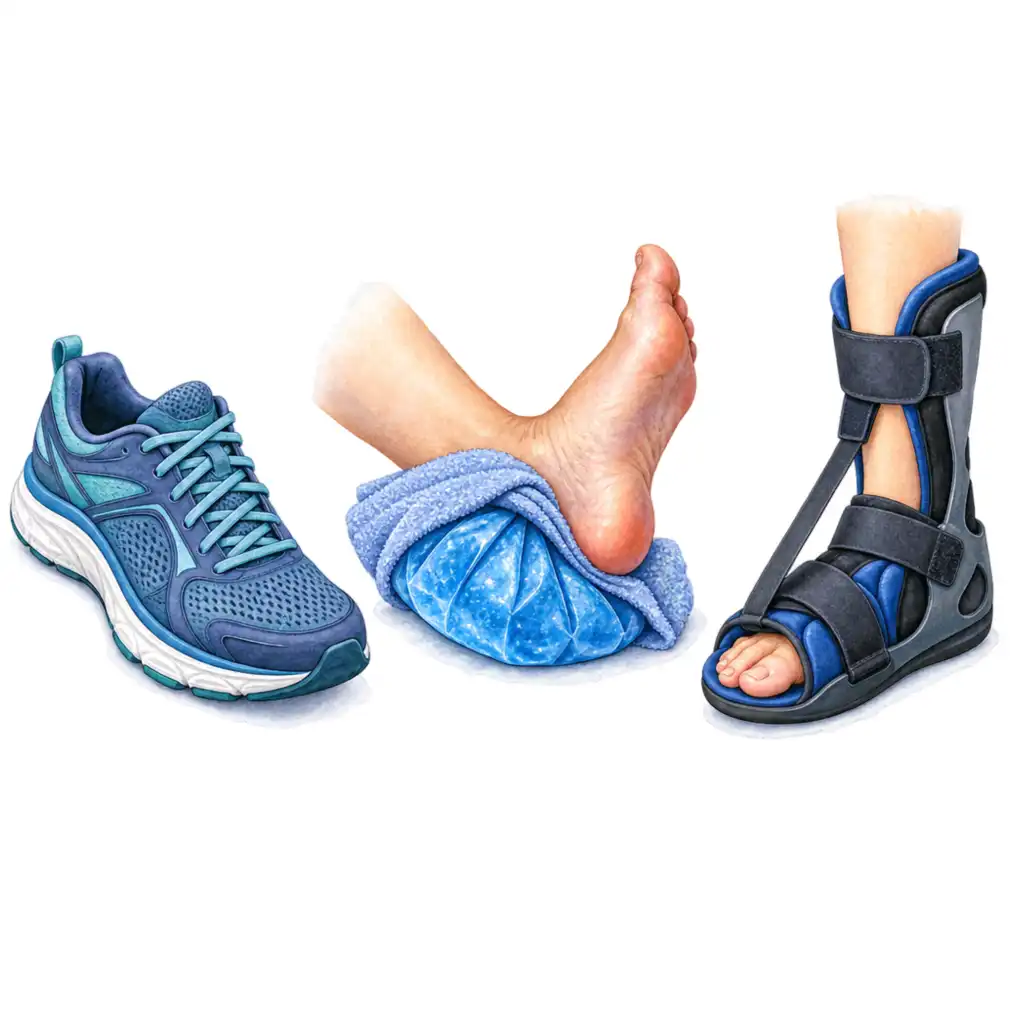
दिन में 3-4 बार, 15-20 मिनट के लिए एड़ी पर बर्फ लगाएं। आप एक पानी की बोतल को फ्रीज करके उस पर पैर रोल भी कर सकते हैं।
Ice Application:Apply ice on heel 3-4 times a day for 15-20 minutes. You can also freeze a water bottle and roll your foot on it.
-
🧘
स्ट्रेचिंग व्यायाम:
प्लांटर फैसिआ और काफ की मांसपेशियों को स्ट्रेच करना सबसे महत्वपूर्ण उपचार है। दिन में कम से कम 2-3 बार करें, खासकर सुबह उठने से पहले।
Stretching Exercises:Stretching plantar fascia and calf muscles is the most important treatment. Do at least 2-3 times daily, especially before getting out of bed in morning.
-
👟
सही जूते:
अच्छे आर्च सपोर्ट और कुशन वाले जूते पहनें। पुराने जूते बदल दें। घर में भी सपोर्टिव चप्पल पहनें।
Right Shoes:Wear shoes with good arch support and cushion. Replace old shoes. Wear supportive slippers even at home.
-
🛏️
आराम:
दर्द बढ़ाने वाली गतिविधियों से बचें। लंबे समय तक खड़े रहना, दौड़ना या कूदना कम करें। हालांकि, पूरी तरह आराम करना भी ठीक नहीं है।
Rest:Avoid activities that increase pain. Reduce long standing, running or jumping. However, complete rest is also not good.
-
🏋️
फिजियोथेरेपी:
फिजियोथेरेपिस्ट विशेष व्यायाम और तकनीक सिखाते हैं। अल्ट्रासाउंड या इलेक्ट्रिकल स्टिमुलेशन भी किया जा सकता है।
Physiotherapy:Physiotherapist teaches special exercises and techniques. Ultrasound or electrical stimulation may also be done.
-
🦿
नाइट स्प्लिंट:
रात को पहनने वाला विशेष स्प्लिंट जो पैर को स्ट्रेच पोजीशन में रखता है। इससे सुबह का दर्द कम होता है।
Night Splint:Special splint worn at night that keeps foot in stretched position. This reduces morning pain.
उन्नत उपचार (अगर पहला इलाज काम न करे)
Advanced Treatment (If First Treatment Doesn't Work)
-
💉
स्टेरॉइड इंजेक्शन:
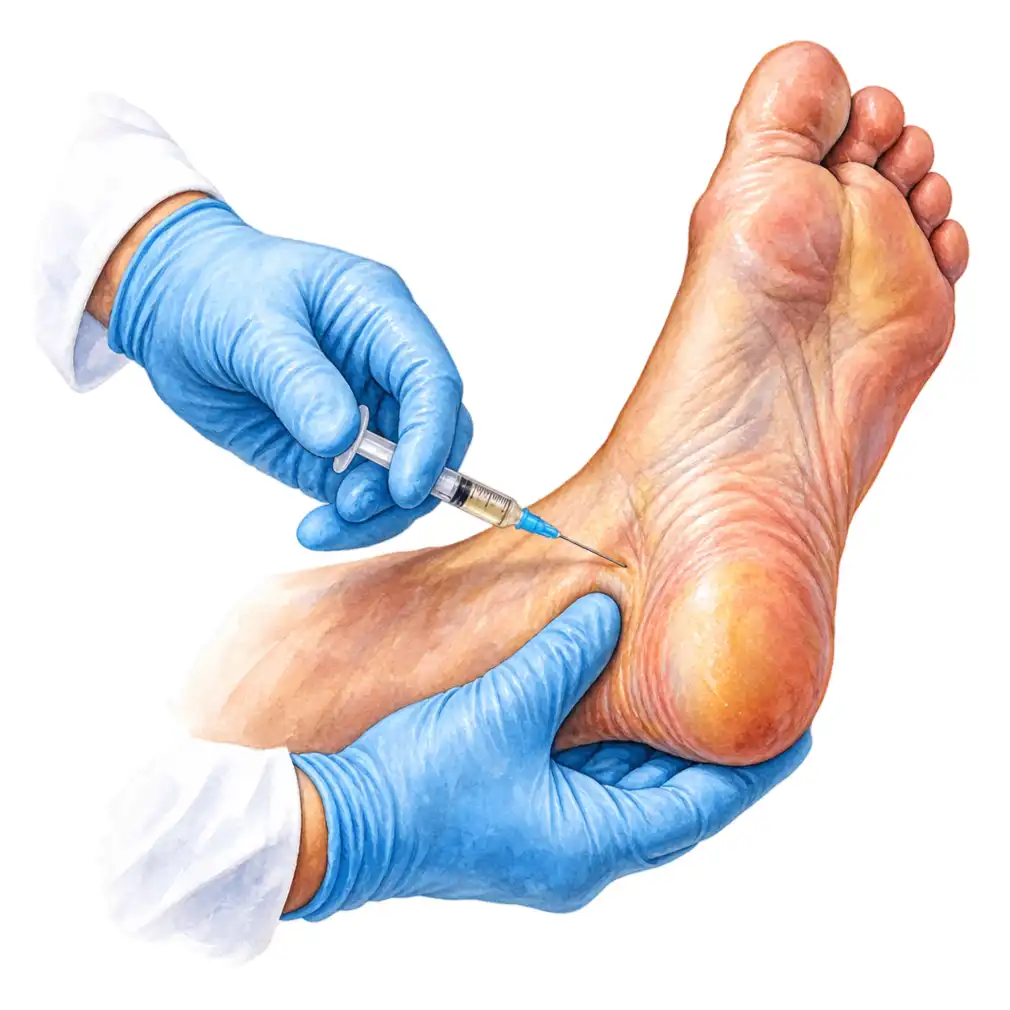
कॉर्टिकोस्टेरॉइड इंजेक्शन दर्द और सूजन में तुरंत राहत देता है। लेकिन बार-बार इंजेक्शन नहीं लिया जा सकता क्योंकि इससे प्लांटर फैसिआ कमजोर हो सकता है।
Steroid Injection:Corticosteroid injection provides immediate relief from pain and inflammation. But frequent injections cannot be taken as it can weaken plantar fascia.
-
🌊
शॉकवेव थेरेपी (ESWT):
ध्वनि तरंगों से प्लांटर फैसिआ को उत्तेजित किया जाता है, जिससे उपचार प्रक्रिया तेज होती है। यह दर्द रहित है और अच्छे परिणाम देता है।
Shockwave Therapy (ESWT):Plantar fascia is stimulated with sound waves, which speeds up healing process. This is painless and gives good results.
-
💉
PRP (प्लेटलेट-रिच प्लाज्मा) इंजेक्शन:
आपके अपने खून से तैयार किया गया इंजेक्शन जो उपचार को बढ़ावा देता है। यह नया और प्रभावी तरीका है।
PRP (Platelet-Rich Plasma) Injection:Injection prepared from your own blood that promotes healing. This is a new and effective method.
सर्जरी (बहुत दुर्लभ, केवल 5% मामलों में)
Surgery (Very Rare, Only in 5% Cases)
-
⚕️
कब जरूरी है:
यदि 6-12 महीने के इलाज के बाद भी कोई सुधार नहीं हो और दर्द रोजमर्रा की जिंदगी को बहुत प्रभावित कर रहा हो, तो सर्जरी की जरूरत पड़ सकती है।
When Necessary:If there's no improvement after 6-12 months of treatment and pain is severely affecting daily life, surgery may be needed.
-
🔪
प्रकार:
प्लांटर फैसिआ रिलीज - इसमें प्लांटर फैसिआ का एक छोटा हिस्सा काटकर तनाव कम किया जाता है। कभी-कभी हील स्पर (एड़ी का कांटा) भी निकाला जाता है।
Type:Plantar Fascia Release - a small part of plantar fascia is cut to reduce tension. Sometimes heel spur is also removed.
बचाव के उपाय
प्लांटर फैसाइटिस से बचने या दोबारा होने से रोकने के लिए:
Prevention Measures
To prevent plantar fasciitis or prevent recurrence:
अच्छे आर्च सपोर्ट, कुशन और शॉक एब्जॉर्बशन वाले जूते पहनें। पुराने या घिसे-पिटे जूते तुरंत बदल दें। दौड़ने के जूते हर 300-500 मील या 6 महीने में बदलें।
Wear shoes with good arch support, cushion and shock absorption. Replace old or worn shoes immediately. Replace running shoes every 300-500 miles or 6 months.
रोज सुबह और रात को प्लांटर फैसिआ और काफ की मांसपेशियों को स्ट्रेच करें। व्यायाम से पहले और बाद में भी स्ट्रेचिंग जरूरी है।
Stretch plantar fascia and calf muscles every morning and night. Stretching is also essential before and after exercise.
स्वस्थ वजन बनाए रखें। अतिरिक्त वजन पैरों पर ज्यादा दबाव डालता है। यहां तक कि 5-10 पाउंड वजन कम करने से भी फर्क पड़ता है।
Maintain healthy weight. Extra weight puts more pressure on feet. Even losing 5-10 pounds can make a difference.
व्यायाम या गतिविधि अचानक न बढ़ाएं। नई गतिविधि शुरू करें तो धीरे-धीरे करें। प्रति सप्ताह 10% से ज्यादा न बढ़ाएं।
Don't suddenly increase exercise or activity. Start new activity gradually. Don't increase more than 10% per week.
दौड़ने की जगह तैराकी, साइकिलिंग या इलिप्टिकल मशीन का उपयोग करें। ये व्यायाम पैरों पर कम दबाव डालते हैं।
Instead of running, use swimming, cycling or elliptical machine. These exercises put less pressure on feet.
घर में भी सपोर्टिव जूते या चप्पल पहनें। कठोर सतह पर नंगे पैर चलने से बचें। समुद्र तट पर रेत पर भी नंगे पैर न चलें।
Wear supportive shoes or slippers even at home. Avoid walking barefoot on hard surfaces. Don't walk barefoot on beach sand either.
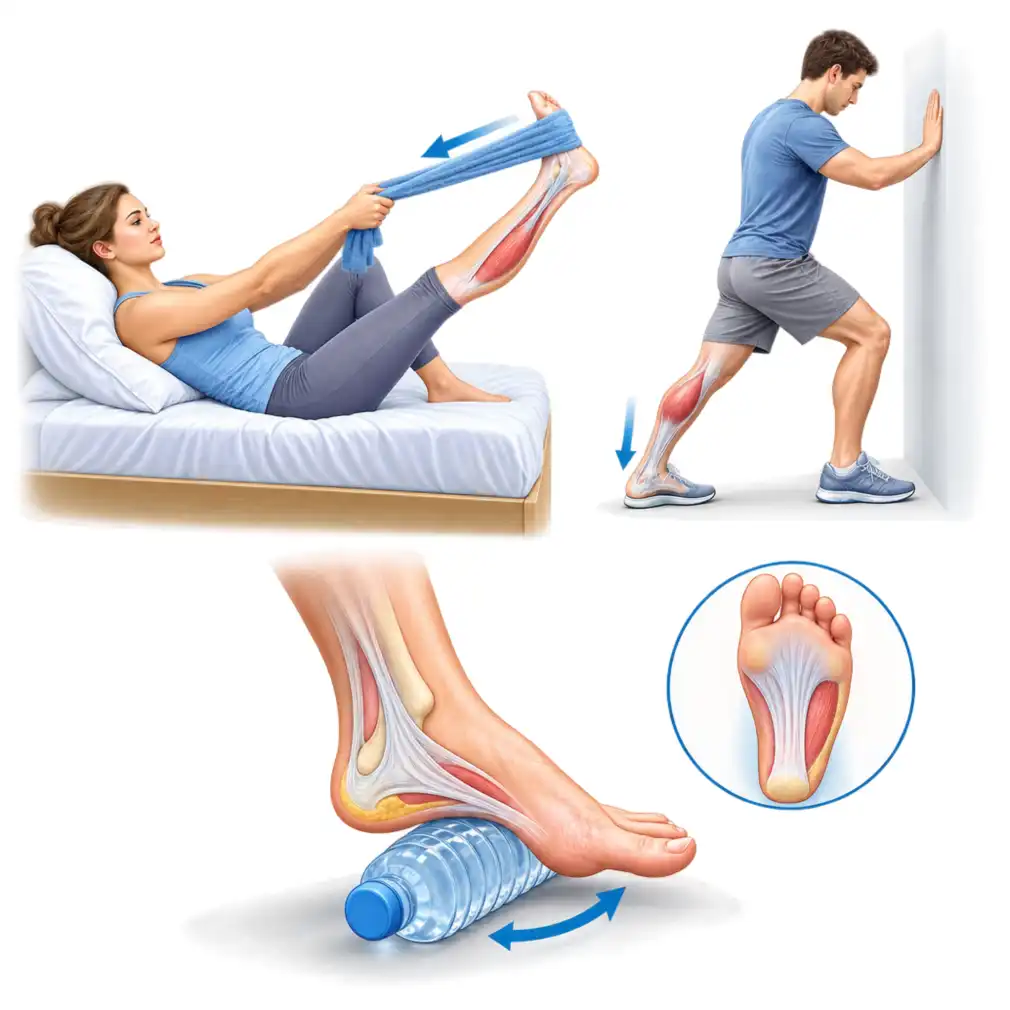
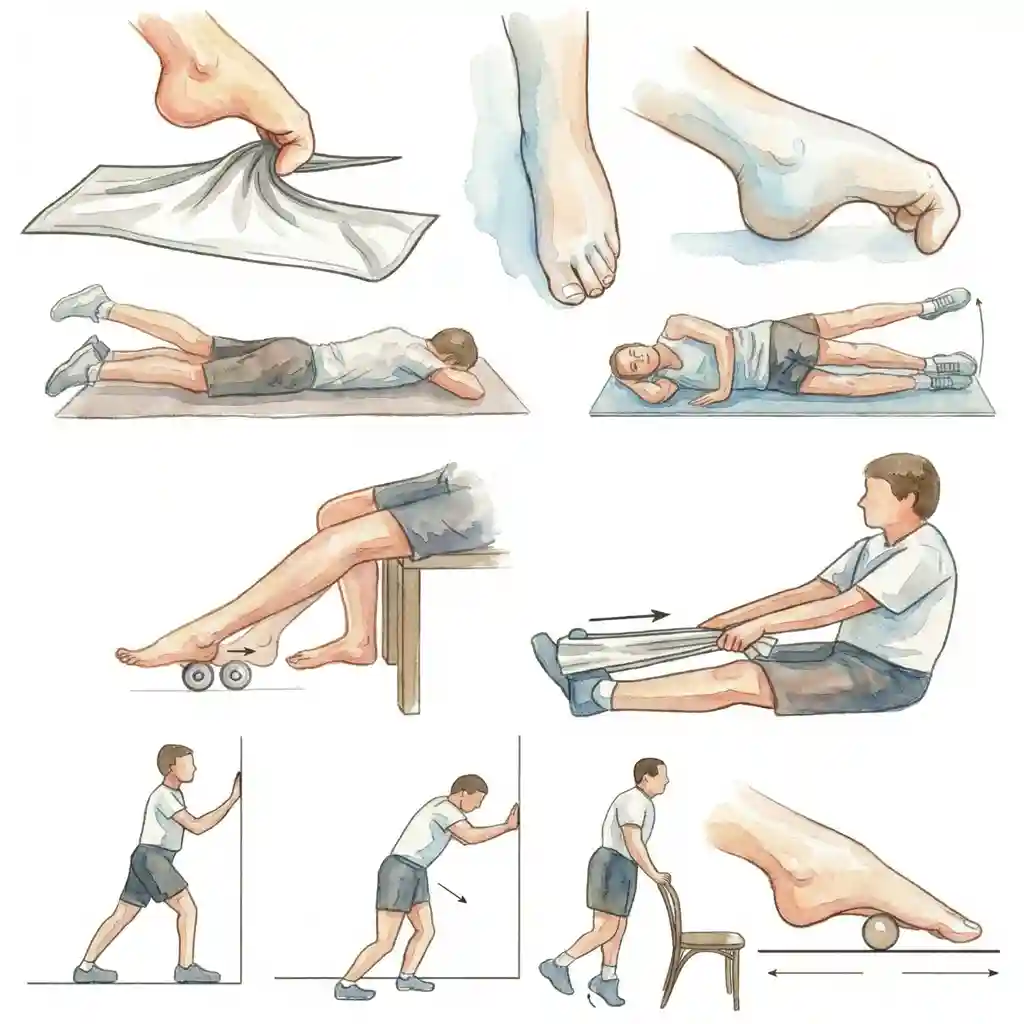
घर पर करने के व्यायाम
ये व्यायाम रोज करने से प्लांटर फैसाइटिस में बहुत फायदा होता है:
Exercises to Do at Home
Doing these exercises daily is very beneficial for plantar fasciitis:
-
1
सुबह बिस्तर से उठने से पहले पैर को सीधा रखेंKeep leg straight before getting out of bed in morning
-
2
पैर की उंगलियों के चारों ओर एक तौलिया लपेटेंWrap a towel around your toes
-
3
तौलिया को अपनी ओर खींचें, पैर को सीधा रखेंPull towel towards you, keep leg straight
-
4
20-30 सेकंड तक रुकें, 3 बार दोहराएंHold for 20-30 seconds, repeat 3 times
-
1
दीवार के सामने खड़े हों, हाथ दीवार पर रखेंStand facing wall, put hands on wall
-
2
एक पैर को पीछे रखें, एड़ी जमीन पर टिकाएंStep one foot back, keep heel on ground
-
3
आगे के घुटने को मोड़ें, पिछला पैर सीधा रखेंBend front knee, keep back leg straight
-
4
पिंडली में खिंचाव महसूस करें, 30 सेकंड रुकेंFeel stretch in calf, hold for 30 seconds
-
1
एक पानी की बोतल को फ्रीज करेंFreeze a water bottle
-
2
कुर्सी पर बैठें, बोतल फर्श पर रखेंSit on chair, place bottle on floor
-
3
पैर के तलवे से बोतल को आगे-पीछे रोल करेंRoll bottle back and forth with sole of foot
-
4
5-10 मिनट तक करें, दिन में 2-3 बारDo for 5-10 minutes, 2-3 times a day
-
1
फर्श पर 10-15 कंचे या छोटी चीजें रखेंPlace 10-15 marbles or small objects on floor
-
2
कुर्सी पर बैठें, पास में एक कप रखेंSit on chair, keep a cup nearby
-
3
पैर की उंगलियों से कंचे उठाकर कप में डालेंPick up marbles with toes and put in cup
-
4
दिन में 2 बार, प्रत्येक पैर से करेंDo 2 times a day with each foot
अक्सर पूछे जाने वाले सवाल
प्लांटर फैसाइटिस के बारे में सबसे आम सवाल:
Frequently Asked Questions
Most common questions about plantar fasciitis:
ज्यादातर मामलों में सही इलाज से 3-12 महीने में सुधार हो जाता है। लेकिन कुछ लोगों को ठीक होने में ज्यादा समय भी लग सकता है। नियमित स्ट्रेचिंग और इलाज का पालन करना बहुत जरूरी है।
नहीं, यह खतरनाक बीमारी नहीं है, लेकिन अगर इलाज न किया जाए तो दर्द बढ़ सकता है और चलने-फिरने में दिक्कत हो सकती है। दीर्घकालिक प्लांटर फैसाइटिस घुटने, कूल्हे या पीठ की समस्याओं का कारण भी बन सकता है क्योंकि आप दर्द से बचने के लिए अलग तरह से चलते हैं।
नहीं, ये अलग-अलग हैं। हील स्पर एड़ी की हड्डी पर बनने वाली एक छोटी हड्डी की उभार है, जबकि प्लांटर फैसाइटिस ऊतक की सूजन है। हालांकि, दोनों एक साथ हो सकते हैं, लेकिन हील स्पर ही दर्द का मुख्य कारण नहीं होता।
In most cases, with proper treatment, improvement occurs within 3-12 months. However, some people may take longer to heal. Regular stretching and following treatment is very important.
No, it's not a dangerous disease, but if left untreated, pain can increase and cause difficulty in walking. Chronic plantar fasciitis can also cause knee, hip or back problems because you walk differently to avoid pain.
No, they are different. Heel spur is a small bone protrusion on heel bone, while plantar fasciitis is tissue inflammation. However, both can occur together, but heel spur itself is not the main cause of pain.
सबसे प्रभावी घरेलू इलाज हैं: (1) दिन में कम से कम 2-3 बार प्लांटर फैसिआ और एच्लीज टेंडन को स्ट्रेच करना, (2) बिस्तर से उठने से पहले स्ट्रेचिंग करना, (3) दिन में 3-4 बार 15-20 मिनट के लिए बर्फ लगाना, (4) अच्छे आर्च सपोर्ट वाले जूते पहनना, और (5) दर्द बढ़ाने वाली गतिविधियों से बचना लेकिन पूरी तरह आराम नहीं करना।
हां, लेकिन समझदारी से। दौड़ना और कूदना जैसी गतिविधियां जो दर्द बढ़ाती हैं, उनसे बचें। इसके बजाय तैराकी, साइकिलिंग या इलिप्टिकल मशीन जैसे कम प्रभाव वाले व्यायाम करें। जैसे-जैसे दर्द कम हो, धीरे-धीरे गतिविधि का स्तर बढ़ाएं। व्यायाम से पहले और बाद में हमेशा स्ट्रेचिंग करें।
The most effective home treatments are: (1) stretching the plantar fascia and Achilles tendon at least 2-3 times daily, (2) stretching before getting out of bed, (3) applying ice for 15-20 minutes, 3-4 times a day, (4) wearing shoes with good arch support, and (5) avoiding painful activities but not resting completely.
Yes, but wisely. Avoid activities that increase pain like running and jumping. Instead, do low-impact exercises like swimming, cycling, or using an elliptical machine. As pain decreases, gradually increase your activity level. Always stretch before and after exercise.
नहीं, प्लांटर फैसाइटिस के दौरान नंगे पैर चलने से बचें, खासकर कठोर सतहों पर। घर में भी सपोर्टिव चप्पल या जूते पहनें। नंगे पैर चलने से प्लांटर फैसिआ पर अधिक दबाव पड़ता है और दर्द बढ़ सकता है। यहां तक कि समुद्र तट पर रेत पर चलने से भी शुरुआत में बचना चाहिए।
ऐसे जूते चुनें जिनमें: (1) अच्छा आर्च सपोर्ट हो, (2) मोटा, कुशन वाला तलवा हो, (3) थोड़ी ऊंची एड़ी हो (1-2 इंच), (4) लचीला अगला हिस्सा हो, और (5) अच्छा शॉक एब्जॉर्बशन हो। फ्लिप-फ्लॉप, हाई हील्स और सपाट तलवे वाले जूतों से बचें। दौड़ने के जूते हर 300-500 मील या हर 6 महीने में बदलें।
हां, बिल्कुल। अतिरिक्त वजन प्लांटर फैसिआ पर अधिक दबाव डालता है। यहां तक कि 5-10 पाउंड वजन कम करने से भी काफी फर्क पड़ सकता है। स्वस्थ आहार और कम प्रभाव वाले व्यायाम (जैसे तैराकी या साइकिलिंग) के जरिए वजन प्रबंधन प्लांटर फैसाइटिस के इलाज और बचाव दोनों में मदद करता है।
No, avoid walking barefoot during plantar fasciitis, especially on hard surfaces. Wear supportive slippers or shoes even at home. Walking barefoot puts more stress on the plantar fascia and can increase pain. Even walking on sand at the beach should be avoided initially.
Choose shoes that have: (1) good arch support, (2) thick, cushioned sole, (3) slightly elevated heel (1-2 inches), (4) flexible forefoot, and (5) good shock absorption. Avoid flip-flops, high heels, and flat-soled shoes. Replace running shoes every 300-500 miles or every 6 months.
Yes, definitely. Extra weight puts more pressure on the plantar fascia. Even losing 5-10 pounds can make a significant difference. Weight management through healthy diet and low-impact exercise (like swimming or cycling) helps both treatment and prevention of plantar fasciitis.
हां, अगर आप बचाव के उपाय नहीं अपनाते तो यह वापस आ सकता है। ठीक होने के बाद भी नियमित स्ट्रेचिंग जारी रखें, सही जूते पहनें, स्वस्थ वजन बनाए रखें, और गतिविधि में अचानक वृद्धि से बचें। अगर आपको पहले प्लांटर फैसाइटिस हो चुका है, तो आपका जोखिम थोड़ा अधिक है, इसलिए सावधान रहना जरूरी है।
दिन में कम से कम 2-3 बार स्ट्रेचिंग करें, खासकर: (1) सुबह बिस्तर से उठने से पहले, (2) व्यायाम से पहले और बाद में, और (3) रात को सोने से पहले। हर स्ट्रेच को 20-30 सेकंड तक रोकें और 3 बार दोहराएं। नियमित स्ट्रेचिंग प्लांटर फैसाइटिस के इलाज और बचाव दोनों के लिए सबसे जरूरी है।
हां, लेकिन धीरे-धीरे। तब तक प्रतीक्षा करें जब तक दर्द पूरी तरह से खत्म न हो जाए और आप बिना किसी असुविधा के सामान्य गतिविधियां कर सकें। फिर धीरे-धीरे शुरुआत करें - छोटी दूरी, नरम सतहों पर। अपनी दूरी या तीव्रता को प्रति सप्ताह 10% से अधिक न बढ़ाएं। हमेशा अच्छे दौड़ने के जूते पहनें और दौड़ने से पहले और बाद में स्ट्रेचिंग करें।
Yes, it can recur if you don't take preventive measures. Once healed, continue regular stretching, wear proper shoes, maintain healthy weight, and avoid sudden increases in activity. If you've had plantar fasciitis, your risk is slightly higher, so being careful is important.
Stretch at least 2-3 times daily, especially: (1) before getting out of bed in the morning, (2) before and after exercise, and (3) before sleeping at night. Hold each stretch for 20-30 seconds and repeat 3 times. Regular stretching is most important for both treatment and prevention of plantar fasciitis.
Yes, but gradually. Wait until pain is completely gone and you can do normal activities without discomfort. Then start slowly - short distances, on soft surfaces. Don't increase your distance or intensity by more than 10% per week. Always wear good running shoes and stretch before and after running.
एड़ी के दर्द से राहत पाएं!
डॉ. गौरव जैन से परामर्श लें - इंदौर के अनुभवी ऑर्थोपेडिक सर्जन
अपॉइंटमेंट बुक करेंGet Relief from Heel Pain!
Consult Dr. Gaurav Jain - Experienced Orthopedic Surgeon in Indore
Book Appointment