Best Spine Surgery in Indore (रीढ़ की सर्जरी)
इंदौर में रीढ़ की हड्डी की सर्जरी
Slip Disc, Sciatica, Canal Stenosis and Spinal Deformity
ज़्यादातर कमर दर्द में ऑपरेशन की ज़रूरत कभी नहीं पड़ती। रीढ़ के सर्जन का काम यही पहचानना है कि किस मरीज़ को वाकई सर्जरी चाहिए — और ईमानदारी से यह बता देना। डॉ. गौरव जैन ने मुंबई इंस्टिट्यूट ऑफ स्पाइन सर्जरी, बॉम्बे हॉस्पिटल से रीढ़ की सर्जरी की फेलोशिप की है।
Most back pain never needs an operation. The job of a spine surgeon is to know exactly which back does — and to say so honestly. Dr. Gaurav Jain is fellowship-trained in spine surgery at the Mumbai Institute of Spine Surgery, Bombay Hospital.
कमर की सर्जरी वाकई कब ज़रूरी है?
यही सवाल ज़्यादातर मरीज़ों को रीढ़ के क्लिनिक तक लाता है, आमतौर पर MRI रिपोर्ट देखकर डर जाने के बाद। सच्चा जवाब: ज़्यादातर कमर दर्द दवा, फिजियोथेरेपी, कोर मज़बूत करने और समय से ठीक हो जाता है। सर्जरी सिर्फ़ एक छोटे और स्पष्ट समूह में सोची जाती है।
सर्जरी की सलाह तब दी जाती है जब
- नस दब रही हो और कमज़ोरी बढ़ रही हो — पैर घिसटना, पकड़ कमज़ोर होना।
- कॉडा इक्वाइना सिंड्रोम — पेशाब या शौच पर असर। यह घंटों में की जाने वाली आपात सर्जरी है।
- पैर का दर्द (साइटिका) जो छह से बारह हफ़्ते सही इलाज के बाद भी न जाए और MRI से पूरी तरह मेल खाता हो।
- चलने की दूरी घटती जाए — लंबर कैनाल स्टेनोसिस के कारण महीने-दर-महीने कम चल पाना।
- अस्थिरता — खिसकी हुई कशेरुका (स्पॉन्डिलोलिस्थीसिस) जो झुकने-सीधे होने के एक्स-रे में हिलती दिखे।
- संक्रमण, टीबी या ट्यूमर, और रीढ़ के अस्थिर फ्रैक्चर।
- बढ़ती विकृति — बढ़ते बच्चे में लगातार बढ़ता स्कोलियोसिस का टेढ़ापन।
When does a back actually need surgery?
This is the question that brings most patients to a spine clinic, usually after being frightened by an MRI report. The honest answer: the great majority of back pain settles with medication, physiotherapy, core strengthening and time. Surgery is considered in a small and well-defined group.
Surgery is advised when
- A nerve is being crushed and causing progressive weakness — a foot that drags, a grip that is failing.
- Cauda equina syndrome — bladder or bowel involvement. This is a surgical emergency measured in hours.
- Leg pain (sciatica) that has not settled after six to twelve weeks of proper conservative treatment and matches the MRI finding exactly.
- Neurogenic claudication — walking distance shrinking month by month because of lumbar canal stenosis.
- Instability — a slipped vertebra (spondylolisthesis) that moves on flexion and extension X-rays.
- Infection, tuberculosis or tumour of the spine, and unstable spinal fractures.
- Progressive deformity — a scoliosis curve that keeps increasing in a growing child.
रीढ़ की जिन बीमारियों का इलाज होता है
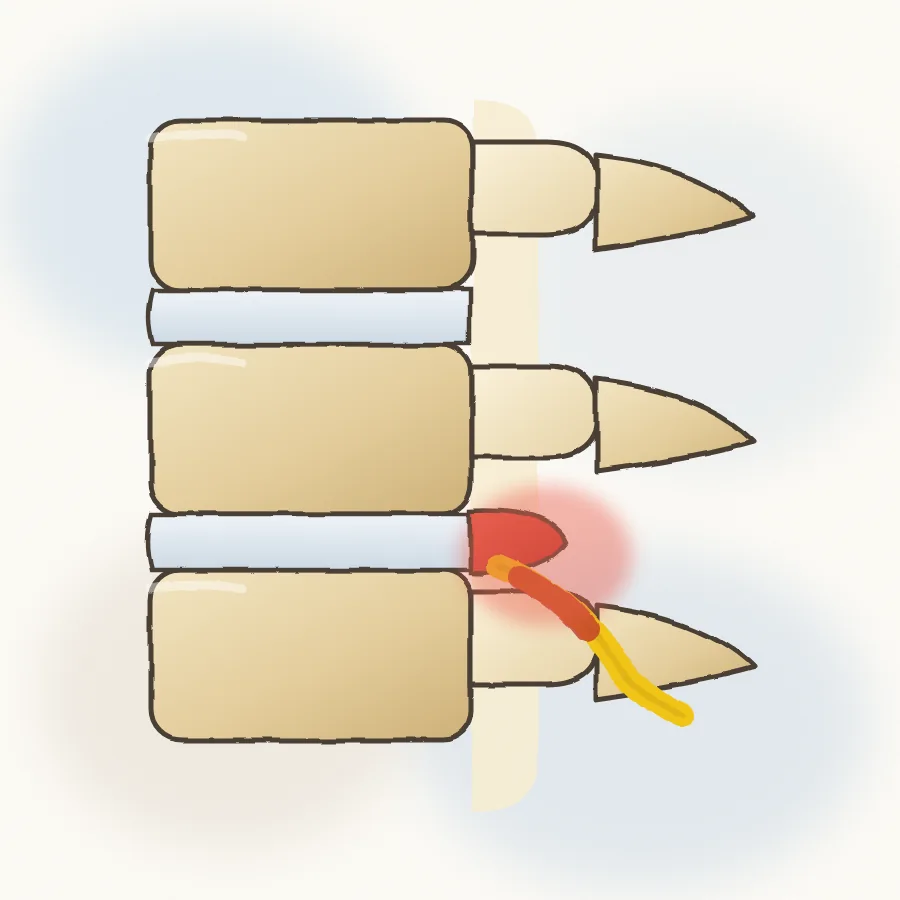
डिस्क खिसकना और साइटिका
पैर में उतरता तेज़ दर्द, झुनझुनी और सुन्नपन। ज़्यादातर बिना सर्जरी ठीक होते हैं; दर्द बना रहे या कमज़ोरी आए तो माइक्रोडिस्केक्टॉमी। स्लिप डिस्क पर और जानें।
लंबर कैनाल स्टेनोसिस
बुज़ुर्ग मरीज़ जो बैठकर और साइकिल चलाकर आराम में रहते हैं पर कुछ सौ मीटर चलने के बाद रुककर आगे झुकना पड़ता है। डीकंप्रेशन से चलने की दूरी लौट आती है।
स्पॉन्डिलोलिस्थीसिस
एक कशेरुका का दूसरी पर आगे खिसकना, कमर दर्द के साथ पैर के लक्षण। अस्थिर होने पर फ्यूजन और स्क्रू से स्थिर किया जाता है।
गर्दन की रीढ़ की बीमारी
गर्दन दर्द के साथ हाथ में उतरता दर्द, और मायलोपैथी में हाथों का बेढंगा होना या चाल लड़खड़ाना। गर्दन दर्द पर और जानें।
स्कोलियोसिस और कुबड़ापन
बच्चों और किशोरों में रीढ़ का टेढ़ापन — समय-समय पर एक्स-रे से निगरानी, बढ़ते मध्यम टेढ़ेपन में ब्रेस, और ज़्यादा टेढ़ेपन में सर्जरी। स्कोलियोसिस पर और जानें।
रीढ़ की टीबी और संक्रमण
भारत में अब भी आम। रात का दर्द, बुखार, वज़न घटना और कभी कमज़ोरी। ज़्यादातर मामले लंबी दवा से ठीक होते हैं; सर्जरी अस्थिरता, विकृति या नस के नुकसान में। रीढ़ की टीबी पर और जानें।
ऑस्टियोपोरोसिस से रीढ़ का फ्रैक्चर
बुज़ुर्गों में हल्की चोट या छींक से भी कशेरुका दब जाना और अचानक तेज़ कमर दर्द। ब्रेस, दर्द नियंत्रण और ऑस्टियोपोरोसिस के इलाज से प्रबंधन।
रीढ़ की चोट
ऊँचाई से गिरने या सड़क दुर्घटना के बाद फ्रैक्चर। स्थिर फ्रैक्चर में ब्रेस; अस्थिर या नस की चोट वाले में फिक्सेशन।
Spine conditions treated
Disc prolapse & sciatica
Shooting pain down the leg, tingling and numbness. Most settle without surgery; microdiscectomy is offered when pain persists or weakness develops. More on slip disc.
Lumbar canal stenosis
Older patients who can sit and cycle comfortably but must stop and bend forward after walking a few hundred metres. Decompression restores walking distance.
Spondylolisthesis
One vertebra slipping forward on another, causing back pain with leg symptoms. Stabilised with fusion and instrumentation when unstable.
Cervical spine disease
Neck pain with arm radiation, and myelopathy causing clumsy hands or an unsteady walk. More on neck pain.
Scoliosis & kyphosis
Spinal curvature in children and adolescents, monitored with serial X-rays, braced when the curve is moderate and growing, and corrected surgically when it is severe. More on scoliosis.
Spinal TB & infection
Still common in India. Presents with night pain, fever, weight loss and sometimes weakness. Most cases respond to prolonged medication; surgery is for instability, deformity or neurological deficit. More on spinal TB.
Osteoporotic spine fracture
A vertebra collapsing after a trivial fall or even a sneeze in an elderly patient, causing sudden severe back pain. Treated with bracing, pain control and osteoporosis therapy.
Spinal trauma
Fractures after a fall from height or a road accident. Stable fractures are braced; unstable ones and those with nerve injury need fixation.
रीढ़ की सर्जरी और रिकवरी
| सर्जरी | किसके लिए | भर्ती और रिकवरी |
|---|---|---|
| माइक्रोडिस्केक्टॉमी | डिस्क खिसकने से साइटिका या कमज़ोरी | 1–2 दिन; उसी या अगले दिन चलना; 2–3 हफ़्ते में ऑफिस का काम |
| लंबर डीकंप्रेशन (लैमिनेक्टॉमी) | कैनाल स्टेनोसिस से चलने की दूरी घटना | 2–3 दिन; चलने की दूरी तुरंत बढ़ती है |
| पेडिकल स्क्रू से फ्यूजन | अस्थिरता, कशेरुका खिसकना, विकृति, ट्यूमर या टीबी | 3–5 दिन; 6–12 हफ़्ते ब्रेस |
| विकृति सुधार | बढ़ता स्कोलियोसिस या कुबड़ापन | 5–7 दिन; 4–8 हफ़्ते में स्कूल या काम |
| गर्दन की डिस्केक्टॉमी और फ्यूजन | गर्दन की डिस्क से हाथ का दर्द या मायलोपैथी | 2–3 दिन; कुछ हफ़्ते सॉफ्ट कॉलर |
रीढ़ की किसी भी सर्जरी के लिए हाँ कहने से पहले ये चार सवाल पूछें
- ठीक किस जगह का दबाव हटाया या जोड़ा जा रहा है, और क्यों? जवाब में एक तय स्तर का नाम होना चाहिए जो आपके लक्षणों से मेल खाए।
- अगर मैं इंतज़ार करूँ तो क्या होगा? ज़्यादातर डिस्क की समस्याओं में इंतज़ार सुरक्षित है। बढ़ती कमज़ोरी या पेशाब पर असर में नहीं।
- सर्जरी किस चीज़ को ठीक नहीं करेगी? दबी नस से हुआ पैर का दर्द बहुत बेहतर ठीक होता है, बरसों पुराना फैला हुआ कमर दर्द नहीं।
- पुनर्वास की योजना क्या है? सर्जरी के बाद कोर मज़बूत करना ऑपरेशन जितना ही ज़रूरी है।
Spine procedures and what recovery looks like
| Procedure | Done for | Hospital stay & recovery |
|---|---|---|
| Microdiscectomy | Disc prolapse with sciatica or weakness | 1–2 days; walking the same or next day; desk work in 2–3 weeks |
| Lumbar decompression (laminectomy) | Canal stenosis with reduced walking distance | 2–3 days; walking distance improves immediately |
| Fusion with pedicle screws | Instability, spondylolisthesis, deformity, tumour or TB | 3–5 days; brace for 6–12 weeks |
| Deformity correction | Progressive scoliosis or kyphosis | 5–7 days; school or work in 4–8 weeks |
| Cervical discectomy and fusion | Cervical disc disease with arm pain or myelopathy | 2–3 days; soft collar for a few weeks |
Before you agree to any spine operation, ask these four questions
- What exactly is being decompressed or fused, and why? The answer should name a specific level and match your symptoms.
- What happens if I wait? For most disc problems, waiting is safe. For progressive weakness or bladder involvement, it is not.
- What will surgery not fix? Leg pain from a compressed nerve responds far better than long-standing generalised back pain.
- What is the rehabilitation plan? Core strengthening after surgery is as important as the operation itself.
सर्जरी से पहले क्या-क्या किया जाता है
- गतिविधि में बदलाव, बिस्तर पर आराम नहीं। दो दिन से ज़्यादा लेटे रहने से कमर दर्द बढ़ता है, घटता नहीं।
- तय समय के लिए दवा — सूजन कम करने वाली दवा, नस के दर्द की दवा और ज़रूरत पर मांसपेशी ढीली करने वाली दवा।
- व्यवस्थित फिजियोथेरेपी — कोर और कमर की मांसपेशियाँ मज़बूत करना, हैमस्ट्रिंग खींचना, मुद्रा सुधारना। लंबे समय में यही सबसे असरदार इलाज है।
- बैठने-उठने का सुधार — कुर्सी की ऊँचाई, स्क्रीन का स्तर, गाड़ी चलाने की मुद्रा और वज़न उठाने का तरीका। ऑफिस में काम करने वालों का बार-बार होने वाला कमर दर्द अक्सर कुर्सी की समस्या है, डिस्क की नहीं।
- वज़न कम करना और विटामिन डी की कमी दूर करना — दोनों से दोबारा दर्द होने की आशंका घटती है।
- चुनिंदा इंजेक्शन — एपिड्यूरल या रूट ब्लॉक से तेज़ साइटिका में राहत मिलती है और कई मरीज़ों में ऑपरेशन टल जाता है।
हर हिस्से की विस्तृत जानकारी कमर दर्द, गर्दन दर्द, स्लिप डिस्क, सेक्रोइलाइटिस और टेलबोन दर्द वाले पेजों पर दी गई है।
What is tried before surgery
- Activity modification, not bed rest. More than two days in bed makes back pain worse, not better.
- Medication for a defined period — anti-inflammatories, nerve pain medication and muscle relaxants where appropriate.
- Structured physiotherapy — core and back extensor strengthening, hamstring stretching, and posture correction. This is the single most effective long-term treatment.
- Ergonomic correction — chair height, screen level, driving posture, and how you lift. Most recurrent back pain in office workers is a chair problem, not a disc problem.
- Weight reduction and vitamin D correction, both of which measurably reduce recurrence.
- Selective injections — an epidural or root block can relieve severe sciatica and, in many patients, avoid an operation altogether.
Detailed self-care guidance for each region is on the back pain, neck pain, slip disc, sacroiliitis and tailbone pain pages.
अक्सर पूछे जाने वाले प्रश्न
Frequently Asked Questions
Does a slip disc always need surgery?
Is spine surgery risky? Can it cause paralysis?
Will I be able to bend and work normally after spine surgery?
What is lumbar canal stenosis?
Can spinal TB be cured without surgery?
Who is the right doctor for back pain in Indore?
किसी ने रीढ़ की सर्जरी बताई है? पहले दूसरी राय लीजिए
अपनी MRI फिल्में और पुराने पर्चे लेकर गोयल नगर या साईनाथ कॉलोनी, इंदौर के क्लिनिक पर आइए। आपको साफ़ बताया जाएगा कि सर्जरी ज़रूरी है या नहीं।
Told you need a spine operation? Get a second opinion first
Bring your MRI films and previous prescriptions to the clinic in Goyal Nagar or Sainath Colony, Indore. You will be told plainly whether your back needs surgery — or whether it does not.