 Dr. Gaurav Jain
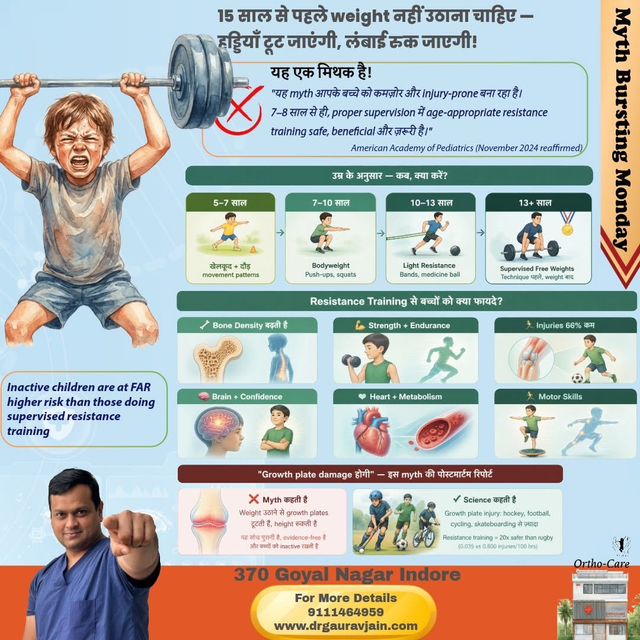
🏋️ बच्चों में Resistance Training: "15 से पहले weight उठाना खतरनाक है?"
भूमिका: एक चिंतित माँ का सवाल
यह सवाल मुझे अपने clinic में, sports events में और social media पर बार-बार मिलता है।
और मेरा जवाब हमेशा यही होता है: "यह डर पुराना है। विज्ञान अब कुछ और कहता है।"
आज हम इस harmful myth को science की रोशनी में एक बार के लिए खत्म करते हैं।
MYTH vs FACT: सीधे मुद्दे पर आते हैं
"15 साल से पहले weight उठाना खतरनाक है। Growth plates टूट जाएंगी, height रुक जाएगी।"
Properly supervised resistance training 7-8 साल की उम्र से ही safe और beneficial है। यह हड्डियाँ मज़बूत करती है, injuries कम करती है, और growth पर कोई नकारात्मक प्रभाव नहीं डालती।
दुनिया के शीर्ष चिकित्सा संस्थानों का सर्वसहमति
यह कोई "एक researcher की राय" नहीं है। सभी बड़े संस्थान एकमत हैं:
American Academy of Pediatrics (AAP)
Resistance training से muscular strength के अलावा — cardiovascular fitness, body composition, bone mineral density, blood lipid profiles, insulin sensitivity, injury resistance और mental health में सुधार होता है।
American College of Sports Medicine (ACSM) — 2025
कोई भी scientific evidence यह नहीं दर्शाती कि well-designed youth resistance training program बच्चों की growth रोकती है या उनके developing skeleton को नुकसान पहुँचाती है।
National Strength and Conditioning Association (NSCA)
Youth resistance training — when properly supervised and age-appropriate — is both safe and effective.
ScienceDirect, Sleep Medicine (December 2025)
Resistance training in youth is a safe and effective way to improve strength, coordination, endurance, and ability to participate in sports.
Growth Plate Myth — विस्तार से समझते हैं
यह Myth कहाँ से आया?
Logic तो simple लगता है:
- बच्चे की हड्डियाँ बढ़ रही हैं ✓
- Growth plates soft हैं ✓
- Weight pressure डालती है ✓
- "तो obvious है कि नुकसान होगा!" ✗
लेकिन जब scientists ने 20+ साल की research की — सब गलत निकला।
Growth Plates असल में क्या हैं?
Growth plates (Epiphyseal plates) हड्डियों के सिरों पर cartilage के regions हैं जहाँ हड्डियाँ बढ़ती हैं। ये puberty के बाद bony tissue में convert हो जाती हैं।
हाँ, growth plate injury संभव है — लेकिन कहाँ से?
Growth plate injuries rare हैं और primarily unsupervised settings या excessive loads से होती हैं — controlled resistance training से नहीं। No well-controlled prospective study ने supervised training programs में growth cartilage को damage होते हुए document नहीं किया है।
Sports में Injury Risk: Gym vs Others
| Activity | Injury Risk |
|---|---|
| 🏒 Ice Hockey | HIGH |
| 🏈 Football / Cricket | HIGH |
| 🛹 Skateboarding | HIGH |
| 🏀 Basketball (jumping) | MODERATE |
| 🏊 Swimming | LOW |
| 🏋️ Supervised Resistance Training | VERY LOW ✅ |
Counter-intuitive Truth:
अगर आप बच्चे को gym से दूर रखते हैं लेकिन cricket खेलने देते हैं — तो आप उसे gym से MUCH ज़्यादा injury-prone activity में डाल रहे हैं!
Resistance training–related injuries बहुत rare हैं। Proper training और supervision से risk और भी कम हो सकता है।
Pre-pubescent बच्चों में Strength कहाँ से आती है?
⚠️ बच्चे "bulk up" नहीं होते resistance training से
क्यों? Bulk बनाने के लिए testosterone चाहिए — जो puberty से पहले negligible होता है।
तो फिर Strength gains कहाँ से?
- ✅Neuromuscular Adaptation — brain और muscles का बेहतर coordination
- ✅Motor Skill Development — proper movement patterns सीखना
- ✅Connective Tissue Strengthening — tendons और ligaments मज़बूत होना
Result: बच्चा stronger बनता है — बिना "muscular" दिखे। यह perfect है!
Bone Health Science: Wolff's Law
यह एक Pediatric Orthopaedic Surgeon के लिए सबसे महत्वपूर्ण point है।
"Mechanical stress → Stronger bones"
Controlled loading हड्डियों को adapt करने के लिए signal देती है।
क्या Research दिखाता है?
- ✅Bone Mineral Density (BMD) बढ़ती है — spine, hip, total body में
- ✅Bone Strength Index बढ़ता है — fracture resistance बेहतर होती है
- ✅Peak Bone Mass higher होता है — जो 25-30 साल तक accumulate होती है
🔑 Lifelong Protection:
Loading the skeleton during childhood and adolescence is associated with higher peak bone mass, which is the single best protection against osteoporosis in later life.
यानी: बचपन में built bone = 40-50 साल का osteoporosis protection
सबसे बड़ा फायदा: 66% तक कम Sports Injuries
बच्चे जो Resistance Training करते हैं...
उन्हें अन्य sports में 66% तक कम injuries होती हैं।
Strength and neuromuscular training is among the most effective tools available for reducing sports injuries in young athletes, including knee and ACL injuries.
क्यों यह काम करता है?
- Muscles पूरी range में strengthen होती हैं
- Tendons/ligaments load adaptation करते हैं
- Proprioception (body awareness) बेहतर होती है
- Injury-prone movement patterns सुधरते हैं
Resistance Training के सभी Benefits — एक नज़र में
| Benefit | Evidence |
|---|---|
| 💪 Strength + Power | 30-50% gains in 3 months |
| 🦴 Bone Density | Significantly higher |
| 🛡️ Injury Prevention | 66% reduction |
| ❤️ Heart Health | BP, cholesterol improve |
| 📉 Body Composition | More muscle, less fat |
| 🩺 Metabolism | Better insulin sensitivity |
| 🧠 Brain Function | Focus, academics ↑ |
| 😊 Mental Health | Self-esteem, confidence ↑ |
| 🏃 Coordination | Balance, agility, posture |
उम्र के अनुसार Program Roadmap
Phase 1: 5–7 साल — Movement Foundation
लक्ष्य: Movement patterns सीखना, sports में interest
गतिविधियाँ: Unstructured play, swimming, cycling, gymnastics
Note: Formal resistance training की जरूरत नहीं
Phase 2: 7–10 साल — Bodyweight Basics
लक्ष्य: Fundamental movement patterns, body control
गतिविधियाँ: Push-ups, squats, jumping jacks, resistance bands, climbing
Golden Rules:
- Technique सीखना, weight नहीं
- 10-15 reps, 1-2 sets
- PE teacher या certified coach
Phase 3: 10–13 साल — Light Resistance Introduction
लक्ष्य: Proper form में resistance introduction
गतिविधियाँ: Light dumbbells, medicine ball, suspension training
Golden Rules:
- 10-15 reps आसानी से हों — तब weight बढ़ाएँ
- Never "max out"
Phase 4: 13+ साल — Structured Program
लक्ष्य: Progressive overload के साथ systematic training
गतिविधियाँ: Supervised free weights, compound movements, sport-specific training
Golden Rules:
- Certified coach essential
- Gradual progression — 10% per week max
Safe Youth Resistance Training के 5 Golden Rules
- Supervision ALWAYS — हर session में qualified adult
- Technique First, Weight Second — perfect form = weight बढ़ाने की condition
- Progressive Overload — 10% से ज़्यादा increase नहीं per week
- No Maximal Lifting — "1 rep max" कभी नहीं
- Rest and Recovery — 48 घंटे rest same muscle group के बीच
क्या बच्चे "Bulky" हो जाएंगे?
नहीं। Pre-puberty में testosterone negligible होता है।
Pre-pubescent बच्चों में strength gains primarily neural adaptations से होती हैं — marked muscular hypertrophy नहीं।
Summary:
- बच्चा stronger बनता है ✓
- बच्चा leaner बनता है ✓
- "Muscular" नहीं दिखता ✓
Indian Context: क्यों यह ज़रूरी है?
भारत में एक bone health crisis develop हो रहा है:
- ❌Screen time epidemic — कम outdoor activity
- ❌Academic pressure — खेल को "waste" माना जाता है
- ❌Organized sports कम — inadequate PE classes
- ❌Vitamin D deficiency — widespread epidemic
- ❌Myths prevalent — parents ही training को खतरनाक मानते हैं
Current Reality: Today's youth are weaker and slower than previous generations. It is high time to incorporate strength-building exercises into youth fitness programs.
माता-पिता के लिए Practical Action Plan
🏠 घर पर (7–10 साल):
- Morning में 10-15 मिनट — squats, push-ups, jumping jacks
- Music लगाओ, family activity बनाओ
- YouTube पर "kids bodyweight workout"
- No equipment needed!
⚽ School / Sports:
- PE class को seriously लें
- Cricket, football, swimming — सब osteogenic activities हैं
- Coach की advice follow करें
🏋️ Gym (12+ साल, supervised):
- Certified youth trainer से consultation
- First 2-4 weeks: bodyweight + form
- Gradual weight introduction
Red Flags — ये कभी न करने दें
| यह करें | ✓ |
|---|---|
| Maximal lifting (1 rep max) | ❌ Never |
| Olympic-style lifts (unsupervised) | ❌ Never |
| Training through pain | ❌ Never |
| Unsupervised training | ❌ Never |
| Anabolic steroids | ❌ Absolutely forbidden |
| Excessive volume | ❌ Never |
Nutrition — Training के साथ Essential
Training के साथ ये ज़रूरी है:
- ✅Protein: 1-1.4g/kg body weight per day
- ✅Calcium + Vitamin D: हड्डियों के लिए
- ✅Hydration: Training से पहले, दौरान, बाद में
- ✅Real Food: protein powder की जरूरत नहीं
निष्कर्ष: Inactivity है असली दुश्मन
Supervised resistance training — safe, evidence-based, और आपके बच्चे के लिए एक magnificent gift है।
"Supervised training stunts nothing. Inactivity stunts everything."
अपने बच्चे को gym से मत डराइए। उसे supervised, age-appropriate activity की best gift दीजिए।
📚 References
- American Academy of Pediatrics — Resistance Training for Children and Adolescents (Reaffirmed 2024)
- ScienceDirect / Sleep Medicine — Practical Guide to Strength/Resistance Training in Pediatrics Ages 7-18 Years (December 2025)
- American College of Sports Medicine (ACSM) — Mythbusting: Youth Resistance Training (February 2025)
- National Academy of Sports Medicine (NASM) — Youth Resistance Training for Long-Term Health (Evidence-Based Review)
- Sports Medicine (Springer Nature) — The Era of Resistance Training as Primary Form of Physical Activity for Health in Youth (May 2025)
- Translational Pediatrics — Resistance training for children and adolescents (Myers et al., 2017)
- PMC — Bone Mineral Density in Competitive Athletes; Effects of Resistance Training Experience on BMD and Stress Fractures (2025)
- NASM Youth Resistance Training — An Evidence-Based Review
Director, GDP Care
Pediatric Orthopaedics & Clubfoot Specialist (Ponseti Technique)