Best Cavus Foot (High Arch) Treatment in Indore (पैर का ऊँचा आर्च)
Cavus Foot (High Arches)
ऊँचा arch, बाहरी किनारे पर दर्द, बार-बार मोच | बच्चों में इसकी वजह अक्सर नसों में होती है | Indore
A high arch, outer-border pain and repeated sprains | In children the cause often lies in the nerves | Indore
Cavus Foot क्या है?
What is Cavus Foot?
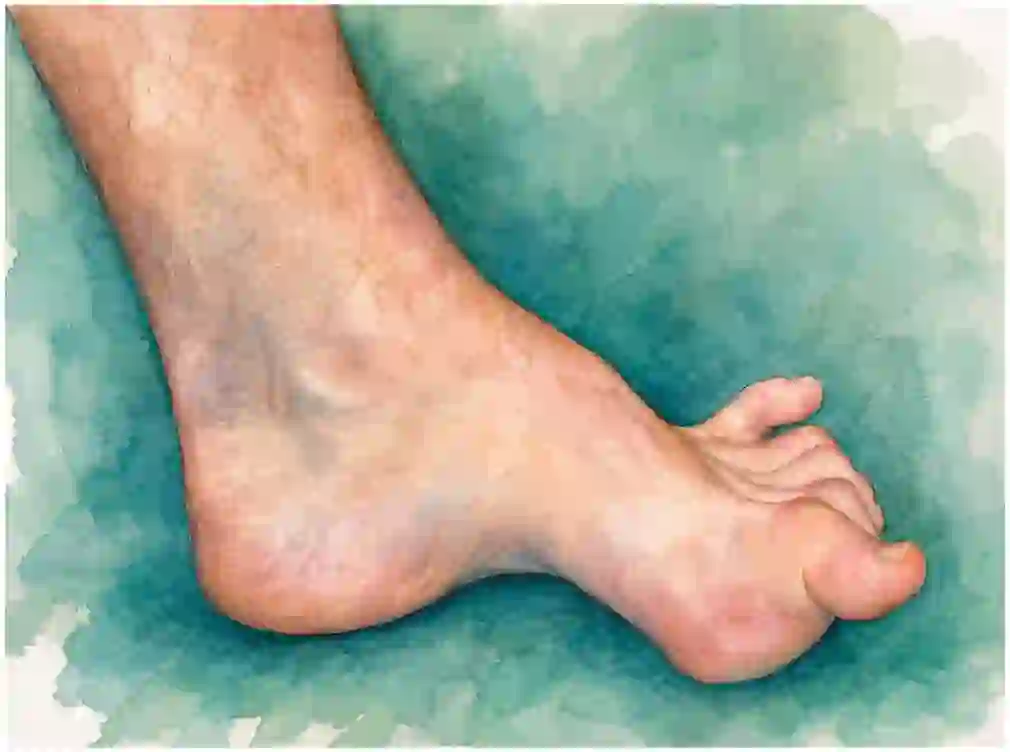
Cavus foot (pes cavus) में पैर का arch सामान्य से बहुत ऊँचा रहता है — खड़े होने पर भी वह चपटा नहीं होता। नतीजा यह कि शरीर का पूरा वज़न सिर्फ़ एड़ी और पंजे के अगले हिस्से पर पड़ता है, बीच का हिस्सा ज़मीन को छूता ही नहीं।
In cavus foot (pes cavus) the arch is abnormally high and stays high even when standing. The body's weight lands on the heel and the ball of the foot alone, while the middle of the foot never reaches the ground.
🎯 सबसे ज़रूरी बात🎯 The single most important point
बच्चों में ऊँचा arch सिर्फ़ पैर की बनावट का मामला नहीं होता। जब तक साबित न हो जाए, cavus foot को नस या रीढ़ की किसी स्थिति का संकेत माना जाता है — ख़ासकर अगर यह बढ़ रहा हो या सिर्फ़ एक पैर में हो। इसीलिए जाँच पैर से शुरू होकर रीढ़ और नसों तक जाती है।In a child, a high arch is not simply a foot shape. A cavus foot is treated as a neurological finding until proved otherwise — especially when it is progressing, or present on one side only. That is why the examination runs from the foot up to the spine.
कारण — पैर से ऊपर की ओर देखना
The Causes - Looking Up from the Foot
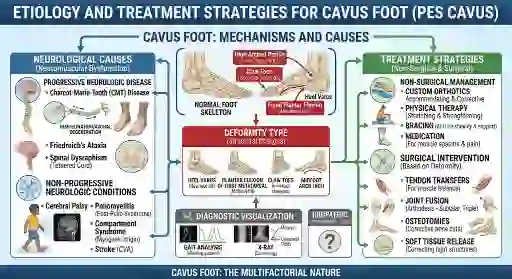
लगभग दो-तिहाई मामलों में कोई न कोई नस या रीढ़ से जुड़ा कारण मिलता है। सबसे आम है Charcot-Marie-Tooth (CMT) — एक आनुवंशिक नस की बीमारी। कारण पहचान लेना इलाज की दिशा बदल देता है, क्योंकि बढ़ती हुई बीमारी में पैर भी बढ़ता ही जाता है।
A cause in the nerves or spine is found in a large share of children, the commonest being Charcot-Marie-Tooth disease, an inherited neuropathy. Finding the cause changes the plan, because a progressive disease means a progressive foot.
Charcot-Marie-Tooth (CMT)Charcot-Marie-Tooth disease
सबसे आम कारण। परिवार में किसी और के पैर का ऊँचा arch, पिंडली का पतलापन या चलने में तकलीफ़ — ये संकेत ज़रूर पूछे जाते हैं।The commonest cause by far. A parent with high arches, thin calves or trouble walking is a clue worth asking about every time.
रीढ़ की स्थितियाँSpinal causes
Tethered cord, spinal dysraphism, syrinx — इनमें अक्सर एक ही पैर प्रभावित होता है, और पीठ के निचले हिस्से पर बालों का गुच्छा या गड्ढा मिल सकता है।Tethered cord, spinal dysraphism and syrinx often affect one foot only, and may leave a dimple or tuft of hair over the lower back.
स्थिर (non-progressive) स्थितियाँNon-progressive conditions
Cerebral palsy, polio के बाद की स्थिति, या compartment syndrome के बाद मांसपेशियों का असंतुलन।Cerebral palsy, the sequelae of polio, or muscle imbalance following a compartment syndrome.
Friedreich's ataxia और अन्यFriedreich's ataxia and others
चाल में लड़खड़ाहट के साथ ऊँचा arch मिले तो इस दिशा में भी जाँच की जाती है।A high arch alongside an unsteady gait points the assessment in this direction.
Idiopathic (कारण अज्ञात)Idiopathic
कुछ बच्चों में पूरी जाँच के बाद भी कोई कारण नहीं मिलता। ऐसे पैर आमतौर पर स्थिर रहते हैं और दोनों तरफ़ एक जैसे होते हैं।In some children no cause is found despite a full work-up. These feet are usually stable and symmetrical.
चोट के बादAfter injury
पिंडली की गंभीर चोट या compartment syndrome के बाद मांसपेशियाँ सिकुड़ जाएँ तो arch ऊँचा हो सकता है।Scarring of the calf muscles after severe injury or a compartment syndrome can pull the arch up.
लक्षण
Symptoms
- पैर के बाहरी किनारे में दर्द — वज़न वहीं ज़्यादा पड़ता है
- बार-बार टखने की मोच, क्योंकि एड़ी अंदर की ओर झुकी होती है
- अँगूठे और छोटी उँगली के नीचे कड़ी खाल (callus)
- उँगलियों का मुड़ जाना (claw toes) और जूते में रगड़ना
- जूते का बाहरी किनारा जल्दी घिसना
- असमान ज़मीन पर लड़खड़ाना और खड़े रहने में थकान
- पिंडली का पतला होना या पैर में कमज़ोरी — यह नस की जाँच का संकेत है
- जूते ठीक से न आना, ख़ासकर ऊँचे arch के कारण ऊपर से दबाव
- Pain along the outer border of the foot, where the weight is falling
- Repeated ankle sprains, because the heel sits turned inwards
- Hard callus under the big toe and little toe joints
- Clawing of the toes, rubbing inside the shoe
- Shoes wearing out along the outer edge
- Unsteadiness on uneven ground and tiring on standing
- Thin calves or weakness in the foot — a prompt for neurological assessment
- Difficulty fitting shoes, with pressure over the high instep
जाँच — पैर, रीढ़ और नसें
Assessment - the Foot, the Spine and the Nerves
🔑 Coleman block test — सबसे अहम जाँच🔑 The Coleman block test - the key examination
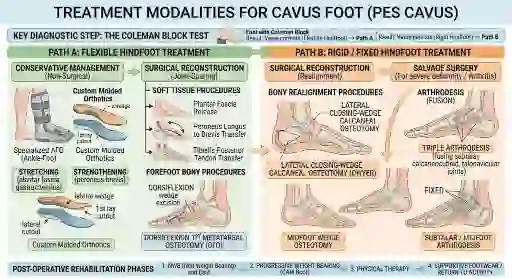
बच्चे को लकड़ी के एक block पर इस तरह खड़ा किया जाता है कि अँगूठे वाला हिस्सा नीचे लटका रहे। अगर एड़ी अपने आप सीधी हो जाए तो पिछला पैर लचीला है — और इलाज नरम रास्ते से हो सकता है। अगर एड़ी टेढ़ी ही रहे तो वह अकड़ा (rigid) है, और operation की योजना अलग बनती है। इसी एक जाँच पर इलाज का पूरा रास्ता टिका होता है।The child stands on a wooden block with the first ray hanging free. If the heel straightens on its own, the hindfoot is flexible and gentler treatment can work. If it stays turned in, the hindfoot is rigid and the surgical plan is different. Almost everything downstream follows from this one test.
- पूरी नस-सम्बन्धी जाँच — ताक़त, संवेदना, reflexes, और चाल का अवलोकन
- पीठ की जाँच — बालों का गुच्छा, गड्ढा या निशान, जो रीढ़ की छिपी स्थिति की ओर इशारा करते हैं
- माता-पिता के पैरों की जाँच — CMT अक्सर परिवार में चलती है और यहीं पकड़ में आ जाती है
- खड़े होकर X-ray — arch का कोण (Meary's angle) और एड़ी की स्थिति नापने के लिए
- रीढ़ की MRI — एक तरफ़ का cavus, तेज़ी से बढ़ता deformity, या नस की जाँच में गड़बड़ी होने पर
- Nerve conduction / EMG और आनुवंशिक जाँच — CMT जैसी neuropathy की पुष्टि के लिए
- चाल का विश्लेषण (gait analysis) — जटिल मामलों में operation की योजना बनाने के लिए
- A full neurological examination — power, sensation, reflexes and the walk itself
- Examination of the back — a hairy patch, dimple or scar that hints at a hidden spinal cause
- Looking at the parents' feet — CMT runs in families and is often caught right here
- Standing X-rays — to measure Meary's angle and the position of the heel
- MRI of the spine — for a one-sided cavus, a rapidly progressing deformity, or abnormal neurology
- Nerve conduction studies, EMG and genetic testing — to confirm a neuropathy such as CMT
- Gait analysis — for planning surgery in the more complex feet
इलाज
Treatment
इलाज तीन बातों पर निर्भर करता है: कारण क्या है, पिछला पैर लचीला है या अकड़ा हुआ, और तकलीफ़ कितनी है। बढ़ती हुई नस की बीमारी में योजना आगे के बदलाव को ध्यान में रखकर बनाई जाती है।
Treatment turns on three things: what is causing it, whether the hindfoot is flexible or rigid, and how much trouble it gives. Where the underlying disease is progressive, the plan is made with the next few years in mind.
Orthotics और जूतेOrthotics and footwear
बाहरी किनारे पर wedge वाला custom insole वज़न को अंदर की ओर लाता है; चौड़े, गहरे जूते claw toes को जगह देते हैं।A custom insole with a lateral wedge shifts the load inwards; wide, deep shoes give clawed toes room.
PhysiotherapyPhysiotherapy
Calf और plantar fascia की stretching, टखने के आसपास की मांसपेशियों की मज़बूती, और संतुलन का अभ्यास।Calf and plantar fascia stretching, strengthening around the ankle, and balance work.
Bracing (AFO)Bracing
पैर गिरने (foot drop) या कमज़ोरी हो तो AFO चाल को स्थिर करता है — ख़ासकर नस की बीमारी वाले बच्चों में।Where there is weakness or a drop foot, an AFO steadies the gait - especially in the neuropathic feet.
Soft tissue surgerySoft tissue surgery
Plantar fascia का release, और मांसपेशियों का संतुलन ठीक करने के लिए tendon transfer — लचीले पिछले पैर में यही आधार है।Plantar fascia release and tendon transfers to rebalance the muscles - the mainstay when the hindfoot is flexible.
Bony realignmentBony realignment
अँगूठे वाली हड्डी की dorsiflexion osteotomy और एड़ी की lateral closing wedge (Dwyer) osteotomy — हड्डी की दिशा बदलकर वज़न सही जगह लाना।A dorsiflexion osteotomy of the first metatarsal and a lateral closing wedge (Dwyer) osteotomy of the heel bring the weight back to where it belongs.
Arthrodesis (fusion)Arthrodesis
बहुत अकड़े या घिसे हुए जोड़ वाले पैर में, जहाँ बाक़ी विकल्प काम न करें — triple arthrodesis स्थिर, दर्द-रहित पैर देता है।For the rigid or already-worn foot where nothing else will hold, a triple arthrodesis gives a stable, pain-free platform.
Operation के बाद
After Surgery
घाव भरना
पैर plaster में और ऊँचा रखा जाता है। दर्द नियंत्रण और सूजन कम करना ही मुख्य काम।
बिना वज़न के
Osteotomy या fusion हुआ हो तो हड्डी जुड़ने तक वज़न नहीं। Crutches या wheelchair से school संभव है।
वज़न और physiotherapy
X-ray पर हड्डी जुड़ने के बाद धीरे-धीरे चलना, और movement तथा ताक़त लौटाने के लिए physiotherapy।
जूते और खेल
नए insole या जूते के साथ चलना, फिर धीरे-धीरे खेल। नस की बीमारी हो तो brace की ज़रूरत बनी रह सकती है।
लंबी निगरानी
CMT जैसी बढ़ती स्थितियों में deformity लौट सकती है, इसलिए growth पूरी होने तक और उसके बाद भी नज़र रखी जाती है।
Wound healing
The foot is in a cast and kept elevated; pain control and swelling are the whole job at this stage.
Off the foot
No weight while an osteotomy or fusion unites. School is manageable on crutches or in a wheelchair.
Weight-bearing and physiotherapy
Walking returns gradually once the X-ray shows union, with physiotherapy for movement and strength.
Shoes and sport
New insoles or shoes first, then a graded return to sport. Where there is a neuropathy, a brace may stay part of the picture.
Long-term follow-up
In a progressive condition such as CMT the deformity can return, so review continues through growth and beyond.
भ्रम बनाम सच्चाई
Myths vs Facts
"ऊँचा arch तो अच्छी बात है।"
हल्का ऊँचा arch सामान्य हो सकता है। पर दर्द देने वाला, बढ़ता हुआ या एक तरफ़ का ऊँचा arch जाँच माँगता है — अक्सर उसके पीछे नस या रीढ़ का कारण होता है।
"बार-बार मोच आना बस लापरवाही है।"
Cavus foot में एड़ी अंदर की ओर झुकी होती है, जिससे टखना बार-बार मुड़ता है। यह बनावट की समस्या है, ध्यान की नहीं।
"Insole से पैर की बनावट बदल जाएगी।"
Insole दबाव बाँटता है और दर्द घटाता है — यह बहुत क़ीमती है। पर वह हड्डी की दिशा नहीं बदलता; बिगड़ते deformity के लिए operation ही रास्ता है।
"एक बार operation हो गया तो बात ख़त्म।"
Idiopathic cavus में अक्सर हाँ। पर CMT जैसी बढ़ती नस की बीमारी में deformity लौट सकती है — इसलिए follow-up चलता रहता है।
"A high arch is a good thing."
A slightly high arch can be perfectly normal. One that hurts, that is increasing, or that affects one foot only needs investigating - the cause is often in the nerves or the spine.
"The sprains are just carelessness."
In a cavus foot the heel sits turned inwards, so the ankle rolls again and again. That is anatomy, not inattention.
"Insoles will reshape the foot."
Insoles redistribute pressure and relieve pain, which is worth a great deal. They do not change the bones; a worsening deformity needs surgery.
"One operation and it is finished."
Often true in an idiopathic foot. In a progressive neuropathy such as CMT the deformity can come back, which is why review continues.
Indore में जाँच — क्या साथ लाएँ
Getting Checked in Indore - What to Bring
Cavus foot में सही इलाज तभी बनता है जब कारण साफ़ हो। Dr. Gaurav Jain (MBBS, D.Ortho, DNB Orthopaedics, MNAMS; बच्चों की हड्डी रोग और स्पाइन सर्जरी में फेलोशिप) Indore में बच्चों के पैर की विकृतियों का इलाज करते हैं — soft tissue संतुलन, osteotomy और ज़रूरत पड़ने पर fusion सहित, और नस से जुड़ी स्थितियों में neurologist के साथ मिलकर।
The right operation for a cavus foot only takes shape once the cause is clear. Dr. Gaurav Jain (MBBS, D.Ortho, DNB Orthopaedics, MNAMS; fellowship-trained in pediatric orthopedics and spine surgery) treats children's foot deformity in Indore - soft tissue rebalancing, osteotomy and fusion where needed - working alongside a neurologist when the cause lies in the nerves.
- घिसे हुए जूते — तलवे का घिसाव सबसे ईमानदार गवाह है
- पुराने insole या brace, और उनसे कितना फ़र्क़ पड़ा
- परिवार की जानकारी — माता-पिता या भाई-बहन के पैर का ऊँचा arch, पतली पिंडली या चलने में तकलीफ़
- पीठ या नस की कोई पुरानी रिपोर्ट, MRI या nerve conduction की जाँच
- चलते और दौड़ते हुए का video — नंगे पैर, सामने और पीछे दोनों से
- The worn shoes — the sole is the most honest witness you can bring
- Any insoles or braces already used, and how much difference they made
- Family detail — high arches, thin calves or walking difficulty in a parent or sibling
- Any spinal or neurological reports, MRI or nerve conduction studies
- A video of walking and running, barefoot, from in front and behind
अक्सर पूछे जाने वाले सवाल
Frequently Asked Questions
Cavus foot क्या है? / What is cavus foot?
पैर का arch सामान्य से बहुत ऊँचा होना, जो खड़े होने पर भी चपटा नहीं होता। वज़न सिर्फ़ एड़ी और पंजे के अगले हिस्से पर पड़ता है, जिससे दर्द, callus और बार-बार मोच होती है।
A foot whose arch is abnormally high and does not flatten on standing. The weight falls on the heel and the ball of the foot alone, which brings pain, callus and repeated sprains.
क्या ऊँचा arch हमेशा किसी बीमारी का संकेत है? / Does a high arch always mean disease?
नहीं, पर बच्चों में इसे गंभीरता से लिया जाता है। दर्द देने वाला, बढ़ता हुआ या सिर्फ़ एक पैर का ऊँचा arch नस या रीढ़ की जाँच माँगता है — जब तक कुछ और साबित न हो।
Not always, but in a child it is taken seriously. A painful, progressing or one-sided high arch calls for the nerves and spine to be checked until something else explains it.
CMT क्या है? / What is CMT?
Charcot-Marie-Tooth एक आनुवंशिक नस की बीमारी है और बच्चों में cavus foot का सबसे आम पहचाना जाने वाला कारण। परिवार में ऊँचे arch, पतली पिंडली या चलने की तकलीफ़ इसका संकेत हो सकते हैं।
Charcot-Marie-Tooth is an inherited neuropathy and the commonest identified cause of cavus foot in children. High arches, thin calves or walking difficulty in the family are the clues.
रीढ़ की MRI क्यों करवाते हैं? / Why an MRI of the spine?
क्योंकि tethered cord या रीढ़ की कोई छिपी स्थिति भी cavus बना सकती है — ख़ासकर जब सिर्फ़ एक पैर प्रभावित हो या deformity तेज़ी से बढ़ रहा हो। कारण मिल जाए तो उसका अपना इलाज भी ज़रूरी होता है।
Because a tethered cord or other hidden spinal problem can produce a cavus foot, particularly when only one side is affected or the deformity is advancing quickly. If it is found, it needs treating in its own right.
Coleman block test क्या बताता है? / What does the Coleman block test show?
यह बताता है कि पिछला पैर लचीला है या अकड़ा हुआ। Block पर खड़े होने से एड़ी सीधी हो जाए तो लचीला — नरम इलाज संभव। न हो तो rigid, और तब हड्डी की osteotomy की योजना बनती है।
It shows whether the hindfoot is flexible or rigid. If the heel straightens when the child stands on the block, gentler treatment can work; if it does not, bony correction enters the plan.
क्या insole काफ़ी है? / Are insoles enough?
कई बच्चों में हाँ — बाहरी किनारे पर wedge वाला custom insole दर्द काफ़ी घटा देता है। पर insole हड्डी की दिशा नहीं बदलता, इसलिए बिगड़ते deformity में operation की ज़रूरत पड़ती है।
For many children, yes - a custom insole with a lateral wedge takes much of the pain away. But insoles do not change bone, so a worsening deformity still needs surgery.
Operation में क्या-क्या किया जाता है? / What does the surgery involve?
पैर के हिसाब से: plantar fascia का release, मांसपेशियों का संतुलन ठीक करने के लिए tendon transfer, अँगूठे वाली हड्डी और एड़ी की osteotomy, और बहुत अकड़े पैर में fusion। अक्सर इनमें से कई एक ही operation में।
It depends on the foot: plantar fascia release, tendon transfers to rebalance the muscles, osteotomy of the first metatarsal and the heel, and fusion for the rigid foot. Often several of these together.
Operation के बाद कितने दिन बिना वज़न के? / How long off the foot after surgery?
आमतौर पर 6 हफ़्ते तक, हड्डी जुड़ने तक। सिर्फ़ soft tissue का operation हो तो यह अवधि कम रहती है। इसके बाद physiotherapy से movement और ताक़त लौटाई जाती है।
Usually about six weeks, until the bone unites; less if only soft tissue was done. Physiotherapy then rebuilds movement and strength.
क्या deformity दोबारा आ सकता है? / Can the deformity come back?
बढ़ती हुई नस की बीमारी (जैसे CMT) में हाँ, क्योंकि मांसपेशियों का असंतुलन बना रहता है। Idiopathic cavus में सुधार आमतौर पर टिकाऊ होता है। इसीलिए कारण जानना ज़रूरी है।
In a progressive neuropathy such as CMT it can, because the muscle imbalance continues. In an idiopathic foot the correction usually holds. That is exactly why the cause matters.
बच्चा खेल पाएगा? / Will my child play sport?
ज़्यादातर बच्चे हाँ। दर्द कम होने और संतुलन सुधरने के बाद खेल संभव है; नस की बीमारी में brace के साथ भी बहुत कुछ किया जा सकता है।
Most children can. Once the pain settles and balance improves, sport is realistic - and with a brace, a great deal remains possible even with a neuropathy.
किस तरह के जूते सही रहते हैं? / What sort of shoes help?
चौड़े और गहरे जूते जिनमें उँगलियों को जगह मिले, अच्छी cushioning वाला तलवा, और custom insole। बहुत सख़्त या तंग जूते callus और दर्द बढ़ाते हैं।
Wide, deep shoes that give the toes room, a well-cushioned sole, and a custom insole. Tight or unyielding shoes make the callus and the pain worse.
किसे दिखाएँ? / Which specialist should we see?
बच्चों की हड्डी रोग विशेषज्ञ से शुरुआत करें; ज़रूरत पड़ने पर वे neurologist के साथ मिलकर काम करते हैं। Indore में Dr. Gaurav Jain (MBBS, D.Ortho, DNB Orthopaedics, MNAMS) इसका इलाज करते हैं।
Start with a pediatric orthopedic surgeon, who will involve a neurologist where needed. In Indore, Dr. Gaurav Jain (MBBS, D.Ortho, DNB Orthopaedics, MNAMS) treats this condition.
📞 ऊँचा arch और बार-बार मोच? Dr. Gaurav Jain से जाँच करवाएँ
📞 High arches and repeated sprains? See Dr. Gaurav Jain
Indore के Pediatric Orthopedic Surgeon | पैर की विकृति, tendon transfer और deformity correctionPediatric Orthopedic Surgeon in Indore | Foot deformity, tendon transfers and correction
📞 अभी Call करें 📞 Call Nowघिसे हुए जूते ज़रूर साथ लाएँ — तलवे का घिसाव बहुत कुछ बता देता है।Do bring the worn shoes - the wear on the sole tells us a great deal.