Best Limb Length Discrepancy Treatment in Indore
Limb Length Discrepancy – One Leg Shorter or Longer in Children
हल्का अंतर normal हो सकता है, लेकिन ज्यादा अंतर के लिए सही समय पर evaluation और planning ज़रूरी
Small differences can be normal, significant discrepancy needs proper evaluation and planned management
Limb Length Discrepancy क्या है? – Normal vs Problem
What is Limb Length Discrepancy? – Normal vs Significant
Limb Length Discrepancy (LLD) का मतलब है दोनों पैरों (कभी–कभी हाथों) की लंबाई में मापने योग्य अंतर, जिससे चाल, posture या symmetry पर असर पड़ने लगे।
सामान्य तथ्य
• बहुत हल्का अंतर कई healthy लोगों में भी पाया जाता है और clinically महत्वपूर्ण नहीं होता।
• बड़ा या बढ़ता हुआ LLD pelvic tilt, scoliosis, pain और gait disturbance का कारण बन सकता है।
• planning वर्तमान अंतर नहीं, बल्कि bone growth खत्म होने पर अनुमानित अंतर के आधार पर होती है।
मुख्य कारण
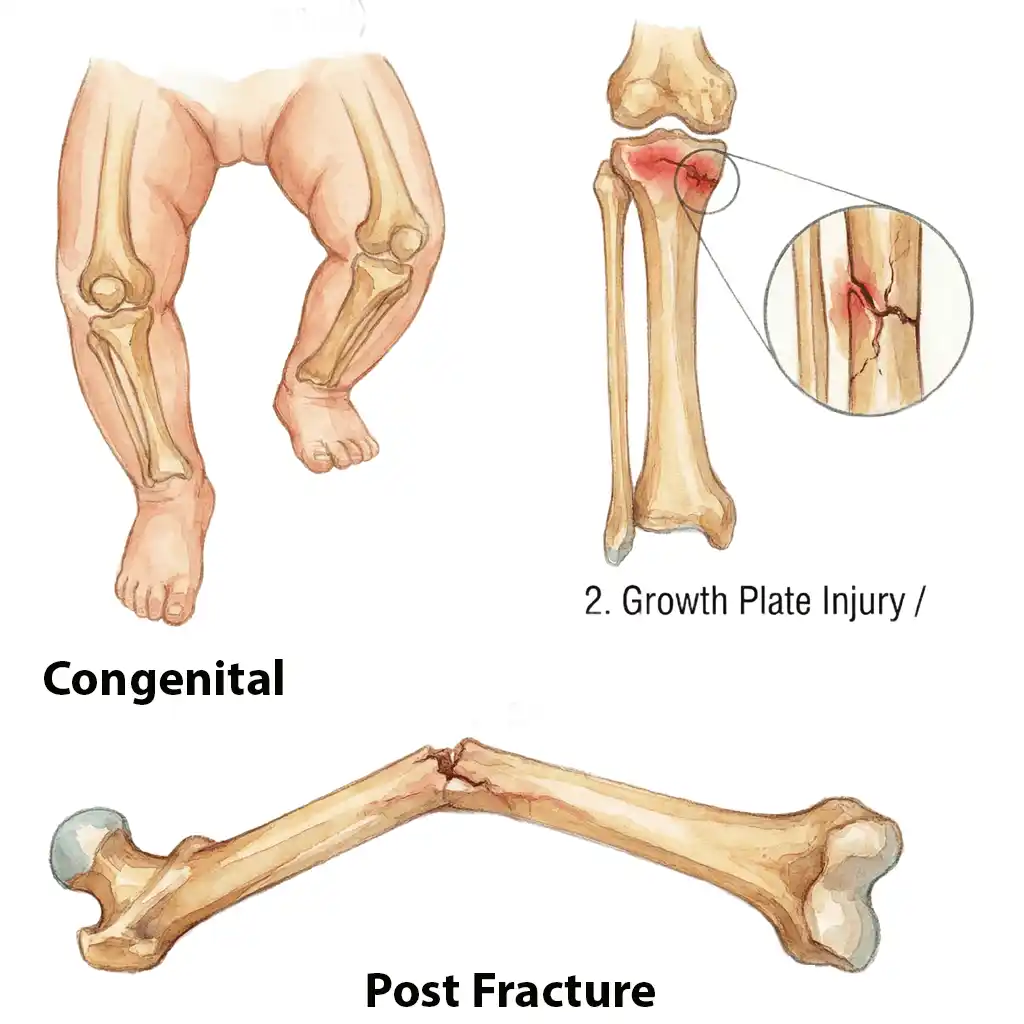
1. जन्मजात (Congenital) अंतर
• fibular hemimelia, femoral deficiency, congenital short femur आदि।
• अंतर शुरू से मौजूद और अक्सर धीरे–धीरे बढ़ता है।
• कई बार limb deformity के साथ जुड़ा होता है।
2. Growth Plate Injury / Infection
• fracture, infection, tumor या surgery से growth plate का हिस्सा damage हो जाए — इससे बनने वाले physeal bar के बारे में विस्तार से पढ़ें।
• इससे growth slow या बंद हो सकती है – limb छोटा, या कभी–कभी ज्यादा लंबा भी हो सकता है।
3. Post-fracture Malunion / Overgrowth
• badly healed fracture से angular deformity या shortening।
• कुछ femur fractures में overgrowth से inverse pattern (दूसरा पैर लंबा) भी दिख सकता है।
कब माता–पिता को ध्यान देना चाहिए?
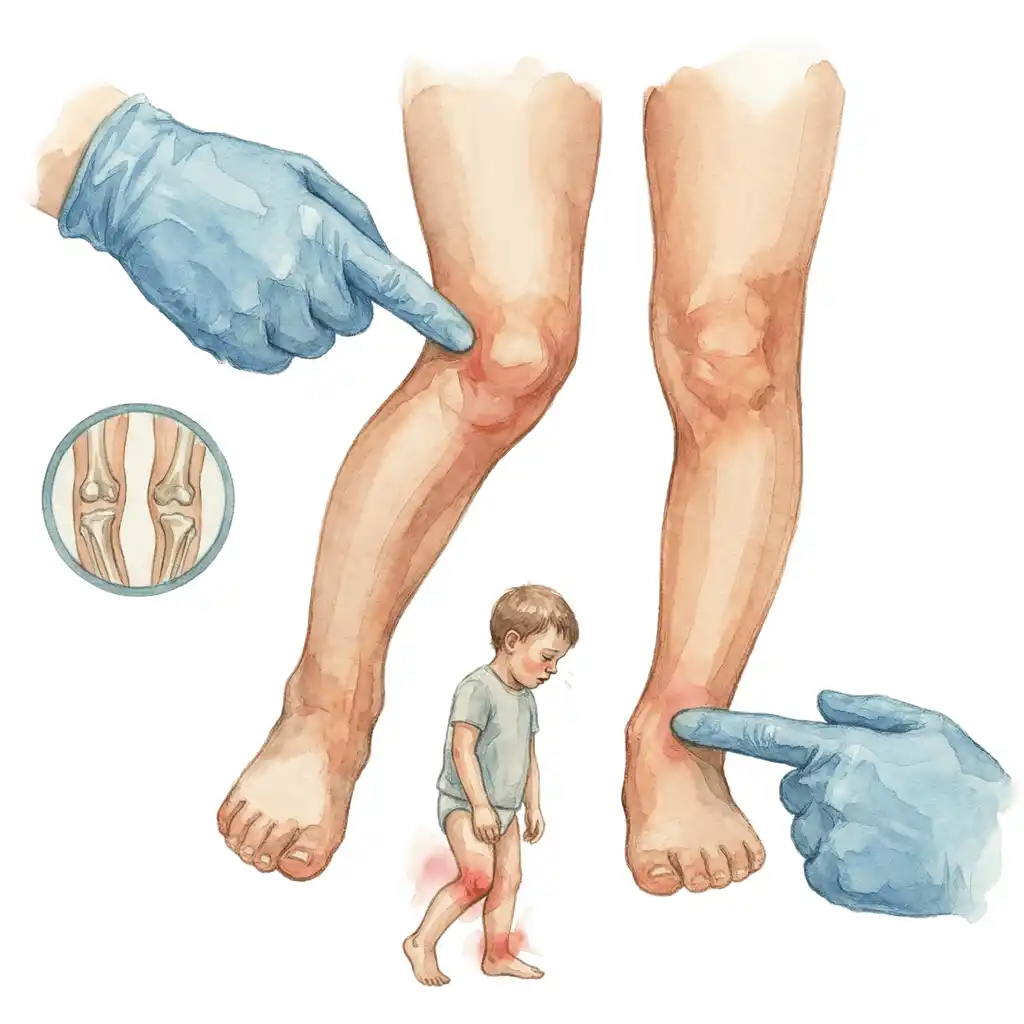
• बच्चा चलते समय एक side ज्यादा झुका हुआ दिखे या limp करे।
• एक पैर की pant / chaddi की लंबाई बार–बार different लगे।
• खड़े होने पर pelvis एक तरफ नीचे झुका दिखे, spine में side bend दिखे।
• दर्द, थकान या खेलते समय जल्दी थक जाना।
Limb Length Discrepancy (LLD) means a measurable difference in length between the two limbs significant enough to affect gait, posture or appearance.
Key Points
• Small differences are common and often harmless.
• Larger or progressive discrepancies can cause pelvic tilt, compensatory scoliosis and pain.
• Planning focuses on the predicted discrepancy at maturity, not just today’s measurement.
Main Causes
1. Congenital Shortening / Overgrowth
• Conditions like congenital femoral deficiency, fibular hemimelia.
• Discrepancy present from early childhood and usually progressive.
2. Physeal Injury or Disease
• Trauma, infection, tumor or surgery affecting growth plate, which can leave a physeal bar behind.
• Can slow, stop or asymmetrically alter growth, leading to LLD.
3. Post-fracture Effects
• Malunion causing shortening or angulation.
• Overgrowth after certain femur fractures in younger children.
Parental Warning Signs
• Persistent limp or favouring one leg.
• Trousers/shoes fitting differently on two sides.
• Visible pelvic tilt or spinal curve when standing.
• Complaints of fatigue or pain after walking/playing.
Limb Length Discrepancy – जांच और माप
Evaluation & Measurement of LLD
Clinical Assessment
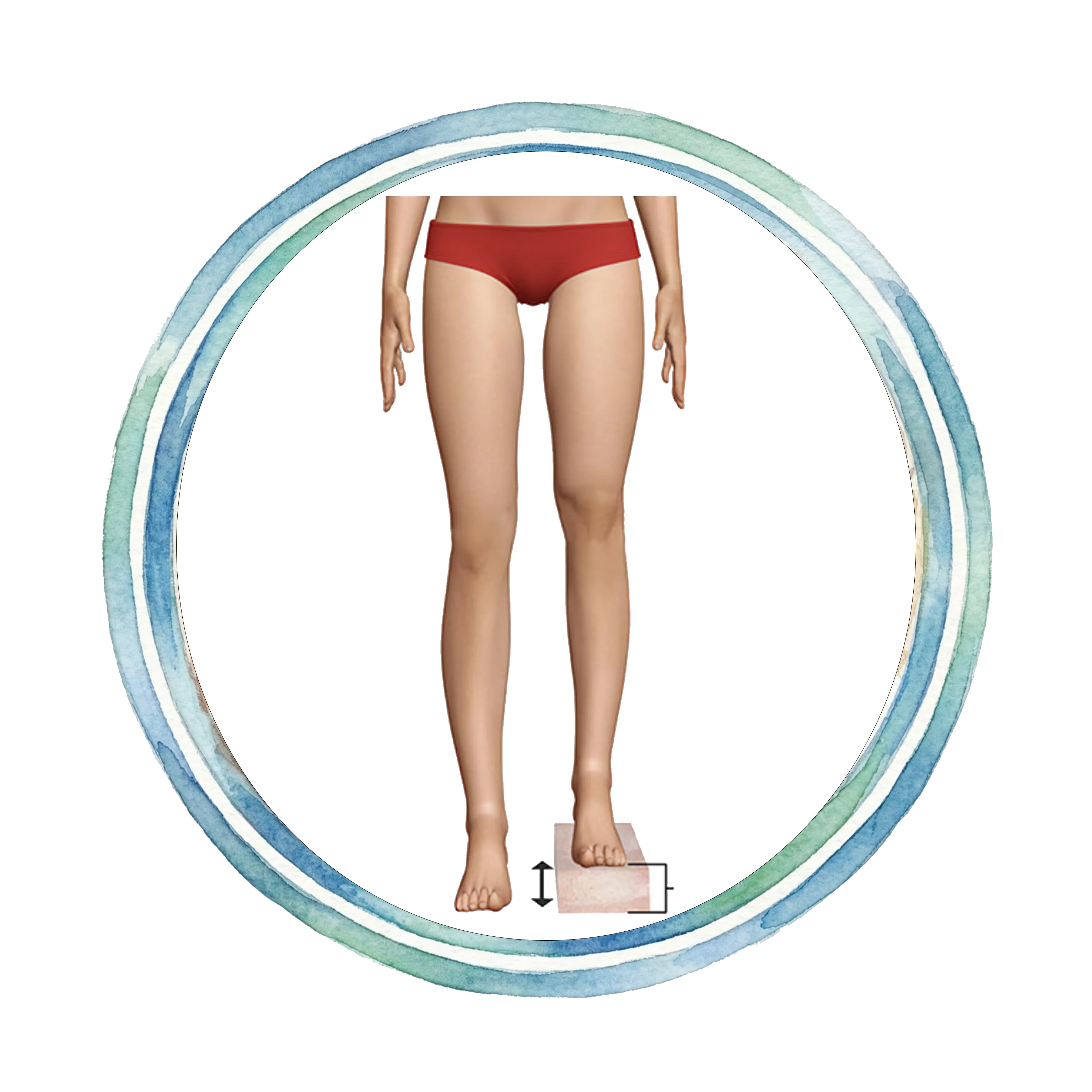
1. Tape Measure और Block Test
• ASIS से medial malleolus तक माप, apparent vs true length।
• block test – छोटे पैर के नीचे लकड़ी के block रखकर pelvis level करना, functional अंतर का अंदाज़।
2. Gait और Posture Analysis
• limp pattern, toe walking, pelvic drop और compensatory trunk tilt देखना।
• spine में compensatory scoliosis की जाँच।
Imaging और Growth Prediction
3. X-ray / Scanogram
• standing scanogram या long-limb X-ray से accurate bony length माप।
• deformity vs pure length difference अलग करना।
4. Growth Prediction Methods
• Moseley chart, Paley multiplier method आदि से skeletal maturity पर expected LLD का अनुमान।
• इसी अनुमान के आधार पर epiphysiodesis की timing या lengthening amount तय होती है।
Projection क्यों ज़रूरी?
• केवल आज का अंतर देखकर surgery decide करना गलत हो सकता है।
• कुछ बच्चों में अंतर समय के साथ बढ़ेगा, कुछ में लगभग स्थिर रहेगा – planning इन्हीं curves पर आधारित होनी चाहिए।
Clinical Evaluation
1. Tape Measurement & Block Test
• True and apparent limb lengths measured clinically.
• Block test helps estimate functional discrepancy and compensation needed.
2. Gait & Spine Assessment
• Observation for limp, toe-walking, pelvic obliquity.
• Screening for compensatory scoliosis and hip/knee overload.
Imaging & Prediction
3. Scanogram / Long-limb X-ray
• Accurate measurement of femur and tibia lengths.
• Differentiates pure length difference from angular deformity.
4. Growth Prediction
• Use of multiplier methods or growth charts to project LLD at maturity.
• Guides timing of epiphysiodesis and need for lengthening.
Why prediction matters
• Decisions should be based on future discrepancy, not just current difference.
• Correct timing can avoid over- or under-correction.
Limb Length Discrepancy – इलाज के विकल्प
Treatment Options for LLD
हर LLD का इलाज surgery नहीं – सही अंतर पर सही समय पर सही विकल्प
छोटे अंतर में simple shoe raise ही काफी हो सकता है, जबकि बड़े अंतर में growth modulation या limb lengthening की जरूरत पड़ती है।
Non-surgical विकल्प
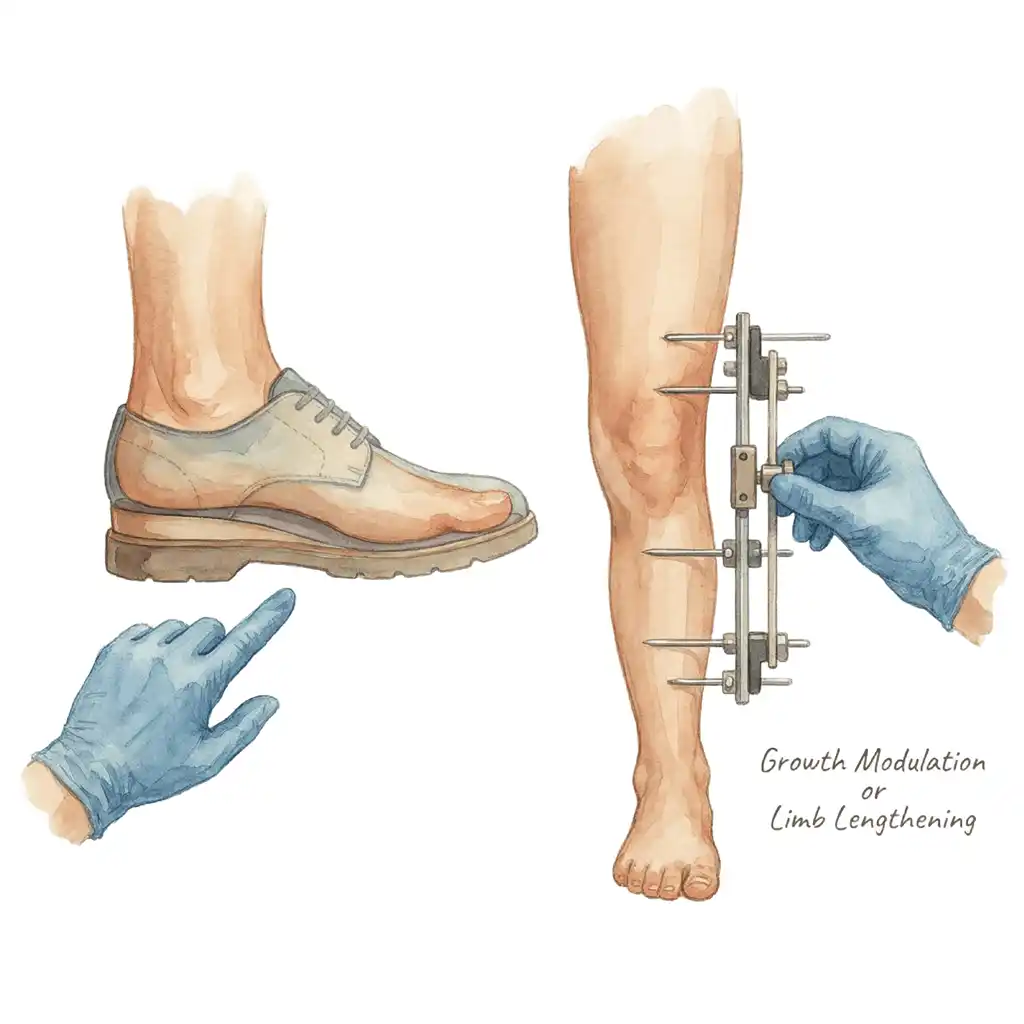
1. Shoe Raise / Insole
• आम तौर पर 0.5–2 cm तक के functional अंतर में उपयोग।
• easily adjustable, reversible और non-invasive विकल्प।
• बहुत बड़े अंतर में केवल raise भारी और cosmetically असुविधाजनक हो सकता है।
2. Physiotherapy & Core Strengthening
• trunk, hip और knee muscles मजबूत करके compensation बेहतर बनाना।
• pain, fatigue और gait control में मदद।
Surgical विकल्प
3. Epiphysiodesis (Growth Modulation)
• लंबी side की growth plate को आंशिक/पूरी तरह रोककर shorter limb को catch up करने देना।
• planning skeletal age और expected LLD पर आधारित।
• relatively small procedure, लेकिन timing critical।
4. Limb Lengthening
• external fixator या internal lengthening nail से controlled distraction osteogenesis।
• बड़े LLD या complex congenital cases में।
• months-long process, intensive physiotherapy और follow-up की जरूरत।
5. Shortening / Combined Procedures
• कुछ adolescents/young adults में limited shortening of longer limb भी विकल्प हो सकता है।
• अक्सर angular deformity correction के साथ combine किया जा सकता है।
डॉ. गौरव जैन की भूमिका
- LLD का accurate मापन और growth prediction
- छोटे अंतर के लिए shoe raise और physio जैसी simple strategies
- Epiphysiodesis और limb lengthening जैसी advanced procedures की timing और planning
- parents को long-term roadmap और realistic expectations समझाना
Not every LLD needs surgery – choose the right option at the right time
Management ranges from shoe raise and observation to growth modulation and lengthening, tailored to each child.
Non-surgical Strategies
1. Shoe Lift
• Useful for mild discrepancies, symptomatic or in near-maturity.
• Simple, adaptable and reversible option.
2. Physiotherapy
• Strengthens core and hip musculature.
• Improves gait mechanics and reduces fatigue.
Surgical Options
3. Epiphysiodesis
• Partial or complete growth arrest of the longer limb’s physis.
• Timed so that final discrepancy is minimized at maturity.
4. Limb Lengthening
• Gradual bone distraction using external fixator or internal nail.
• Indicated for larger LLD, especially congenital or post-traumatic.
5. Shortening/Combination
• Acute shortening of the longer limb in selected older patients.
• Sometimes combined with deformity correction procedures.
Role of Dr. Gaurav Jain
- Accurate measurement and predictive planning for LLD
- Choosing between shoe lifts, growth modulation and lengthening
- Executing advanced reconstruction safely with multidisciplinary support
- Providing a clear long-term plan and counselling for families
माता–पिता के लिए सुझाव और FAQs
Parent Tips & Common Questions
घर पर क्या ध्यान रखें?
1. चाल पर शांत नज़र
वीडियो/फोटो से समय के साथ limp या pelvic tilt में बदलाव देखना मददगार रहता है – रोज़ाना panic करने से बेहतर है periodic comparison।
2. Nutrition
हड्डियों की health के लिए संतुलित diet, adequate vitamin D, calcium और protein ज़रूरी हैं – विशेषकर पूर्व infection या fracture history वाले बच्चों में।
FAQs
क्या LLD होने का मतलब हमेशा surgery है?
नहीं। बहुत से बच्चों में छोटा अंतर केवल observation या shoe raise से ही manage किया जा सकता है। surgery केवल selected cases में, सही उम्र और सही अंतर पर की जाती है।
क्या LLD के बावजूद बच्चा future में normal चल–दौड़ पाएगा?
सही planning और timely management होने पर अधिकांश बच्चों में gait और function excellent होता है। untreated बड़े अंतर में future में pain और compensation ज्यादा हो सकता है।
Parents की role क्या है?
समय पर evaluation, follow-up और X-ray schedule follow करना, shoe raise / physiotherapy की consistency और बच्चे को emotional support देना – यही सबसे महत्वपूर्ण role है।
Parent Tips
1. Monitor, Don’t Over-worry
Record gait videos periodically and review with your specialist instead of checking obsessively every day.
2. Support Overall Bone Health
Ensure adequate nutrition and vitamin D; follow advice on supplements if required.
FAQs
Does every LLD require surgery?
No. Many small discrepancies can be managed with observation or shoe lifts. Surgery is reserved for selected children at the right age and discrepancy level.
Will my child walk and play normally in future?
With well-timed, appropriate treatment most children achieve excellent function. Large uncorrected LLD can cause symptoms, hence the value of planned care.
What is the most important role of parents?
Ensure regular follow-up, adherence to shoe lift/physio or surgical plan, and provide emotional support and realistic expectations to the child.
Limb Length Discrepancy के लिए विशेषज्ञ मूल्यांकन – डॉ. गौरव जैन, इंदौर
Specialist Care for Limb Length Discrepancy – Dr. Gaurav Jain, Indore
Accurate measurement, growth prediction, shoe raise से लेकर guided growth और limb lengthening तक – child-specific योजना एक ही जगह। From accurate measurements and prediction to shoe lifts, growth modulation and lengthening – complete LLD care under one roof.
कॉल करें Call Now