हिंदी
Toe Walking

Toe Walking - पंजों पर चलना

बच्चों में पंजों पर चलने का विशेषज्ञ उपचार | Expert Treatment in Indore

Toe Walking Treatment

Expert Pediatric Care for Toe Walking | Specialized Treatment in Indore

भाषा चुनें: Choose Language:
हिंदी

🦶 Toe Walking क्या है?

Toe walking मतलब जब बच्चा चलते समय अपनी एड़ी (heels) को ज़मीन पर नहीं रखता और सिर्फ पंजों (toes) पर चलता है। यह बहुत छोटे बच्चों में सामान्य है जो अभी-अभी चलना सीख रहे हैं, लेकिन अगर 2 साल की उम्र के बाद भी ऐसा हो तो इसे देखना ज़रूरी है।

Normal Walking vs Toe Walking

👣 👣 👣

Normal walking में पूरा पैर ज़मीन पर रखा जाता है

याद रखें: 2 साल से कम उम्र के बच्चों में थोड़ा toe walking normal हो सकता है। लेकिन अगर यह habit बनी रहे तो doctor से मिलना ज़रूरी है।

🦶 What is Toe Walking?

Toe walking is when a child walks on their toes or the balls of their feet without putting much or any weight on the heel. While it's common in toddlers who are just learning to walk, persistent toe walking beyond 2 years of age may require medical evaluation.

Normal Walking vs Toe Walking

👣 👣 👣

In normal walking, the entire foot makes contact with the ground

Remember: Occasional toe walking in children under 2 years can be normal. However, if this habit persists, medical consultation is recommended.

📋 Toe Walking के प्रकार (Types)

Toe Walking Types
Toe Walking Types
🎯

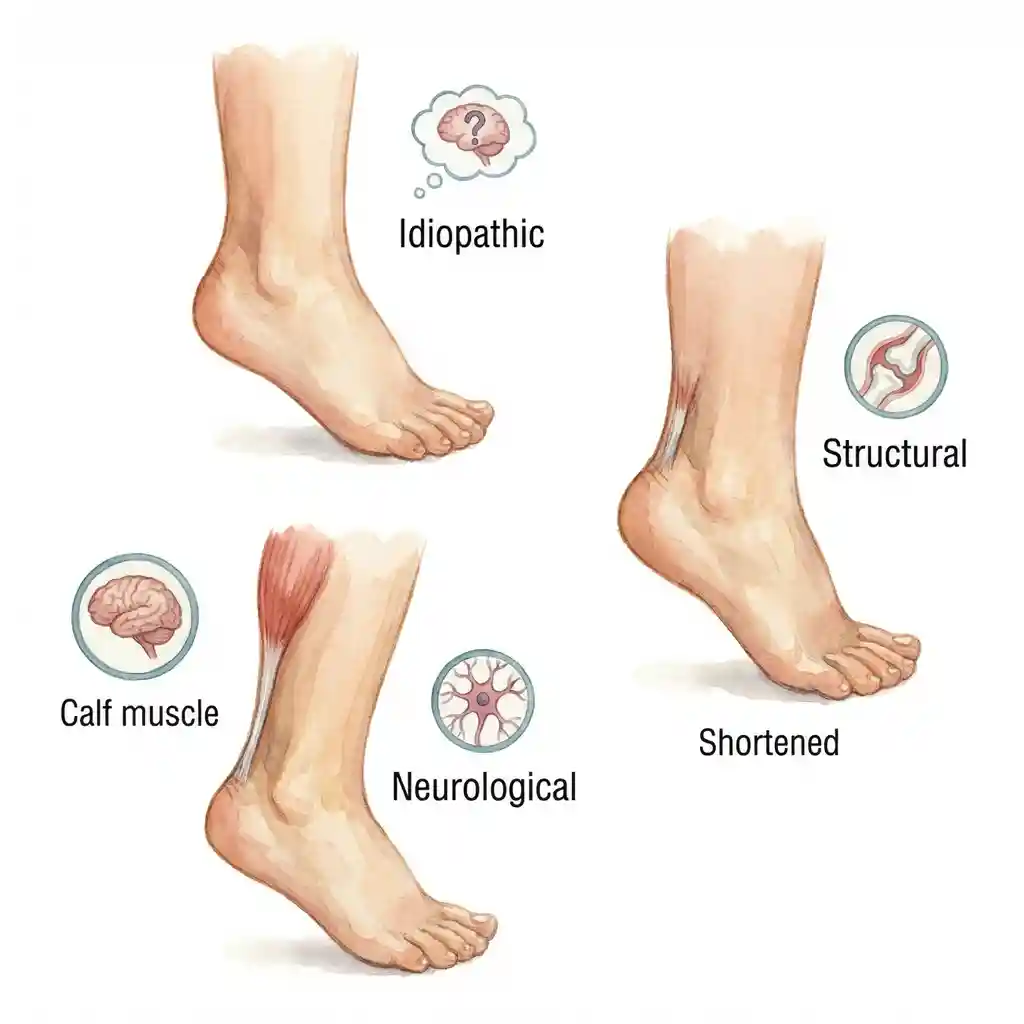
1. Idiopathic Toe Walking

सबसे आम type: इसमें कोई specific medical reason नहीं होता। बच्चा बस habit से toe walking करता है। यह बच्चे normally develop करते हैं और healthy होते हैं।

🧠

2. Neurological Toe Walking

Brain या nerve की problem: Cerebral palsy, muscular dystrophy जैसी conditions में। इसमें muscles tight हो जाती हैं और बच्चे को heel नीचे रखने में problem होती है।

🦴

3. Structural Toe Walking

Bone या joint की problem: Achilles tendon short होना या leg length में difference। इसमें physically heel ज़मीन तक नहीं पहुँच पाती।

📋 Types of Toe Walking

Toe Walking Types
Toe Walking Types
🎯

1. Idiopathic Toe Walking

Most common type: No specific medical reason identified. The child walks on toes out of habit. These children develop normally and are otherwise healthy.

🧠

2. Neurological Toe Walking

Brain or nerve problem: Associated with conditions like cerebral palsy or muscular dystrophy. Muscles become tight, making it difficult to place the heel down.

🦴

3. Structural Toe Walking

Bone or joint problem: Short Achilles tendon or leg length discrepancy. The heel physically cannot reach the ground.

🔍 Toe Walking की पहचान (Symptoms)

  • बच्चा हमेशा या ज़्यादातर समय पंजों पर चलता है
  • Heel ज़मीन को touch नहीं करती या बहुत कम touch करती है
  • Calf muscles (पिंडली की muscles) tight और thick दिखती हैं
  • Walking करते समय balance में problem
  • बार-बार गिरना या stumble करना
  • दौड़ते समय awkward movements
  • Long distance चलने में difficulty
  • Flat foot पर खड़े होने में problem या pain
  • Shoes जल्दी घिस जाती हैं (सिर्फ앞के part से)
कब doctor से मिलें:
  • • अगर बच्चा 2 साल से ज़्यादा का है और अभी भी toe walking करता है
  • • अगर toe walking के साथ pain या stiffness है
  • • अगर बच्चे को heel नीचे रखने में problem है
  • • अगर walking pattern बदल रही है या worse हो रही है

🔍 Signs and Symptoms

  • Child walks on toes most or all of the time
  • Heel doesn't touch or barely touches the ground
  • Calf muscles appear tight and enlarged
  • Difficulty with balance while walking
  • Frequent falling or stumbling
  • Awkward movements when running
  • Difficulty walking long distances
  • Problems or pain when standing flat-footed
  • Shoes wear out quickly (only front part)
When to see a doctor:
  • • Child is over 2 years old and still toe walking
  • • Toe walking is accompanied by pain or stiffness
  • • Child has difficulty putting heel down
  • • Walking pattern is changing or getting worse

❓ Toe Walking के कारण (Causes)

🎯

Habit/Learning Phase

छोटे बच्चे चलना सीखते समय naturally toe walking try करते हैं। यह exploration का part है।

🧬

Family History

अगर parents या siblings में toe walking थी, तो बच्चे में होने की chance ज़्यादा है।

💪

Tight Achilles Tendon

Heel के पीछे की tendon short या tight हो जाती है, जिससे heel नीचे नहीं आ पाती।

🧠

Neurological Issues

Cerebral palsy, autism spectrum disorder, या muscular dystrophy जैसी conditions।

🦴

Bone Problems

Hip dysplasia, leg length difference, या foot deformities।

Sensory Processing

कुछ बच्चों को floor की sensation uncomfortable लगती है तो वे toe walking करते हैं।

❓ Causes of Toe Walking

🎯

Habit/Learning Phase

Young children naturally experiment with toe walking while learning to walk. It's part of exploration.

🧬

Family History

If parents or siblings had toe walking, there's a higher chance the child will too.

💪

Tight Achilles Tendon

The tendon at the back of the heel becomes short or tight, preventing the heel from touching down.

🧠

Neurological Issues

Conditions like cerebral palsy, autism spectrum disorder, or muscular dystrophy.

🦴

Bone Problems

Hip dysplasia, leg length discrepancy, or foot deformities.

Sensory Processing

Some children find the floor sensation uncomfortable and prefer walking on toes.

🔬 Diagnosis कैसे होता है?

  • Physical Examination: Doctor बच्चे की walking pattern देखेगा, muscle tightness check करेगा
  • Medical History: Family history, developmental milestones, कब से toe walking शुरू हुई
  • Gait Analysis: Walking pattern का detailed analysis
  • Range of Motion Test: Ankle और foot की flexibility check करना
  • Neurological Examination: Reflexes, balance, और coordination check करना
  • X-rays: अगर bone या joint problem का doubt हो
  • EMG/Nerve Tests: अगर neurological problem का doubt हो
Dr. Gaurav Jain की approach: हम सबसे पहले detailed examination करते हैं और सभी possible causes को rule out करते हैं। हर बच्चे के लिए personalized treatment plan बनाया जाता है।

🔬 How is it Diagnosed?

  • Physical Examination: Doctor observes walking pattern and checks muscle tightness
  • Medical History: Family history, developmental milestones, when toe walking started
  • Gait Analysis: Detailed analysis of walking pattern
  • Range of Motion Test: Checking ankle and foot flexibility
  • Neurological Examination: Testing reflexes, balance, and coordination
  • X-rays: If bone or joint problems are suspected
  • EMG/Nerve Tests: If neurological problems are suspected
Dr. Gaurav Jain's approach: We conduct a thorough examination and rule out all possible causes. A personalized treatment plan is created for each child.

💊 Treatment Options

Toe Walking Treatment

🏥 Non-Surgical Treatment

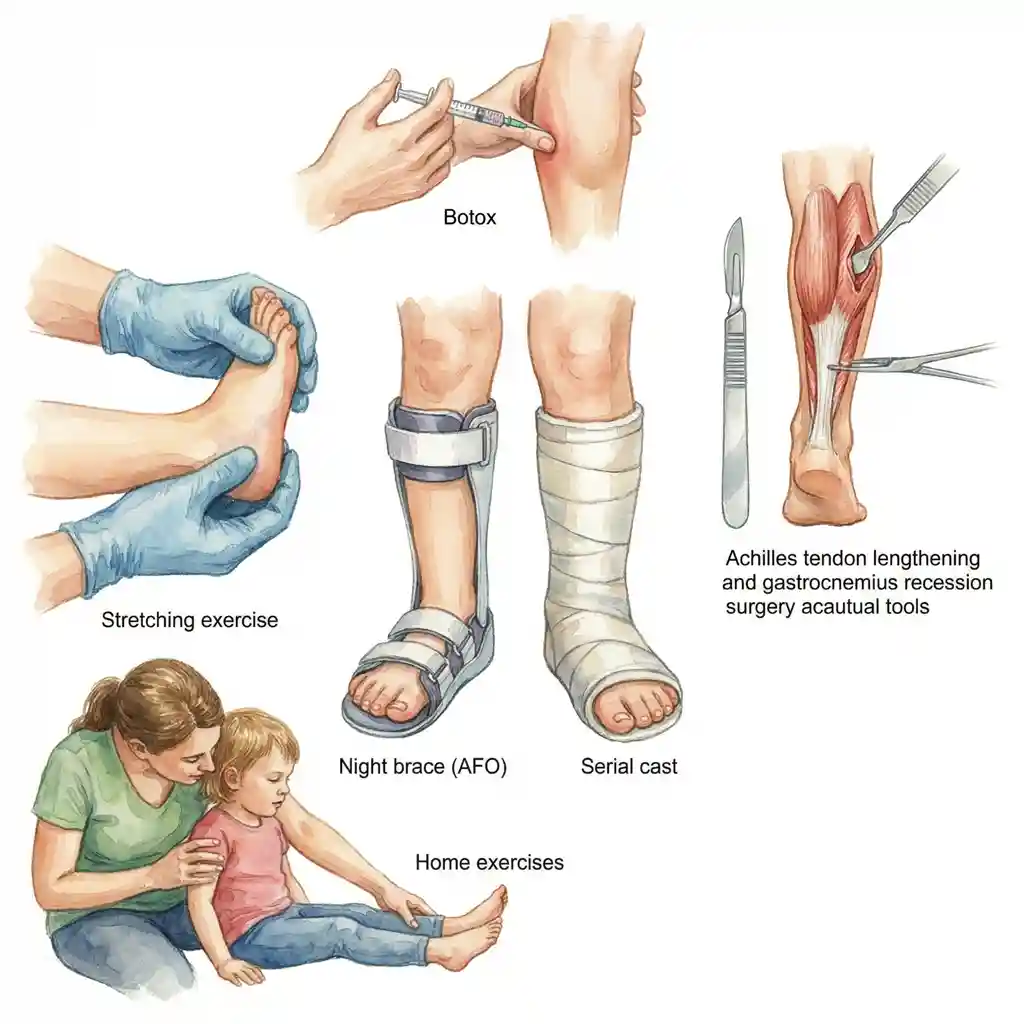
  • Observation: Mild cases में watchful waiting, especially छोटे बच्चों में
  • Physical Therapy: Stretching exercises Achilles tendon और calf muscles के लिए
  • Home Exercises: Parents को exercises सिखाई जाती हैं जो घर पर regularly करनी होती हैं
  • Ankle-Foot Orthosis (AFO): Night time braces जो heel को stretch करती हैं
  • Serial Casting: 4-6 weeks के लिए casts लगाकर muscles को gradually stretch करना
  • Botox Injections: Tight muscles को temporarily relax करने के लिए
  • Proper Footwear: Shoes जो heel को support करें और flat foot walking encourage करें

🔪 Surgical Treatment

Surgery तभी recommend की जाती है जब:

  • Conservative treatment से improvement नहीं हो रहा
  • Achilles tendon बहुत tight है
  • Age 8 years से ज़्यादा है और condition severe है
  • Walking में significant problem हो रही है

Surgery के types:

  • Achilles Tendon Lengthening: Tendon को carefully cut और lengthen किया जाता है
  • Gastrocnemius Recession: Calf muscle को release किया जाता है

Recovery time: 6-8 weeks में normal activities resume हो सकती हैं

Good news: ज़्यादातर cases में non-surgical treatment से ही बच्चे improve हो जाते हैं! Regular exercises और proper care से 80-90% बच्चे सामान्य रूप से चलने लगते हैं।

💊 Treatment Options

Toe Walking Treatment

🏥 Non-Surgical Treatment

  • Observation: Watchful waiting for mild cases, especially in younger children
  • Physical Therapy: Stretching exercises for Achilles tendon and calf muscles
  • Home Exercises: Parents are taught exercises to perform regularly at home
  • Ankle-Foot Orthosis (AFO): Night-time braces that stretch the heel
  • Serial Casting: Gradually stretching muscles with casts for 4-6 weeks
  • Botox Injections: To temporarily relax tight muscles
  • Proper Footwear: Shoes that support the heel and encourage flat-foot walking

🔪 Surgical Treatment

Surgery is recommended only when:

  • Conservative treatment shows no improvement
  • Achilles tendon is very tight
  • Child is over 8 years old with severe condition
  • Significant walking problems are present

Types of surgery:

  • Achilles Tendon Lengthening: Tendon is carefully cut and lengthened
  • Gastrocnemius Recession: Calf muscle is released

Recovery time: Normal activities can resume in 6-8 weeks

Good news: Most cases improve with non-surgical treatment! With regular exercises and proper care, 80-90% of children return to normal walking.

🏠 घर पर क्या करें (Home Care Tips)

Toe Walking HomeCare
🧘

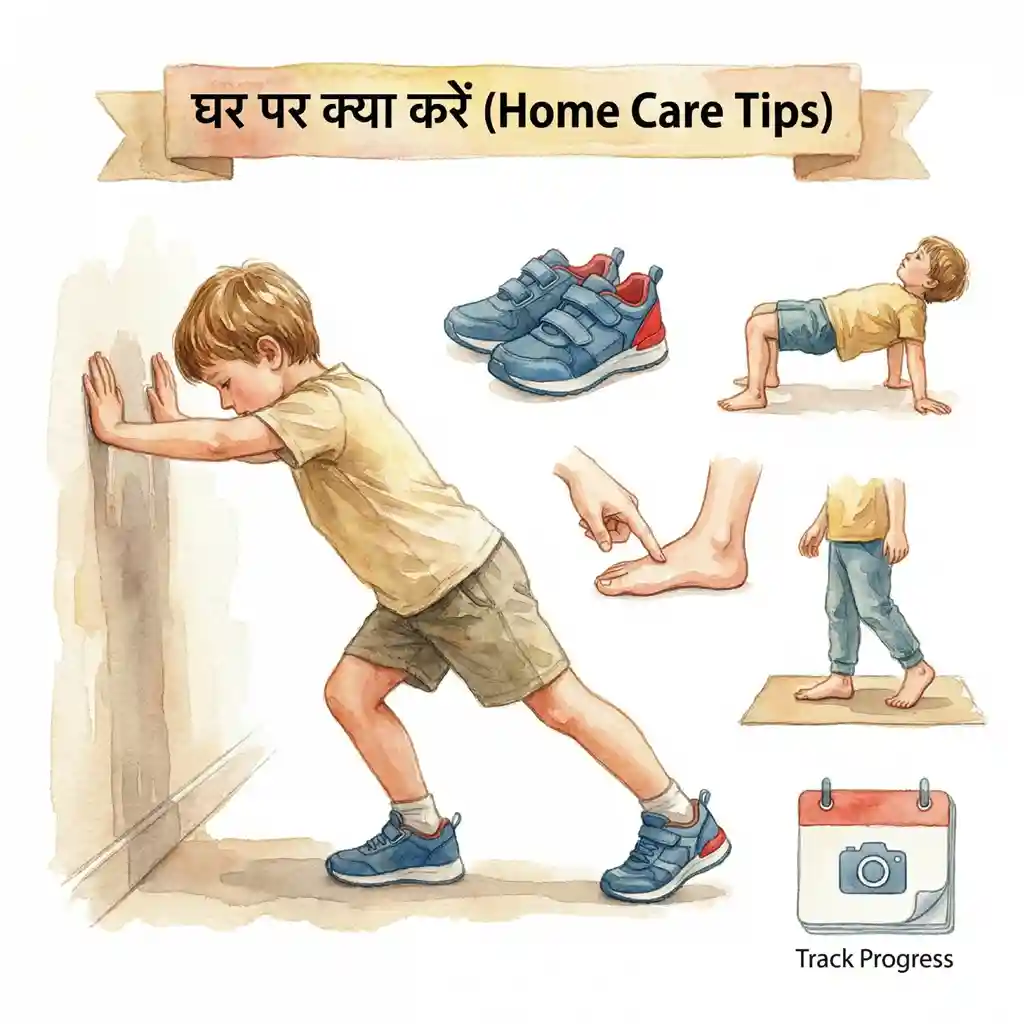
Daily Stretching

रोज़ 3-4 बार, हर बार 30 seconds के लिए Achilles tendon stretch करें। बच्चे को wall push-ups करवाएं।

👟

Proper Shoes

Shoes जो heel को अच्छी support दें। Avoid करें very soft या flexible shoes। Good arch support ज़रूरी है।

🎮

Fun Activities

Games खेलें जिनमें heel walking ज़रूरी हो - like walking like a penguin, bear walk, या crab walk।

Gentle Reminders

बच्चे को gently remind करें flat feet रखने के लिए, लेकिन बहुत ज़्यादा nagging avoid करें।

🚶

Barefoot Walking

घर पर barefoot चलने दें - यह foot muscles को strengthen करता है और proprioception improve करता है।

📊

Track Progress

Video बनाकर progress track करें। हर महीने doctor को दिखाएं कि kitna improvement हो रहा है।

Don'ts - ये न करें:
  • • बच्चे को बहुत ज़्यादा scold या punish न करें - यह habit बदलने में time लगता है
  • • Forcefully heel नीचे push न करें - इससे injury हो सकती है
  • • Without doctor's advice कोई भी brace या device use न करें
  • • Treatment बीच में बंद न करें - consistency बहुत ज़रूरी है

🏠 Home Care Tips

Toe Walking HomeCare
🧘

Daily Stretching

Stretch Achilles tendon 3-4 times daily, 30 seconds each time. Have your child do wall push-ups.

👟

Proper Shoes

Choose shoes with good heel support. Avoid very soft or flexible shoes. Good arch support is essential.

🎮

Fun Activities

Play games requiring heel walking - penguin walk, bear walk, or crab walk.

Gentle Reminders

Gently remind your child to keep feet flat, but avoid excessive nagging.

🚶

Barefoot Walking

Allow barefoot walking at home - strengthens foot muscles and improves proprioception.

📊

Track Progress

Make videos to track progress. Show monthly updates to your doctor.

Don'ts - Avoid These:
  • • Don't scold or punish excessively - habit change takes time
  • • Don't forcefully push heel down - can cause injury
  • • Don't use braces or devices without doctor's advice
  • • Don't stop treatment midway - consistency is crucial

❓ अक्सर पूछे जाने वाले सवाल (FAQ)

Toe walking के बारे में आपके सभी सवालों के जवाब

❓ Frequently Asked Questions (FAQ)

Answers to all your questions about toe walking

क्या toe walking normal है?
Is toe walking normal?
छोटे बच्चों (12-24 months) में toe walking normal हो सकता है जब वे चलना सीख रहे होते हैं। लेकिन अगर 2 साल की उम्र के बाद भी यह pattern continue रहता है, तो doctor से consultation लेना चाहिए। कुछ बच्चे इसे habit की तरह भी करते हैं जो temporary हो सकती है।
Toe walking can be normal in young children (12-24 months) while they're learning to walk. However, if this pattern continues after age 2, medical consultation is recommended. Some children do it as a habit which may be temporary.
Toe walking कितनी common है?
How common is toe walking?
लगभग 5-7% बच्चे toe walking करते हैं। इनमें से ज़्यादातर cases idiopathic होते हैं (मतलब कोई specific medical reason नहीं)। लड़कों में यह थोड़ा ज़्यादा common है girls की तुलना में। Family history होने पर chance और बढ़ जाता है।
Approximately 5-7% of children walk on their toes. Most of these cases are idiopathic (no specific medical reason). Boys are slightly more likely to toe walk than girls. Having a family history increases the chances.
क्या toe walking serious problem है?
Is toe walking a serious problem?
ज़्यादातर cases में toe walking serious नहीं होता, especially जब कोई underlying medical condition न हो। लेकिन अगर इसे untreated छोड़ दिया जाए तो long term में यह problems create कर सकता है जैसे tight Achilles tendon, muscle imbalance, balance issues, और बार-बार गिरना। Early diagnosis और treatment से ये complications avoid हो सकते हैं।
In most cases, toe walking isn't serious, especially when there's no underlying medical condition. However, if left untreated, it can lead to long-term problems like tight Achilles tendon, muscle imbalances, balance issues, and frequent falls. Early diagnosis and treatment can prevent these complications.
Treatment में कितना समय लगता है?
How long does treatment take?
Treatment की duration बच्चे की age, severity, और किस treatment method use हो रही है, इस पर depend करता है। Physical therapy में 3-6 months लग सकते हैं regular exercises के साथ। Serial casting में 4-6 weeks लगते हैं। Surgery के बाद full recovery में 6-12 months तक लग सकते हैं। Consistency और regular follow-ups बहुत important हैं।
Treatment duration depends on the child's age, severity, and treatment method used. Physical therapy may take 3-6 months with regular exercises. Serial casting takes 4-6 weeks. After surgery, full recovery may take 6-12 months. Consistency and regular follow-ups are crucial.
क्या home exercises काफी हैं?
Are home exercises enough?
Mild cases में, regular home exercises बहुत effective हो सकती हैं। लेकिन यह important है कि exercises properly और consistently की जाएं। Initially physical therapist से proper technique सीखना ज़रूरी है। Severe cases में या जब Achilles tendon बहुत tight हो, तो additional treatments जैसे casting, bracing, या surgery की ज़रूरत पड़ सकती है। Regular doctor check-ups essential हैं progress monitor करने के लिए।
In mild cases, regular home exercises can be very effective. However, it's important that exercises are done properly and consistently. Initially learning the proper technique from a physical therapist is necessary. In severe cases or when the Achilles tendon is very tight, additional treatments like casting, bracing, or surgery may be needed. Regular doctor check-ups are essential to monitor progress.
क्या surgery painful होती है?
Is surgery painful?
Surgery general anesthesia के under होती है तो बच्चे को surgery के दौरान pain नहीं होता। Surgery के बाद कुछ दिनों तक discomfort हो सकता है, लेकिन pain medications दी जाती हैं। ज़्यादातर बच्चे 1-2 weeks में comfortable हो जाते हैं। आधुनिक surgical techniques और proper post-operative care से recovery smooth और relatively pain-free होती है। Doctor आपको detailed post-operative care instructions देंगे।
Surgery is performed under general anesthesia so the child feels no pain during the procedure. There may be some discomfort for a few days after surgery, but pain medications are provided. Most children become comfortable within 1-2 weeks. With modern surgical techniques and proper post-operative care, recovery is smooth and relatively pain-free. Your doctor will provide detailed post-operative care instructions.
क्या toe walking अपने आप ठीक हो सकता है?
Can toe walking resolve on its own?
छोटे बच्चों में (2 साल से कम), toe walking अक्सर अपने आप improve हो जाती है जैसे-जैसे वे develop करते हैं। हालांकि, 2 साल से बड़े बच्चों में यह self-resolve होने की possibility कम हो जाती है। अगर 3 साल की उम्र तक भी toe walking continue रहे तो treatment ज़रूरी हो जाती है। Early intervention से better outcomes मिलते हैं। "Wait and watch" approach सिर्फ छोटे बच्चों में ही advisable है।
In young children (under 2 years), toe walking often improves on its own as they develop. However, in children over 2 years, the likelihood of self-resolution decreases. If toe walking continues until age 3, treatment becomes necessary. Early intervention leads to better outcomes. The "wait and watch" approach is advisable only for younger children.
Treatment के बाद क्या problem वापस आ सकती है?
Can the problem recur after treatment?
अगर treatment properly follow की जाए तो recurrence की chance बहुत कम होती है। लेकिन यह important है कि prescribed exercises और stretches को treatment के बाद भी continue करें। कुछ cases में, खासकर अगर बच्चे की growth spurt हो रही हो, muscles फिर से tight हो सकती हैं। Regular follow-ups और maintenance exercises से इसे prevent किया जा सकता है। Doctor की advice के according physical activity maintain करना भी important है।
If treatment is followed properly, the chance of recurrence is very low. However, it's important to continue prescribed exercises and stretches even after treatment. In some cases, especially during growth spurts, muscles may tighten again. This can be prevented with regular follow-ups and maintenance exercises. Maintaining physical activity according to your doctor's advice is also important.
क्या मेरा बच्चा normal sports खेल पाएगा?
Will my child be able to play sports normally?
बिल्कुल! Successful treatment के बाद ज़्यादातर बच्चे completely normal activities और sports में participate कर सकते हैं। Actually, कुछ sports और activities toe walking treatment में helpful भी हो सकती हैं। Swimming, cycling, और stretching-based activities बहुत beneficial हैं। Treatment complete होने के बाद doctor आपको guide करेंगे कि कौन सी activities safe हैं और कब start करनी हैं। बहुत से बच्चे जो toe walking से recover होते हैं वे athletes भी बन जाते हैं!
Absolutely! After successful treatment, most children can participate in completely normal activities and sports. In fact, some sports and activities can be helpful in toe walking treatment. Swimming, cycling, and stretching-based activities are very beneficial. After treatment completion, your doctor will guide you on which activities are safe and when to start. Many children who recover from toe walking even become athletes!
क्या shoes का type matter करता है?
Does the type of shoes matter?
हां, shoes का choice बहुत important है! Proper shoes जो good heel support दें और adequate arch support हो, वे toe walking को discourage करने में मदद करते हैं। Avoid करें बहुत soft, flexible या flat shoes। High-top shoes या boots थोड़ा better हो सकते हैं क्योंकि वे ankle को अच्छी support देते हैं। आपका doctor specific recommendations दे सकता है। घर पर barefoot walking भी beneficial है क्योंकि यह foot muscles को naturally strengthen करता है।
Yes, shoe choice is very important! Proper shoes with good heel support and adequate arch support help discourage toe walking. Avoid very soft, flexible, or flat shoes. High-top shoes or boots may be better as they provide good ankle support. Your doctor can give specific recommendations. Barefoot walking at home is also beneficial as it naturally strengthens foot muscles.
क्या autism से toe walking का connection है?
Is there a connection between autism and toe walking?
कुछ studies suggest करती हैं कि autism spectrum disorder वाले बच्चों में toe walking ज़्यादा common हो सकता है, लेकिन toe walking का मतलब यह नहीं कि बच्चे को autism है। Autism के साथ sensory processing issues हो सकते हैं जो toe walking को contribute करते हैं। अगर आपको developmental concerns हैं तो अपने pediatrician से discuss करें। Toe walking सिर्फ एक symptom है और इसे isolation में evaluate नहीं किया जाना चाहिए।
Some studies suggest that toe walking may be more common in children with autism spectrum disorder, but toe walking doesn't mean a child has autism. Autism may be associated with sensory processing issues that contribute to toe walking. If you have developmental concerns, discuss them with your pediatrician. Toe walking is just one symptom and should not be evaluated in isolation.

क्या आपके बच्चे को Toe Walking की problem है?

Dr. Gaurav Jain से expert consultation लें। हम आपके बच्चे के लिए best treatment plan बनाएंगे!

अपॉइंटमेंट बुक करें

Is Your Child Experiencing Toe Walking?

Get expert consultation from Dr. Gaurav Jain. We'll create the best treatment plan for your child!

Book Appointment
// Smooth scroll behavior document.documentElement.style.scrollBehavior = 'smooth';