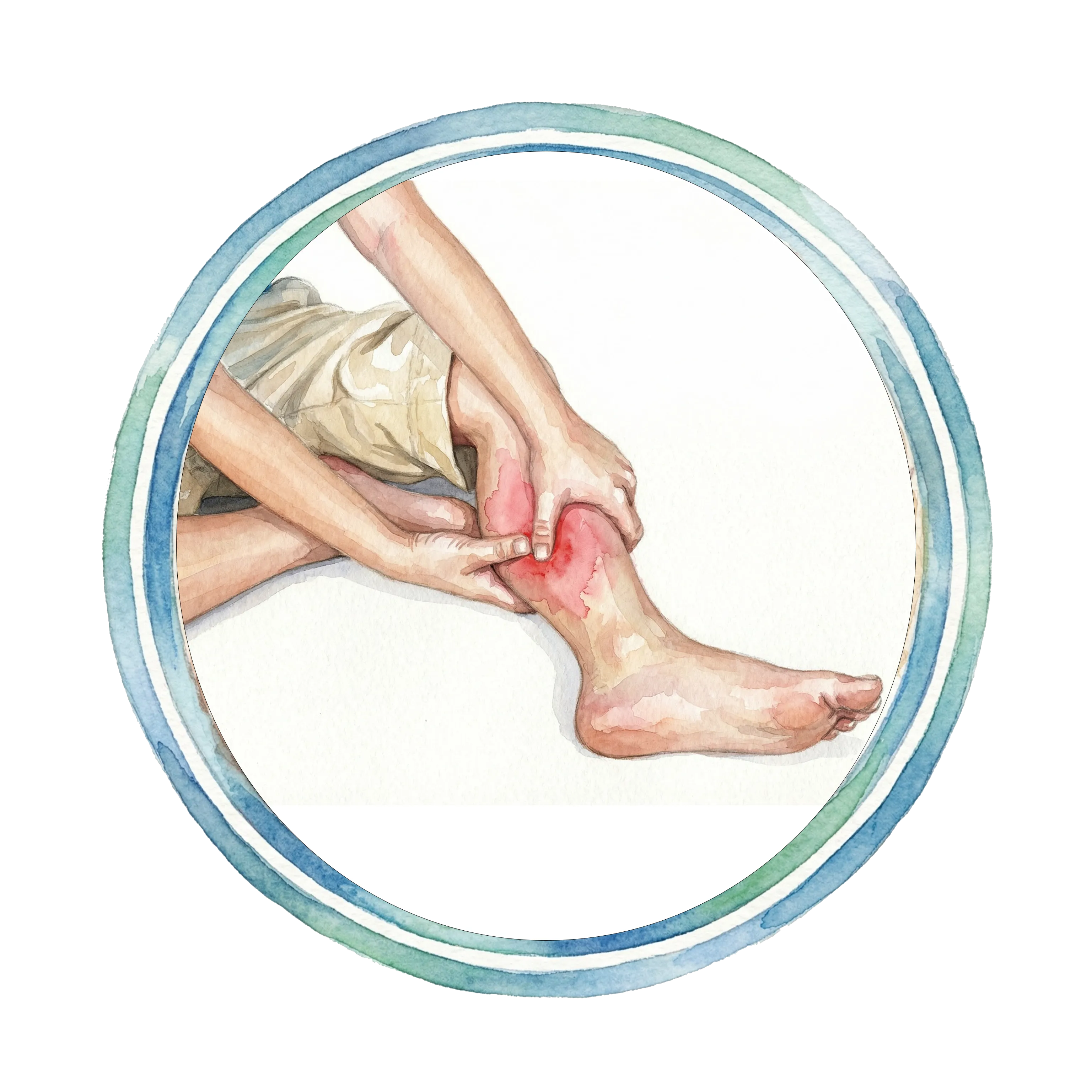
Best Growing Pains in Children — Indore (बच्चों में बढ़ने का दर्द)
Growing Pains in Children
संपूर्ण जानकारी, लक्षण, कारण और उपचार
Complete Information, Symptoms, Causes and Treatment
बढ़ने का दर्द क्या है?
What are Growing Pains?
बढ़ने का दर्द बच्चों में होने वाली एक आम मांसपेशियों की तकलीफ है, जो आमतौर पर 3 से 12 साल के बच्चों को प्रभावित करती है। अपने नाम के बावजूद, यह दर्द वास्तव में शरीर की वृद्धि के कारण नहीं होता है। यह मांसपेशियों की थकान और अत्यधिक शारीरिक गतिविधि से संबंधित है।
Growing pains are common muscle aches that affect children, typically between ages 3 to 12 years. Despite their name, growing pains are not actually caused by growth itself. They are related to muscle fatigue and excessive physical activity.
महत्वपूर्ण तथ्य
Important Facts
- ✅ बढ़ने का दर्द हड्डियों की वृद्धि के कारण नहीं होता
- ✅ Growing pains are NOT caused by bone growth
- ✅ यह हानिरहित है और विकास को प्रभावित नहीं करता
- ✅ They are harmless and don't affect growth
- ✅ यह किसी गंभीर बीमारी का संकेत नहीं है
- ✅ They are NOT a sign of serious disease
- ✅ पारिवारिक इतिहास में होने की संभावना अधिक
- ✅ Tend to run in families
- ✅ उम्र बढ़ने के साथ अपने आप ठीक हो जाता है
- ✅ Go away on their own as child gets older
लक्षण
Symptoms
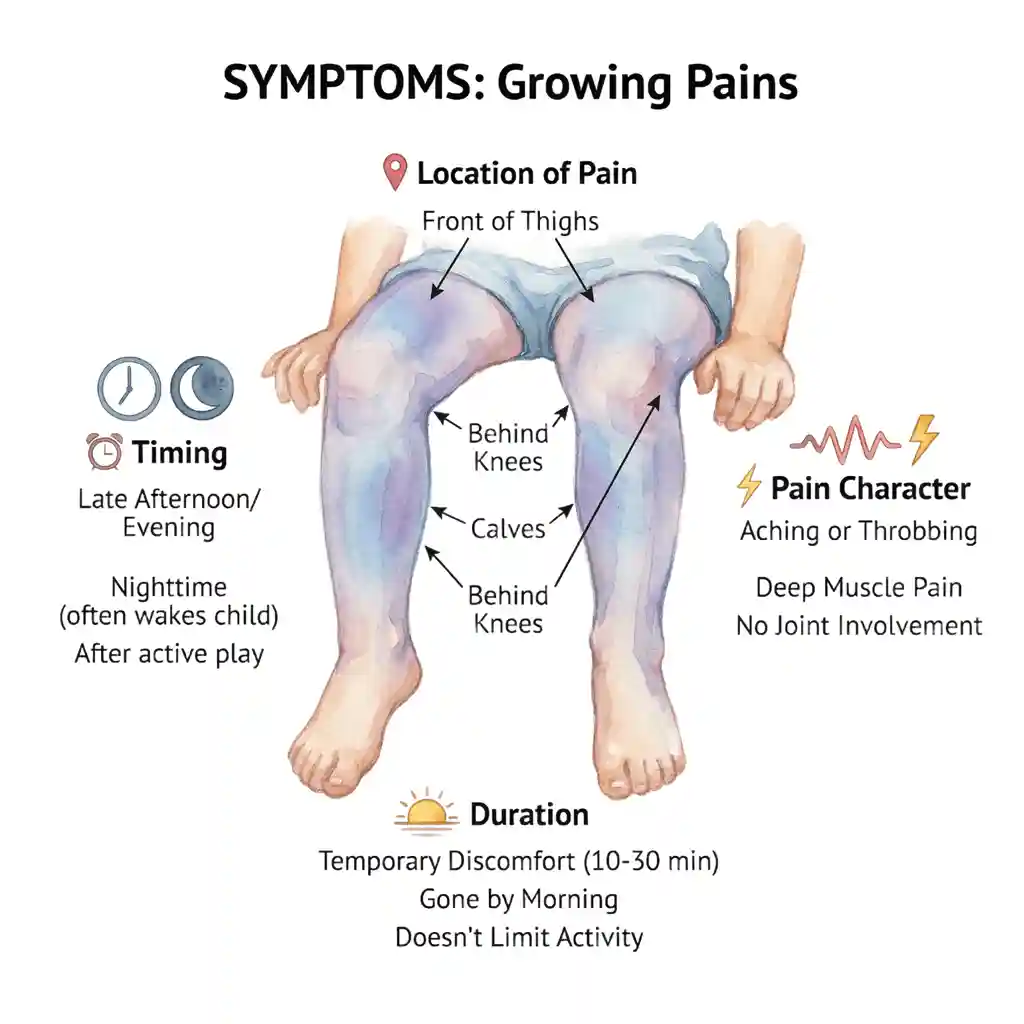
बढ़ने के दर्द की विशिष्ट विशेषताएं हैं जो इसे अन्य स्थितियों से अलग पहचानने में मदद करती हैं।
Growing pains have specific characteristics that help identify them from other conditions.
दर्द का स्थान
Location of Pain
आमतौर पर दोनों पैरों में:
Usually affects both legs:
- जांघों के आगे
- Front of thighs
- पिंडलियां
- Calves
- घुटनों के पीछे
- Behind the knees
समय
Timing
निर्धारित पैटर्न:
Predictable pattern:
- देर दोपहर या शाम
- Late afternoon or evening
- रात का समय (अक्सर बच्चे को जगाता है)
- Nighttime (often wakes child)
- सक्रिय खेल के बाद
- After active play
दर्द की प्रकृति
Pain Character
दर्द या धड़कन:
Aching or throbbing:
- गहरी मांसपेशियों का दर्द
- Deep muscle pain
- दोनों पैर प्रभावित
- Both legs affected
- जोड़ों में नहीं
- No joint involvement
अवधि
Duration
अस्थायी असुविधा:
Temporary discomfort:
- 10-30 मिनट तक रहता है
- Lasts 10-30 minutes
- सुबह तक ठीक
- Gone by morning
- अगले दिन गतिविधि सीमित नहीं करता
- Doesn't limit activity next day
याद रखेंRemember
बढ़ने का दर्द लंगड़ाना, सूजन, लालिमा या बुखार का कारण नहीं बनता। यदि ये लक्षण मौजूद हैं, तो तुरंत डॉक्टर से परामर्श लें।
Growing pains do not cause limping, swelling, redness, or fever. If these symptoms are present, consult a doctor immediately.
कारण
Causes
जबकि सटीक कारण पूरी तरह से समझा नहीं गया है, कई कारक बढ़ने के दर्द में योगदान करते हैं।
While the exact cause is not fully understood, several factors contribute to growing pains.
शारीरिक गतिविधि
Physical Activity
दिन भर दौड़ने, कूदने और चढ़ने से मांसपेशियों का अधिक उपयोग
Overuse of muscles during the day from running, jumping, and climbing
थकान
Fatigue
सक्रिय दिन के बाद मांसपेशियों की थकान
Muscle tiredness after an active day
कम दर्द सीमा
Lower Pain Threshold
कुछ बच्चों में मांसपेशियों में दर्द की संवेदनशीलता अधिक होती है
Some children have heightened pain sensitivity in muscles
निदान
Diagnosis
बढ़ने के दर्द का निदान लक्षणों और शारीरिक परीक्षण के आधार पर किया जाता है। बढ़ने के दर्द के लिए कोई विशिष्ट परीक्षण नहीं है।
Growing pains are diagnosed based on symptoms and physical examination. There are no specific tests for growing pains.
डॉक्टर कैसे निदान करते हैं
How Doctors Diagnose
चिकित्सा इतिहास
Medical History
- दर्द का पैटर्न और समय
- Pain pattern and timing
- दिन के दौरान गतिविधियां
- Activities during the day
- पारिवारिक इतिहास
- Family history
शारीरिक परीक्षण
Physical Examination
- सूजन या लालिमा की जाँच
- Check for swelling or redness
- जोड़ों की गति परीक्षण
- Test joint movement
- मांसपेशियों की कोमलता का आकलन
- Assess muscle tenderness
अन्य स्थितियों को खारिज करें
Rule Out Other Conditions
- गठिया
- Arthritis
- संक्रमण
- Infection
- हड्डी की समस्याएं
- Bone problems
तुरंत डॉक्टर को कब दिखाएंWhen to See a Doctor Immediately
- सुबह भी दर्द रहे
- Pain persists in the morning
- पैरों में सूजन, लालिमा या गर्मी
- Swelling, redness, or warmth in legs
- बच्चा लंगड़ा रहा है
- Child is limping
- बुखार है
- Fever present
- भूख न लगना या वजन कम होना
- Loss of appetite or weight loss
- जोड़ों में दर्द
- Pain in joints
- चकत्ते दिखाई देना
- Rash appears
- बच्चा अस्वस्थ या थका हुआ लगे
- Child seems unwell or tired
उपचार और घरेलू देखभाल
Treatment & Home Care
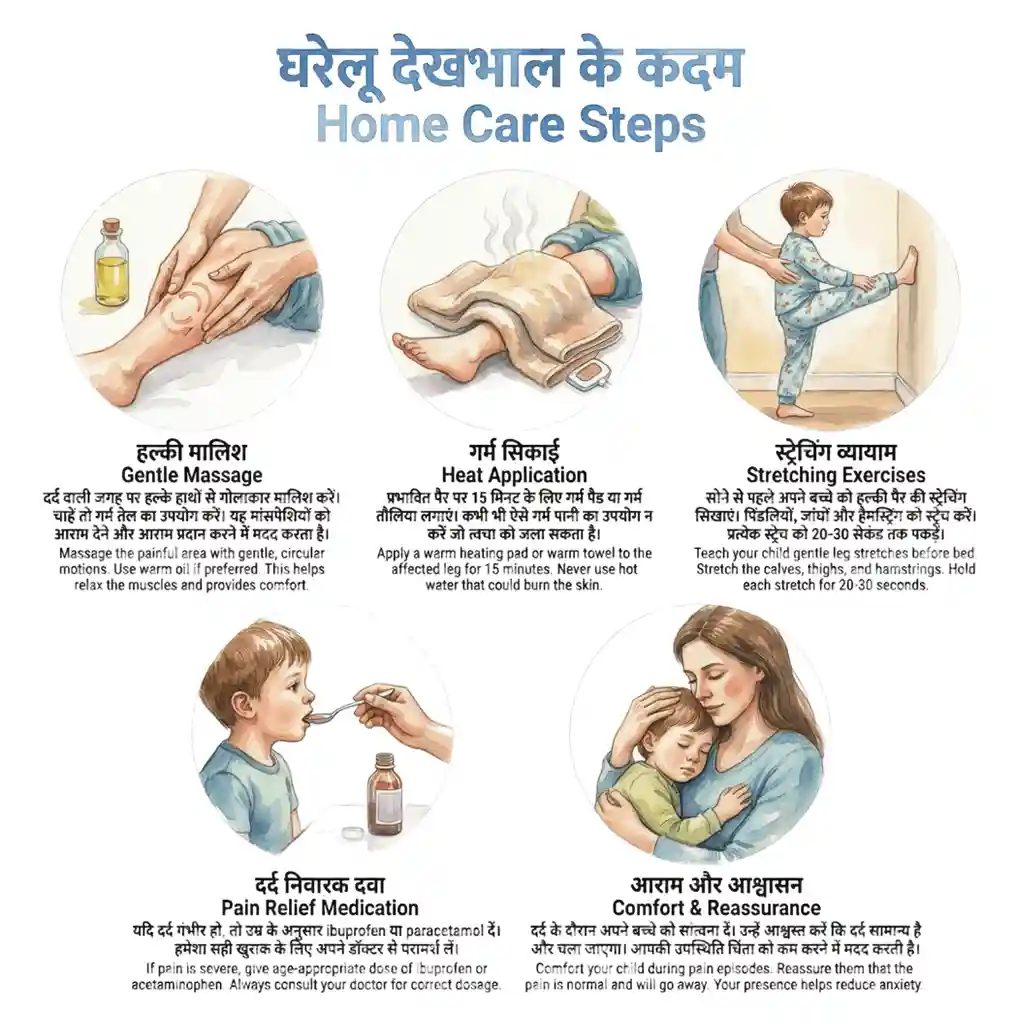
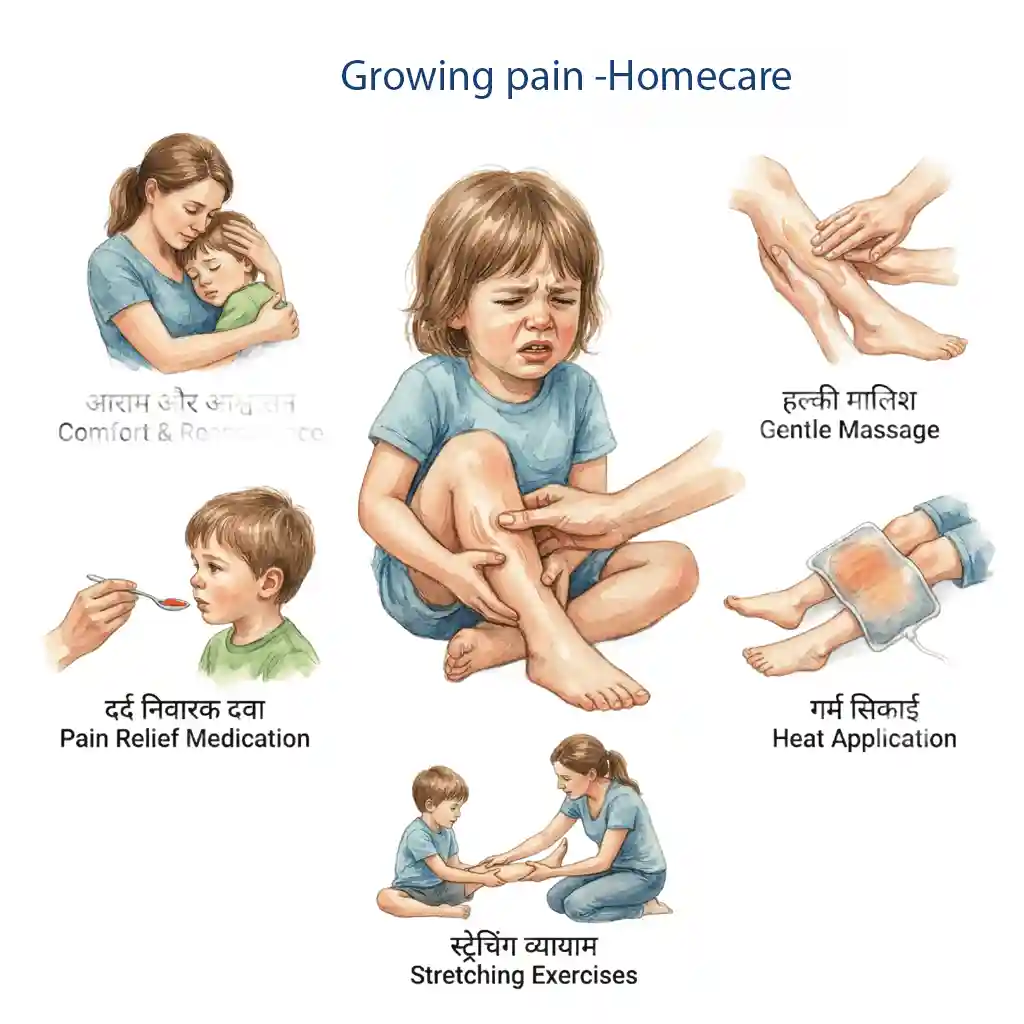
बढ़ने के दर्द को सरल उपायों से घर पर प्रभावी ढंग से प्रबंधित किया जा सकता है। आमतौर पर किसी चिकित्सा उपचार की आवश्यकता नहीं होती है।
Growing pains can be managed effectively at home with simple measures. No medical treatment is usually needed.
घरेलू देखभाल के कदम
Home Care Steps
-
हल्की मालिश
Gentle Massage
दर्द वाली जगह पर हल्के हाथों से गोलाकार मालिश करें। चाहें तो गर्म तेल का उपयोग करें। यह मांसपेशियों को आराम देने और आराम प्रदान करने में मदद करता है।
Massage the painful area with gentle, circular motions. Use warm oil if preferred. This helps relax the muscles and provides comfort.
-
गर्म सिकाई
Heat Application
प्रभावित पैर पर 15 मिनट के लिए गर्म पैड या गर्म तौलिया लगाएं। कभी भी ऐसे गर्म पानी का उपयोग न करें जो त्वचा को जला सकता है।
Apply a warm heating pad or warm towel to the affected leg for 15 minutes. Never use hot water that could burn the skin.
-
स्ट्रेचिंग व्यायाम
Stretching Exercises
सोने से पहले अपने बच्चे को हल्की पैर की स्ट्रेचिंग सिखाएं। पिंडलियों, जांघों और हैमस्ट्रिंग को स्ट्रेच करें। प्रत्येक स्ट्रेच को 20-30 सेकंड तक पकड़ें।
Teach your child gentle leg stretches before bed. Stretch the calves, thighs, and hamstrings. Hold each stretch for 20-30 seconds.
-
दर्द निवारक दवा
Pain Relief Medication
यदि दर्द गंभीर हो, तो उम्र के अनुसार ibuprofen या paracetamol दें। हमेशा सही खुराक के लिए अपने डॉक्टर से परामर्श लें।
If pain is severe, give age-appropriate dose of ibuprofen or acetaminophen. Always consult your doctor for correct dosage.
-
आराम और आश्वासन
Comfort & Reassurance
दर्द के दौरान अपने बच्चे को सांत्वना दें। उन्हें आश्वस्त करें कि दर्द सामान्य है और चला जाएगा। आपकी उपस्थिति चिंता को कम करने में मदद करती है।
Comfort your child during pain episodes. Reassure them that the pain is normal and will go away. Your presence helps reduce anxiety.
रोकथाम के टिप्स
Prevention Tips
नियमित स्ट्रेचिंग
Regular Stretching
विशेष रूप से सोने से पहले रोजाना स्ट्रेचिंग व्यायाम करें
Incorporate daily stretching exercises, especially before bed
हाइड्रेटेड रहें
Stay Hydrated
पूरे दिन बच्चे को भरपूर पानी पिलाएं
Ensure child drinks plenty of water throughout the day
अच्छे जूते
Good Footwear
गतिविधियों और खेल के दौरान सहायक जूते पहनें
Wear supportive shoes during activities and sports
पूर्वानुमान
Prognosis
बढ़ने का दर्द पूरी तरह से हानिरहित है और इसका पूर्वानुमान उत्कृष्ट है। अधिकांश बच्चे किशोरावस्था की शुरुआत तक इससे बाहर निकल जाते हैं।
Growing pains are completely harmless and have an excellent prognosis. Most children outgrow them by early teenage years.
अस्थायी स्थिति
Temporary Condition
बढ़ने का दर्द स्थायी नहीं है और अपने आप ठीक हो जाता है
Growing pains are not permanent and will resolve on their own
कोई दीर्घकालिक प्रभाव नहीं
No Long-term Effects
ये हड्डियों, मांसपेशियों या जोड़ों को कोई नुकसान नहीं पहुंचाते
They don't cause any damage to bones, muscles, or joints
आमतौर पर 12 वर्ष की आयु तक ठीक
Usually Resolve by Age 12
अधिकांश बच्चों में किशोरावस्था की शुरुआत तक यह दर्द बंद हो जाता है
Most children stop experiencing growing pains by early adolescence
अक्सर पूछे जाने वाले प्रश्न
Frequently Asked Questions
नहीं। नाम के बावजूद, बढ़ने का दर्द वास्तव में हड्डियों या शरीर की वृद्धि के कारण नहीं होता है। सटीक कारण अज्ञात है, लेकिन माना जाता है कि ये दिन के दौरान शारीरिक गतिविधि से मांसपेशियों की थकान से संबंधित हैं।
No. Despite the name, growing pains are not caused by the actual growth of bones or body. The exact cause is unknown, but they are believed to be related to muscle fatigue from physical activity during the day.
दर्द का प्रत्येक एपिसोड आमतौर पर 10-30 मिनट तक रहता है और शाम या रात को होता है। सुबह तक दर्द आमतौर पर चला जाता है। एक स्थिति के रूप में बढ़ने का दर्द आमतौर पर पूरी तरह से ठीक होने से पहले 1-2 साल तक रुक-रुक कर जारी रहता है।
Each episode of pain typically lasts 10-30 minutes and occurs in the evening or at night. The pain is usually gone by morning. Growing pains as a condition typically continue intermittently for 1-2 years before resolving completely.
बढ़ने का दर्द आमतौर पर देर दोपहर, शाम या रात को होता है। जब बच्चा सक्रिय होता है तो दिन के दौरान शायद ही कभी होता है। यदि आपके बच्चे को दिन के दौरान दर्द होता है जो उनकी गतिविधियों को सीमित करता है, तो यह बढ़ने के दर्द के अलावा कुछ और हो सकता है और डॉक्टर द्वारा मूल्यांकन किया जाना चाहिए।
Growing pains typically occur in the late afternoon, evening, or at night. They rarely occur during the day when the child is active. If your child has pain during the day that limits their activities, it may be something other than growing pains and should be evaluated by a doctor.
यदि दर्द बढ़ने के दर्द के विशिष्ट पैटर्न का पालन करता है (दोनों पैर, शाम/रात, कोई सूजन या लालिमा नहीं, सुबह तक चला गया), तो आपको आमतौर पर तुरंत डॉक्टर को दिखाने की आवश्यकता नहीं है। हालांकि, यदि निम्नलिखित लक्षण हैं तो अपॉइंटमेंट लें:
If the pain follows the typical pattern of growing pains (both legs, evening/night, no swelling or redness, gone by morning), you usually don't need to see a doctor immediately. However, schedule an appointment if:
- दिन के दौरान या सुबह दर्द बना रहता है
- Pain persists during the day or in the morning
- बच्चा लंगड़ा रहा है या चलने से इनकार कर रहा है
- Child is limping or refusing to walk
- सूजन, लालिमा या गर्मी है
- There is swelling, redness, or warmth
- बुखार है
- Fever is present
बढ़ने के दर्द वाले बच्चों को अक्सर बहुत सक्रिय दिनों के बाद अधिक दर्द होता है। हालांकि, आपको अपने बच्चे की शारीरिक गतिविधि को प्रतिबंधित नहीं करना चाहिए। व्यायाम और खेल स्वस्थ विकास के लिए महत्वपूर्ण हैं। इसके बजाय, गतिविधियों से पहले और बाद में नियमित स्ट्रेचिंग को प्रोत्साहित करें, पर्याप्त हाइड्रेशन सुनिश्चित करें, और जब दर्द होता है तो आराम के उपाय प्रदान करें।
Children with growing pains often have more pain after very active days. However, you should not restrict your child's physical activity. Exercise and sports are important for healthy development. Instead, encourage regular stretching before and after activities, ensure adequate hydration, and provide comfort measures when pain occurs.
बढ़ने के दर्द को रोकने के लिए कोई विशिष्ट दवा नहीं है। हालांकि, यदि दर्द गंभीर है, तो आप अपने बच्चे को ibuprofen या paracetamol जैसी ओवर-द-काउंटर दर्द निवारक दवाओं की उम्र-उपयुक्त खुराक दे सकते हैं। हमेशा अपने बच्चे की उम्र और वजन के आधार पर सही खुराक के लिए अपने डॉक्टर या फार्मासिस्ट से परामर्श लें। अधिकांश बच्चे मालिश और गर्मी अनुप्रयोग जैसे सरल आराम उपायों पर अच्छी प्रतिक्रिया देते हैं।
There is no specific medicine to prevent growing pains. However, if the pain is severe, you can give your child age-appropriate doses of over-the-counter pain relievers like ibuprofen or acetaminophen (paracetamol). Always consult your doctor or pharmacist for the correct dosage based on your child's age and weight. Most children respond well to simple comfort measures like massage and heat application.
नहीं, सभी बच्चों को बढ़ने का दर्द नहीं होता है। अध्ययनों से पता चलता है कि लगभग 25-40% बच्चे किसी समय बढ़ने के दर्द का अनुभव करते हैं। वे सक्रिय बच्चों में अधिक आम हैं और परिवारों में चलते हैं। यदि एक माता-पिता को बचपन में बढ़ने का दर्द हुआ था, तो उनके बच्चों को भी इसका अनुभव होने की अधिक संभावना है।
No, not all children experience growing pains. Studies suggest that about 25-40% of children experience growing pains at some point. They are more common in active children and tend to run in families. If one parent had growing pains as a child, their children are more likely to experience them as well.
बढ़ने का दर्द सबसे अधिक पैरों को प्रभावित करता है (जांघें, पिंडलियां, घुटनों के पीछे)। कभी-कभी, कुछ बच्चों को अपनी बाहों में भी इसी तरह की असुविधा का अनुभव हो सकता है, हालांकि यह कम आम है। यदि आपका बच्चा अक्सर बांह के दर्द की शिकायत करता है, विशेष रूप से यदि यह केवल एक बांह में है या अन्य लक्षणों के साथ है, तो अन्य स्थितियों को खारिज करने के लिए डॉक्टर से परामर्श करना सबसे अच्छा है।
Growing pains most commonly affect the legs (thighs, calves, behind the knees). Occasionally, some children may experience similar discomfort in their arms, though this is less common. If your child frequently complains of arm pain, especially if it's only in one arm or accompanied by other symptoms, it's best to consult a doctor to rule out other conditions.
पेशेवर सलाह चाहिए?
Need Professional Advice?
यदि आप अपने बच्चे के पैर के दर्द के बारे में चिंतित हैं, तो बाल रोग विशेषज्ञ से परामर्श करने में संकोच न करें।
If you're concerned about your child's leg pain, don't hesitate to consult a pediatrician.
डॉक्टर गौरव से संपर्क करें Contact Dr Gaurav Jain