Best Ankle Sprain Treatment in Indore (टखने की मोच का इलाज)
Ankle Sprain की सही जानकारी और जल्दी recovery के tips
Ankle Sprain Treatment
Complete guide and quick recovery tips for ankle sprain
Ankle Sprain क्या है? What is Ankle Sprain?
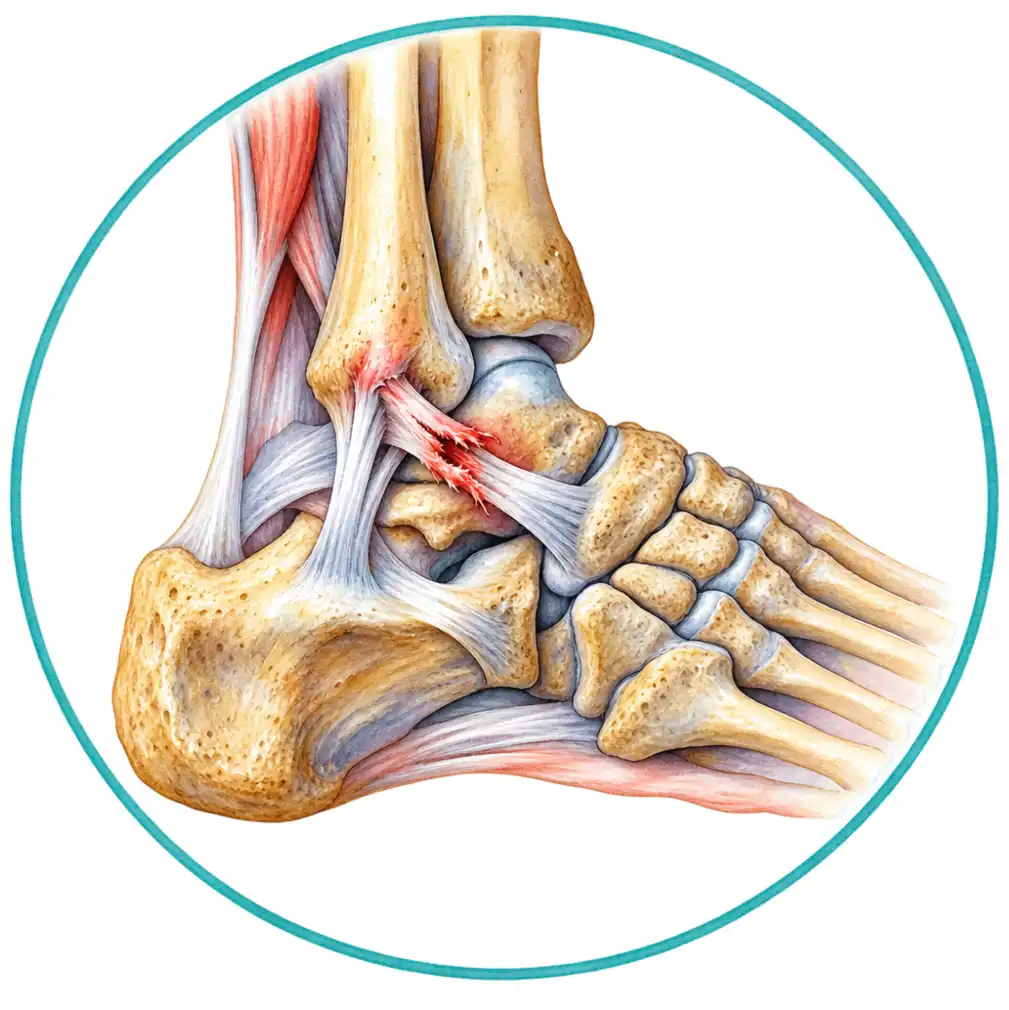
Ankle Sprain या टखने की मोच तब होती है जब ankle joint के ligaments (रबड़ बैंड जैसे tissues जो bones को जोड़ते हैं) stretch हो जाते हैं या tear हो जाते हैं। यह सबसे common sports injury है लेकिन यह रोजमर्रा की activities में भी हो सकती है।
Ankle sprain आमतौर पर तब होती है जब foot अचानक twist हो जाए, असमान surface पर चलें, या गिरते समय awkwardly land करें। Ankle बाहर की तरफ मुड़ जाता है (inversion sprain) - यह सबसे common type है।
जान लें!
हल्की मोच को ignore नहीं करना चाहिए। Proper treatment और rest के बिना ankle weak हो जाता है और फिर से sprain का risk बढ़ जाता है। Chronic ankle instability develop हो सकती है।
An ankle sprain occurs when the ligaments (rubber band-like tissues that connect bones) of the ankle joint are stretched or torn. It is the most common sports injury but can also happen during everyday activities.
Ankle sprains typically occur when the foot suddenly twists, walking on uneven surfaces, or landing awkwardly when falling. The ankle rolls outward (inversion sprain) - this is the most common type.
Important!
A mild sprain should not be ignored. Without proper treatment and rest, the ankle becomes weak and the risk of re-injury increases. Chronic ankle instability can develop.
Ankle Sprain के Grades Grades of Ankle Sprain
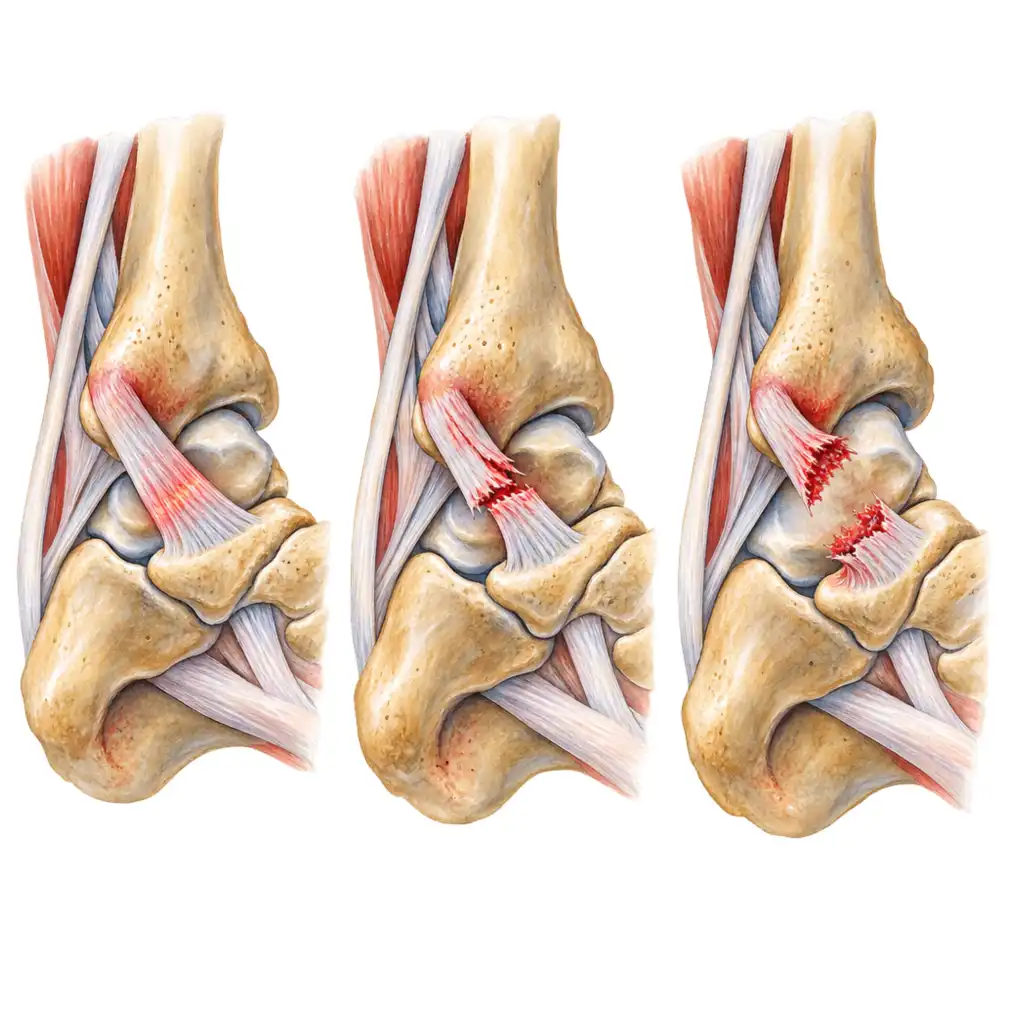
Grade 1 (Mild)
Ligament stretch: Ligaments में slight stretching या minor tearing
Symptoms: Mild pain, slight swelling, minimal bruising
Walking: थोड़ी discomfort के साथ walk कर सकते हैं
Recovery: 1-2 weeks में ठीक हो जाती है
Treatment: RICE protocol, rest, light exercises
Grade 2 (Moderate)
Ligament tear: Partial tearing of ligaments
Symptoms: Moderate to severe pain, considerable swelling, visible bruising
Walking: Walking painful है और difficult
Recovery: 3-6 weeks लग सकते हैं
Treatment: RICE, immobilization, physical therapy, ankle brace
Grade 3 (Severe)
Complete tear: Ligament completely tear हो जाता है
Symptoms: Severe pain, massive swelling, extensive bruising, instability
Walking: बिल्कुल walk नहीं कर सकते, ankle unstable feel होता है
Recovery: 8-12 weeks या उससे ज्यादा
Treatment: Immobilization, cast/boot, physiotherapy, कभी-कभी surgery
Grade 1 (Mild)
Ligament stretch: Slight stretching or minor tearing of ligaments
Symptoms: Mild pain, slight swelling, minimal bruising
Walking: Can walk with some discomfort
Recovery: Heals in 1-2 weeks
Treatment: RICE protocol, rest, light exercises
Grade 2 (Moderate)
Ligament tear: Partial tearing of ligaments
Symptoms: Moderate to severe pain, considerable swelling, visible bruising
Walking: Walking is painful and difficult
Recovery: May take 3-6 weeks
Treatment: RICE, immobilization, physical therapy, ankle brace
Grade 3 (Severe)
Complete tear: Ligament is completely torn
Symptoms: Severe pain, massive swelling, extensive bruising, instability
Walking: Cannot walk at all, ankle feels unstable
Recovery: 8-12 weeks or more
Treatment: Immobilization, cast/boot, physiotherapy, sometimes surgery
लक्षण Symptoms
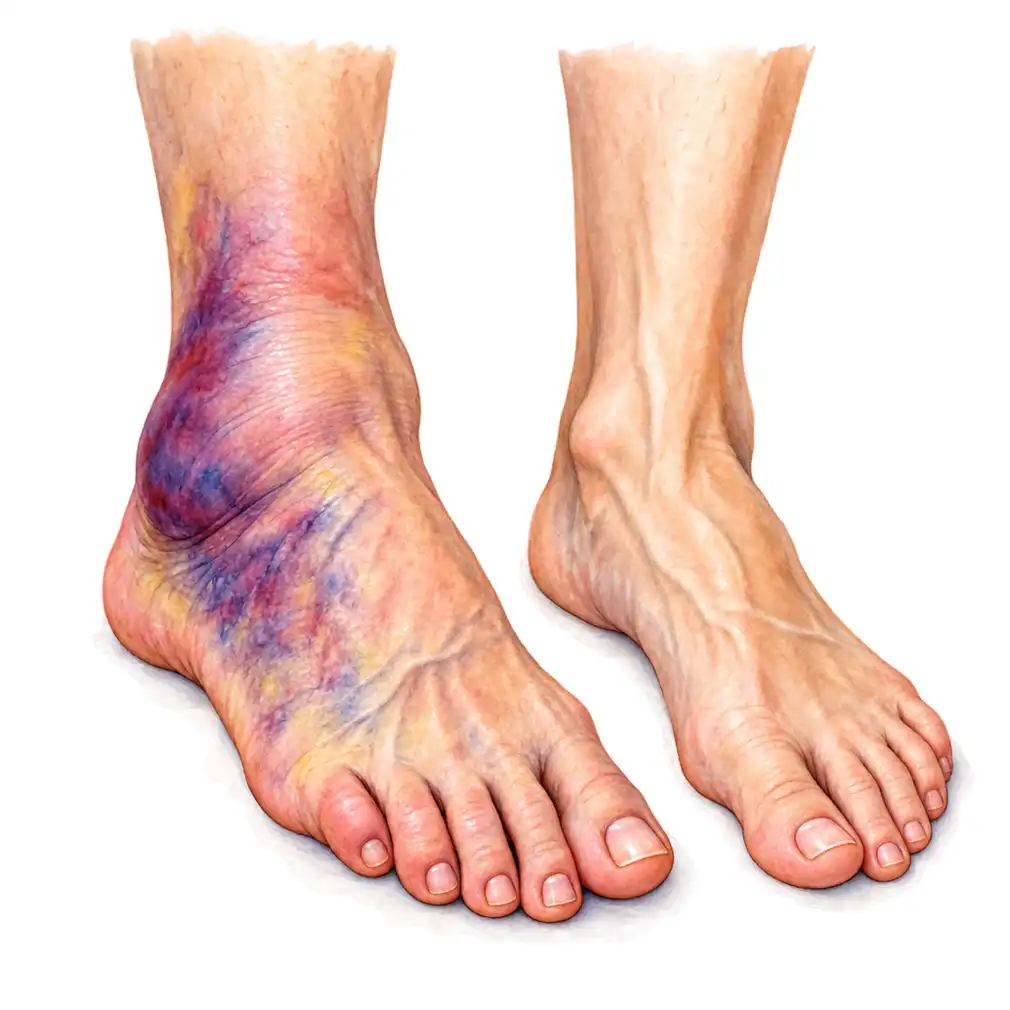
Ankle में तेज दर्द होना, खासकर touch करने या move करने पर। दर्द तुरंत start होता है और weight डालने पर बढ़ जाता है।
Sharp pain in ankle, especially when touched or moved. Pain starts immediately and increases when putting weight on it.
Ankle और foot में swelling आ जाती है। कुछ घंटों में swelling बढ़ जाती है। Severe cases में पूरा foot swell हो सकता है।
Swelling appears in ankle and foot. Swelling increases within a few hours. In severe cases, entire foot may swell.
Ankle के आसपास नीले या बैंगनी marks आ जाते हैं। यह blood vessels के damage से होता है। 24-48 hours में visible होता है।
Blue or purple marks appear around ankle. This happens from damaged blood vessels. Becomes visible in 24-48 hours.
Ankle पर weight डालना painful होता है। Normal तरीके से walk नहीं कर पाते। Limping होती है या crutches की जरूरत पड़ती है।
Putting weight on ankle is painful. Cannot walk normally. Limping occurs or crutches may be needed.
Ankle को सभी directions में move करना difficult होता है। Stiffness महसूस होती है। Full range of motion नहीं हो पाता।
Difficult to move ankle in all directions. Feels stiff. Full range of motion is not possible.
कुछ लोगों को injury के समय "pop" या "snap" की आवाज सुनाई देती है। यह ligament tear होने की sound हो सकती है।
Some people hear a "pop" or "snap" sound at the time of injury. This may be the sound of ligament tearing.
तुरंत क्या करें - RICE Protocol Immediate Treatment - RICE Protocol
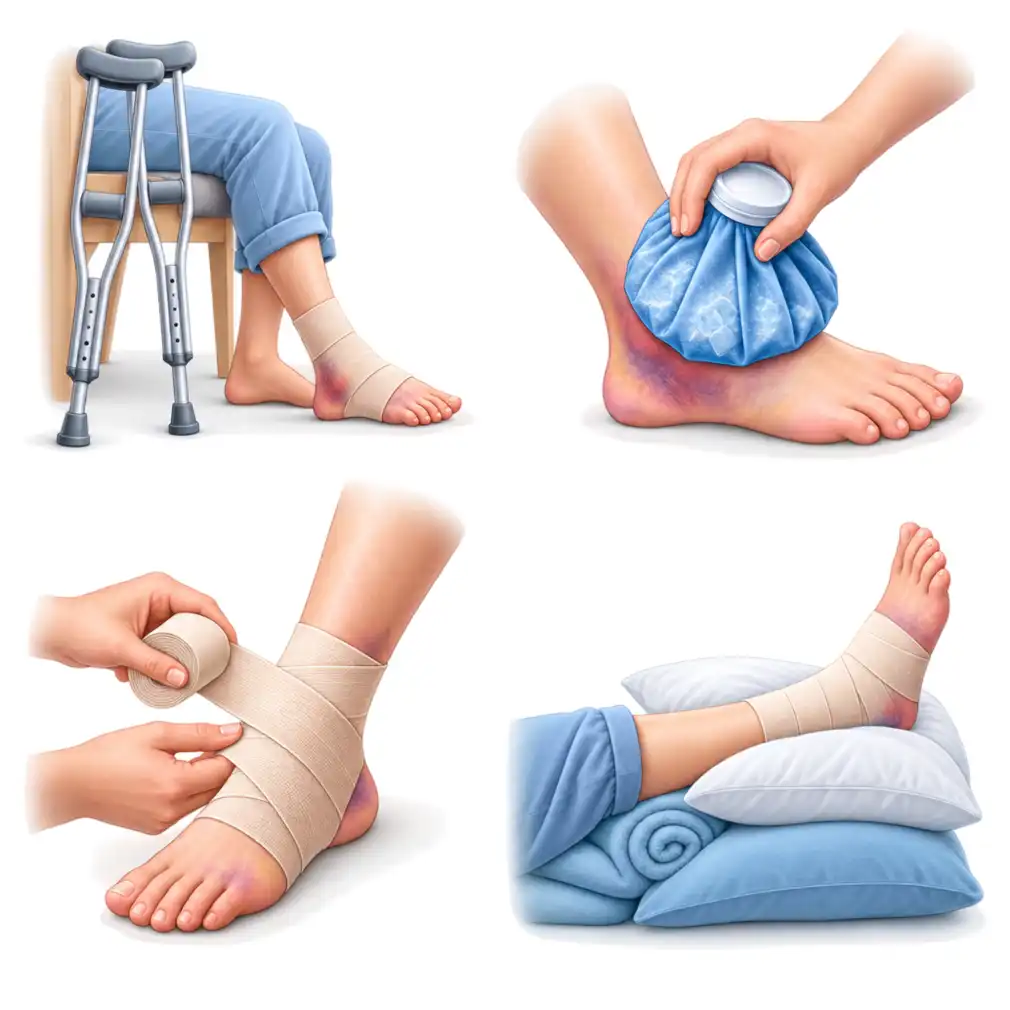
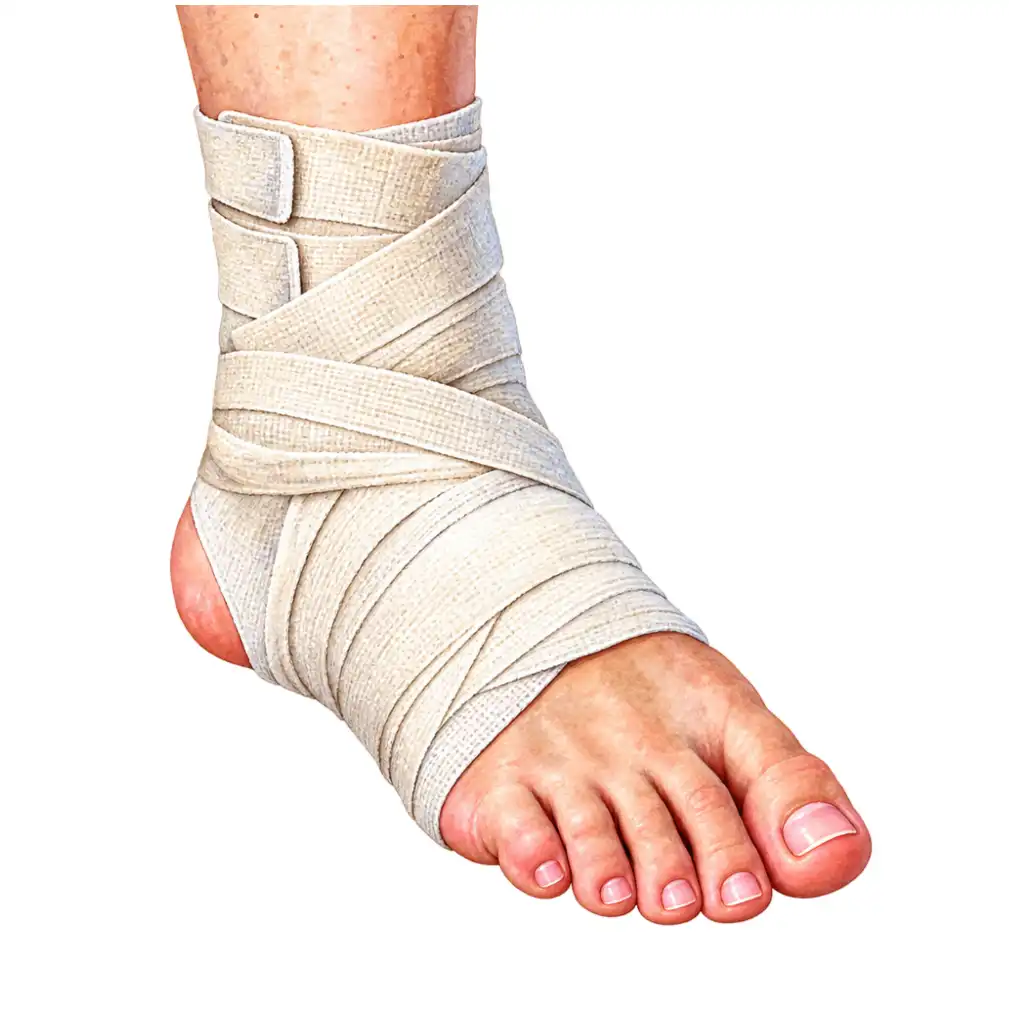
Ankle sprain होने के बाद पहले 48-72 hours बहुत critical होते हैं। तुरंत RICE Protocol follow करें:
The first 48-72 hours after an ankle sprain are critical. Immediately follow the RICE Protocol:
तुरंत रुक जाएं: खेलना या activity बंद करें। Ankle को पूरा rest दें।
Weight bearing avoid करें: Crutches use करें अगर जरूरी हो।
समय: कम से कम 48-72 hours तक आराम करें।
Stop immediately: Stop playing or activity. Give ankle complete rest.
Avoid weight bearing: Use crutches if necessary.
Duration: Rest for at least 48-72 hours.
Ice pack लगाएं: Towel में wrap करके 15-20 minutes के लिए।
Frequency: हर 2-3 hours में repeat करें।
Duration: पहले 48-72 hours में continue करें।
सावधानी: Direct skin पर न लगाएं।
Apply ice pack: Wrapped in towel for 15-20 minutes.
Frequency: Repeat every 2-3 hours.
Duration: Continue for first 48-72 hours.
Caution: Don't apply directly on skin.
Elastic bandage: Ankle को crepe bandage से wrap करें।
Tightness: Snug रखें लेकिन बहुत tight नहीं।
Check करें: Toes नीले न हों, numbness न हो।
फायदा: Swelling कम करता है।
Elastic bandage: Wrap ankle with crepe bandage.
Tightness: Keep snug but not too tight.
Check: Toes should not turn blue, no numbness.
Benefit: Reduces swelling.
Ankle को ऊपर रखें: Heart level से ऊपर उठाएं।
Support: Pillows का use करें।
कब: Sitting या lying down के समय।
फायदा: Swelling और pain कम होती है।
Keep ankle elevated: Raise above heart level.
Support: Use pillows.
When: While sitting or lying down.
Benefit: Reduces swelling and pain.
Treatment Options Treatment Options
Pain Medicines
Over-the-counter: Ibuprofen, Paracetamol pain और inflammation कम करते हैं।
Dosage: Doctor की prescription follow करें।
Avoid: पहले 48 hours में aspirin avoid करें।
Note: Medicine के साथ rest भी जरूरी है।
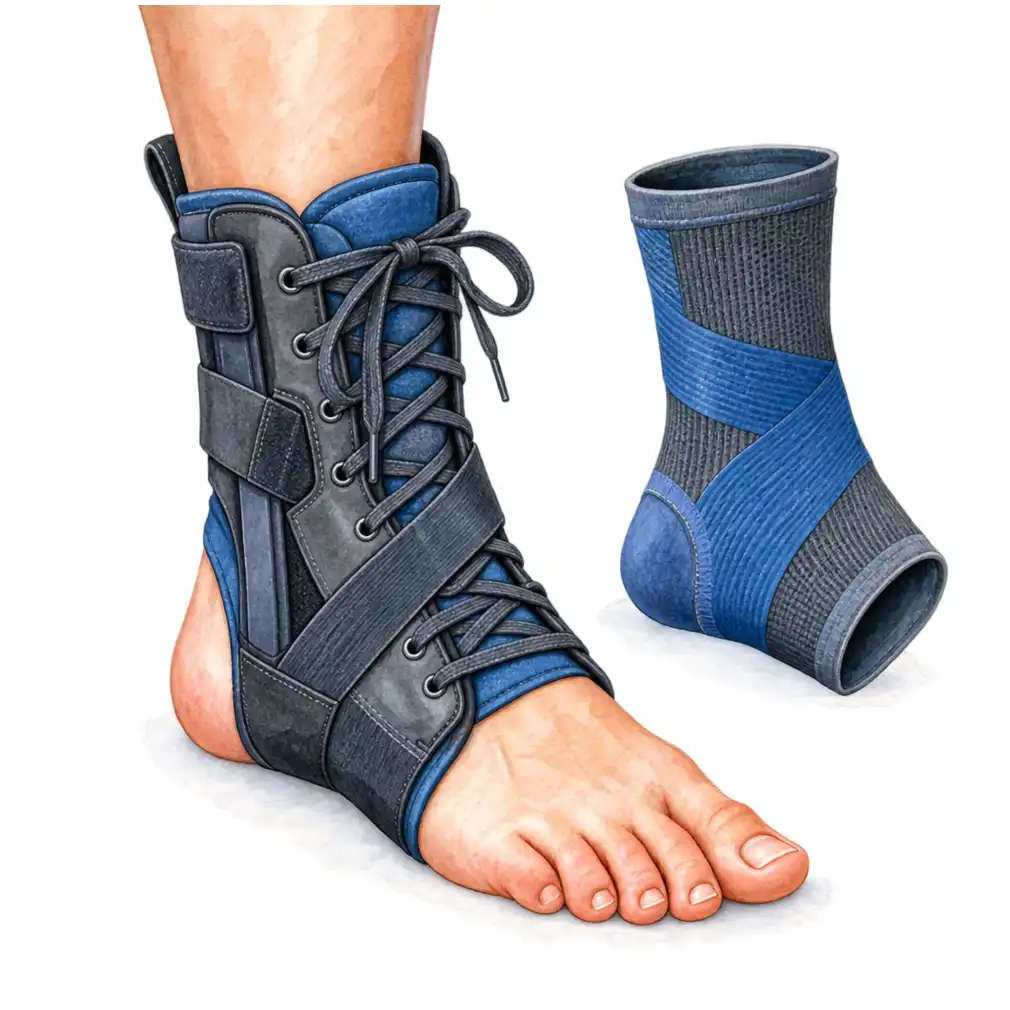
Ankle Brace/Support
Stabilization: Ankle को support और protection देता है।
Types: Lace-up braces, stirrup braces, sleeve braces।
Duration: Doctor के according कुछ weeks तक wear करें।
Benefits: Re-injury से बचाता है, healing में help करता है।
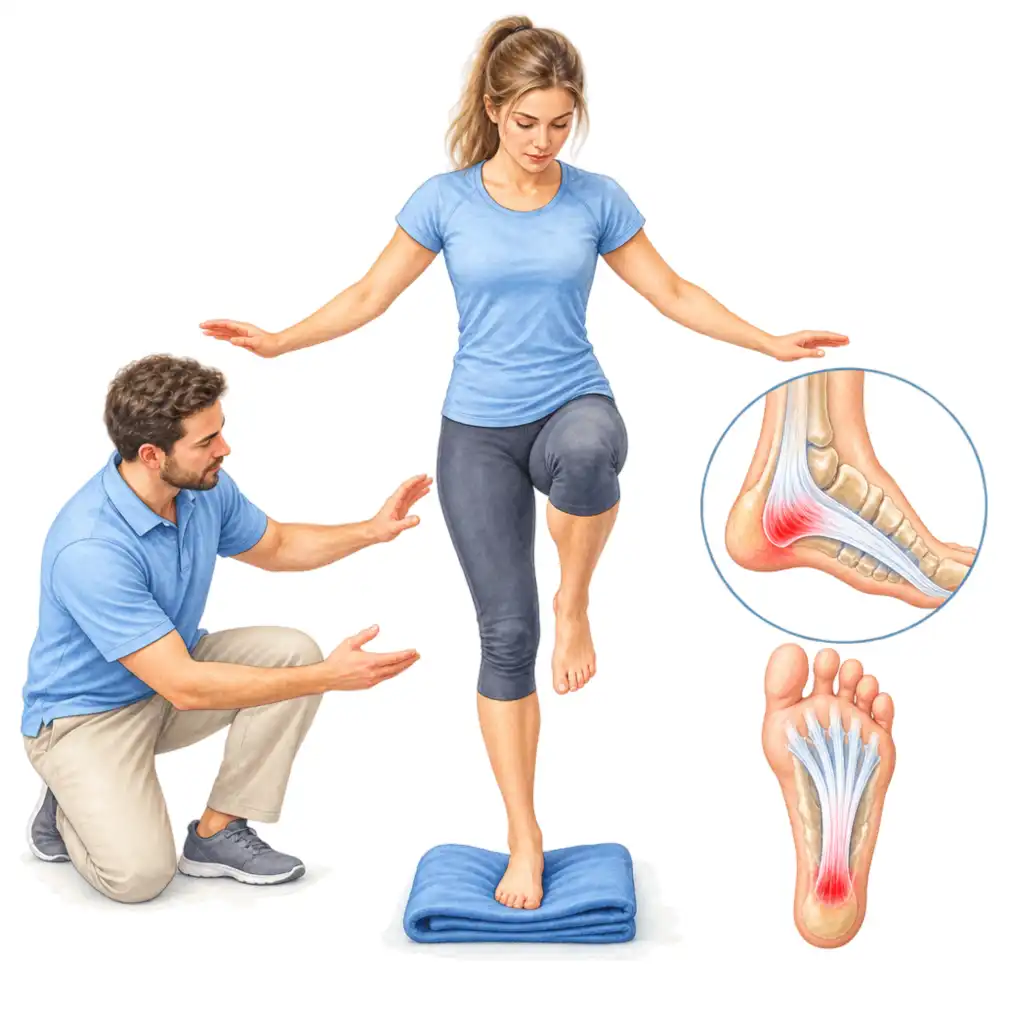
Physical Therapy
Exercises: Range of motion, strengthening, balance exercises।
When: Initial healing के बाद start करें।
Goals: Flexibility restore करना, strength बढ़ाना।
Duration: कई weeks तक continue करें।
Doctor से कब मिलें
Severe pain: जो improve नहीं हो रहा।
Unable to walk: 3-4 days बाद भी।
Severe swelling: या deformity दिखाई दे।
Numbness: या circulation problems हों।
Pain Medicines
Over-the-counter: Ibuprofen, Paracetamol reduce pain and inflammation.
Dosage: Follow doctor's prescription.
Avoid: Avoid aspirin in first 48 hours.
Note: Rest is also necessary along with medicine.
Ankle Brace/Support
Stabilization: Provides support and protection to ankle.
Types: Lace-up braces, stirrup braces, sleeve braces.
Duration: Wear for several weeks as per doctor.
Benefits: Prevents re-injury, helps healing.
Physical Therapy
Exercises: Range of motion, strengthening, balance exercises.
When: Start after initial healing.
Goals: Restore flexibility, increase strength.
Duration: Continue for several weeks.
When to See Doctor
Severe pain: That's not improving.
Unable to walk: Even after 3-4 days.
Severe swelling: Or visible deformity.
Numbness: Or circulation problems.
खतरे के संकेत Warning Signs
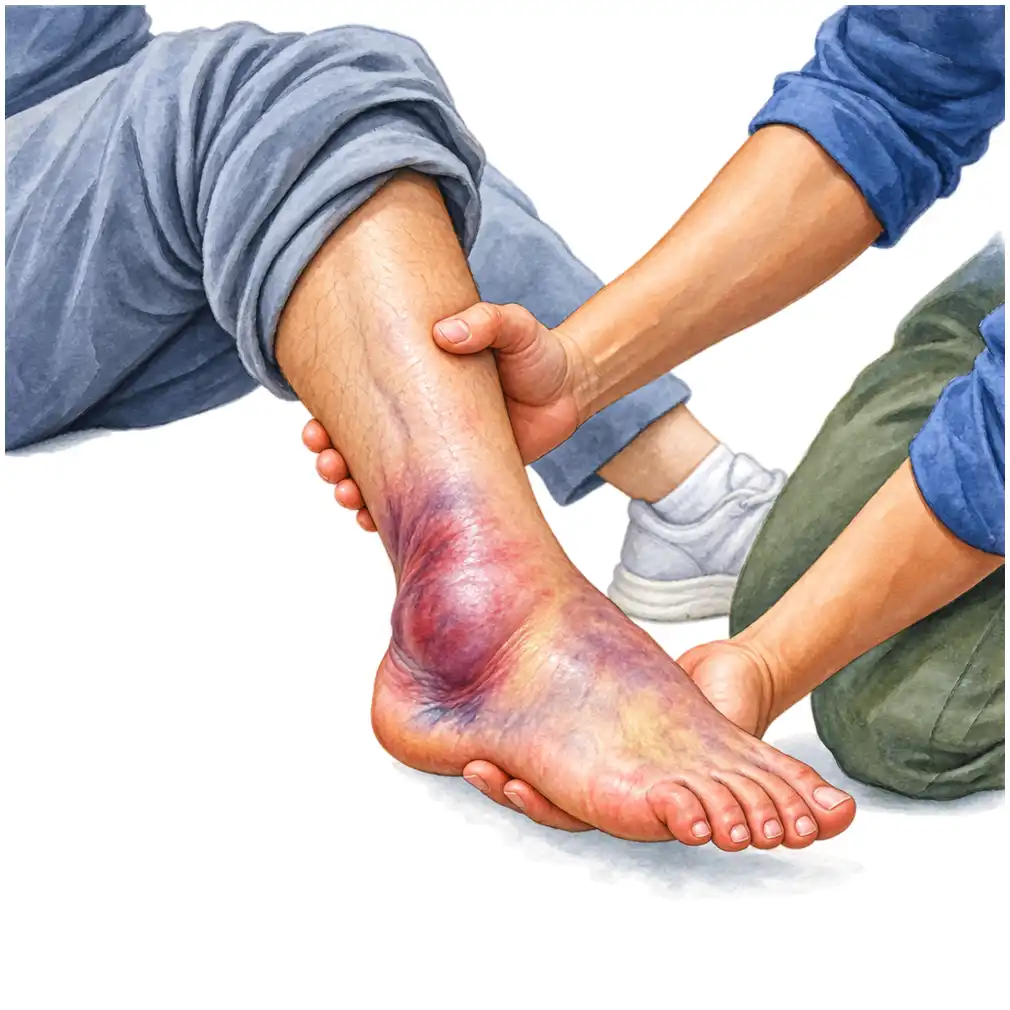
तुरंत Doctor को दिखाएं अगर:
See Doctor Immediately If:
- Severe pain: जो बर्दाश्त नहीं हो रहा और बढ़ता जा रहा है
- Ankle deformity: Ankle bent या out of place दिख रहा है
- Unable to move: Ankle या toes को बिल्कुल move नहीं कर पा रहे
- Numbness/Tingling: Foot में sensation कम हो गया है
- Cold foot: Foot cold feel हो रहा है या color change हो गया है
- Fever: बुखार आ जाए - infection की sign हो सकती है
- Pop sound: Injury के समय loud popping sound सुनाई दी हो
- Not improving: 1 week बाद भी कोई improvement न हो
- Severe pain: That is unbearable and keeps increasing
- Ankle deformity: Ankle looks bent or out of place
- Unable to move: Cannot move ankle or toes at all
- Numbness/Tingling: Reduced sensation in foot
- Cold foot: Foot feels cold or has changed color
- Fever: Develops fever - may be sign of infection
- Pop sound: Heard loud popping sound at time of injury
- Not improving: No improvement even after 1 week
Ankle Sprain से कैसे बचें? How to Prevent Ankle Sprain?
सही Footwear
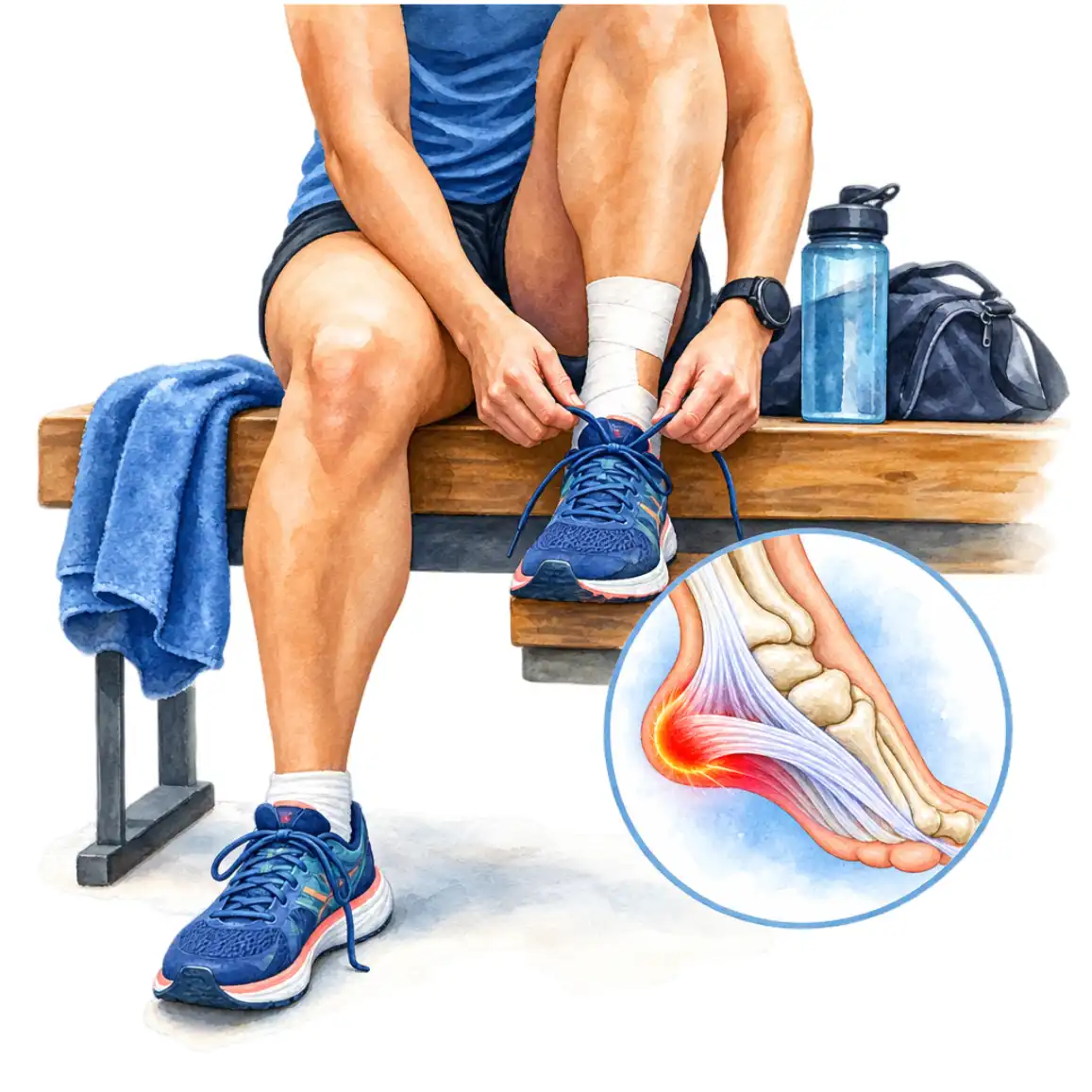
Proper fitting shoes पहनें जो ankle को support दें। Sports के लिए sport-specific shoes use करें। High heels या loose footwear avoid करें।
Warm-up करें
किसी भी physical activity या sports से पहले proper warm-up और stretching करें। Cold muscles और tight ligaments injury का risk बढ़ाते हैं।
Strengthening Exercises
Ankle और leg की muscles को strong रखें। Balance exercises practice करें। Calf raises, ankle circles regularly करें।
सावधानी से चलें
Uneven surfaces, stairs, या slippery areas पर ध्यान से चलें। रात में अच्छी lighting में चलें। Hurry में न दौड़ें।
Ankle Support Use करें
अगर पहले sprain हो चुकी है तो sports के समय ankle brace या taping use करें। Weak ankle को extra protection दें।
पुरानी Injury का Treatment
पुरानी ankle injury को completely heal होने दें। Incomplete recovery से chronic instability develop हो सकती है।
Healthy Weight
Healthy weight maintain करें। Extra weight ankle joints पर extra stress डालता है और injury का risk बढ़ाता है।
Flexibility बनाए रखें
Regular stretching से ankle की flexibility maintain रहती है। Stiff joints injury के ज्यादा prone होते हैं।
Proper Footwear
Wear properly fitting shoes that support the ankle. Use sport-specific shoes for sports. Avoid high heels or loose footwear.
Warm-up
Do proper warm-up and stretching before any physical activity or sports. Cold muscles and tight ligaments increase injury risk.
Strengthening Exercises
Keep ankle and leg muscles strong. Practice balance exercises. Do calf raises, ankle circles regularly.
Walk Carefully
Walk carefully on uneven surfaces, stairs, or slippery areas. Walk in good lighting at night. Don't run in a hurry.
Use Ankle Support
If you've had a previous sprain, use ankle brace or taping during sports. Give weak ankle extra protection.
Treat Old Injuries
Let old ankle injuries heal completely. Incomplete recovery can lead to chronic instability.
Healthy Weight
Maintain healthy weight. Extra weight puts extra stress on ankle joints and increases injury risk.
Maintain Flexibility
Regular stretching maintains ankle flexibility. Stiff joints are more prone to injury.
अक्सर पूछे जाने वाले सवाल (FAQ) Frequently Asked Questions (FAQ)
Rest की duration sprain की severity पर depend करती है। Grade 1 (Mild): 1-2 weeks, limited activity के साथ। Grade 2 (Moderate): 3-4 weeks, proper immobilization के साथ। Grade 3 (Severe): 6-12 weeks या उससे ज्यादा। पहले 48-72 hours complete rest बहुत जरूरी है। इस time RICE protocol strictly follow करें। उसके बाद doctor की guidance में gradually activity resume करें। Too early return से re-injury का risk बढ़ जाता है।
Rest duration depends on sprain severity. Grade 1 (Mild): 1-2 weeks with limited activity. Grade 2 (Moderate): 3-4 weeks with proper immobilization. Grade 3 (Severe): 6-12 weeks or more. Complete rest for first 48-72 hours is essential. During this time, strictly follow RICE protocol. After that, gradually resume activity under doctor's guidance. Too early return increases re-injury risk.
Timeline के according अलग-अलग approach use करें: पहले 48-72 hours: COLD (ice) लगाएं। यह swelling और pain कम करता है। हर 2-3 hours में 15-20 minutes के लिए। 72 hours के बाद: HEAT (warm compress) use कर सकते हैं। यह blood flow increase करता है और healing में help करता है। Never: पहले 3 days में गर्म सिकाई न करें - इससे swelling बढ़ सकती है। Ice को direct skin पर न लगाएं, towel में wrap करें। अगर doubt हो तो doctor से पूछें।
Use different approaches based on timeline: First 48-72 hours: Apply COLD (ice). This reduces swelling and pain. Every 2-3 hours for 15-20 minutes. After 72 hours: Can use HEAT (warm compress). This increases blood flow and helps healing. Never: Don't apply heat in first 3 days - it can increase swelling. Don't apply ice directly on skin, wrap in towel. If in doubt, ask your doctor.
Healing time sprain की severity और proper treatment पर depend करता है: Grade 1 (Mild): 1-3 weeks में ठीक हो जाती है। Most people 2 weeks में normal activities resume कर सकते हैं। Grade 2 (Moderate): 4-8 weeks लग सकते हैं। Full recovery में 6-8 weeks तक का समय। Grade 3 (Severe): 3-6 months लग सकते हैं। कुछ cases में 1 year तक। हालांकि, यह individual factors पर भी depend करता है: age, overall health, previous injuries, adherence to treatment। Proper rest और physiotherapy से healing fast होती है।
Healing time depends on sprain severity and proper treatment: Grade 1 (Mild): Heals in 1-3 weeks. Most people can resume normal activities in 2 weeks. Grade 2 (Moderate): May take 4-8 weeks. Full recovery takes 6-8 weeks. Grade 3 (Severe): May take 3-6 months. In some cases up to 1 year. However, this also depends on individual factors: age, overall health, previous injuries, adherence to treatment. Healing is faster with proper rest and physiotherapy.
यह sprain की severity पर depend करता है। Grade 1 (Mild): Discomfort के साथ walk कर सकते हैं लेकिन limited रखें। Crutches की जरूरत नहीं। Grade 2 (Moderate): Walking difficult और painful है। Crutches use करना better है। Partial weight bearing okay है। Grade 3 (Severe): बिल्कुल walk नहीं करना चाहिए। Crutches या wheelchair जरूरी है। General rule: अगर walking से pain बढ़ता है तो avoid करें। Doctor की permission के बिना full weight bearing न करें। जल्दबाजी में return करने से healing delay हो सकती है और chronic problems develop हो सकती हैं।
This depends on sprain severity. Grade 1 (Mild): Can walk with discomfort but keep it limited. Crutches not needed. Grade 2 (Moderate): Walking is difficult and painful. Better to use crutches. Partial weight bearing is okay. Grade 3 (Severe): Should not walk at all. Crutches or wheelchair necessary. General rule: If walking increases pain, avoid it. Don't do full weight bearing without doctor's permission. Returning in haste can delay healing and develop chronic problems.
Exercises को gradually stages में करें: Stage 1 (1-2 weeks): Ankle circles - sitting position में foot को circle में घुमाएं। Alphabet writing - toes से हवा में ABC लिखें। Towel stretch - sitting position में towel से foot को gently stretch करें। Stage 2 (2-4 weeks): Resistance band exercises - band से ankle को different directions में move करें। Heel raises - standing position में heels उठाएं। Toe raises - toes पर खड़े होएं। Stage 3 (4+ weeks): Balance exercises - one leg पर खड़े होने की practice। Jumping exercises - gradually start करें। Sports-specific movements। हमेशा doctor या physiotherapist की guidance में exercises करें।
Do exercises gradually in stages: Stage 1 (1-2 weeks): Ankle circles - rotate foot in circles while sitting. Alphabet writing - write ABC in air with toes. Towel stretch - gently stretch foot with towel while sitting. Stage 2 (2-4 weeks): Resistance band exercises - move ankle in different directions with band. Heel raises - raise heels in standing position. Toe raises - stand on toes. Stage 3 (4+ weeks): Balance exercises - practice standing on one leg. Jumping exercises - start gradually. Sports-specific movements. Always do exercises under doctor or physiotherapist's guidance.
हर ankle sprain में X-ray जरूरी नहीं है, लेकिन कुछ situations में जरूर करवाना चाहिए: X-ray जरूरी है अगर: Severe pain है जो improve नहीं हो रहा। Ankle deformed दिख रहा है या out of place है। बोन के area पर tenderness है। 3-4 days बाद भी walk नहीं कर पा रहे। Previous fracture की history है। X-ray क्यों: Fracture rule out करने के लिए। Bone displacement check करने के लिए। Proper diagnosis के लिए। Other tests: Severe cases में MRI की जरूरत पड़ सकती है ligament damage assess करने के लिए। Doctor clinical examination के बाद decide करते हैं कि imaging जरूरी है या नहीं।
X-ray is not necessary for every ankle sprain, but should be done in some situations: X-ray necessary if: Severe pain that's not improving. Ankle looks deformed or out of place. Tenderness in bone area. Cannot walk even after 3-4 days. History of previous fracture. Why X-ray: To rule out fracture. To check bone displacement. For proper diagnosis. Other tests: In severe cases, MRI may be needed to assess ligament damage. Doctor decides after clinical examination whether imaging is necessary.
हां, एक बार ankle sprain होने के बाद re-injury का risk बढ़ जाता है। क्यों risk बढ़ता है: Ligaments stretch हो जाते हैं और weak रह जाते हैं। Proprioception (body की position sense) कम हो जाता है। Muscles weak हो सकती हैं। Re-injury से कैसे बचें: Sprain को completely heal होने दें - जल्दबाजी न करें। Strengthening exercises regularly करें। Balance training जरूर करें। Sports के समय ankle brace या taping use करें। Proper footwear पहनें। Warm-up properly करें। Statistics: लगभग 40% लोगों को repeat sprain होती है अगर proper rehabilitation न की जाए। इसलिए physiotherapy complete करना बहुत जरूरी है।
Yes, after having an ankle sprain once, the risk of re-injury increases. Why risk increases: Ligaments get stretched and remain weak. Proprioception (body's position sense) decreases. Muscles can become weak. How to prevent re-injury: Let sprain heal completely - don't rush. Do strengthening exercises regularly. Balance training is essential. Use ankle brace or taping during sports. Wear proper footwear. Warm up properly. Statistics: About 40% of people get repeat sprain if proper rehabilitation isn't done. Therefore completing physiotherapy is very important.
Sports में return की timing बहुत important है। Too early return से permanent damage हो सकता है। Return criteria: No pain at rest या daily activities में। Full range of motion restore हो गया हो। Strength injured side की non-injured side के 90% हो। Balance और proprioception normal हो। Doctor या physiotherapist की clearance मिल जाए। Timeline: Grade 1: 2-3 weeks after। Grade 2: 6-8 weeks after। Grade 3: 3-6 months after। Progressive return: पहले light activities start करें। Gradually intensity बढ़ाएं। Sport-specific drills practice करें। अगर कोई pain या swelling हो तो immediately stop करें। Ankle brace या taping use करना consider करें।
Timing of sports return is very important. Too early return can cause permanent damage. Return criteria: No pain at rest or during daily activities. Full range of motion restored. Strength of injured side is 90% of non-injured side. Balance and proprioception are normal. Clearance from doctor or physiotherapist received. Timeline: Grade 1: 2-3 weeks after. Grade 2: 6-8 weeks after. Grade 3: 3-6 months after. Progressive return: Start with light activities first. Gradually increase intensity. Practice sport-specific drills. If any pain or swelling occurs, stop immediately. Consider using ankle brace or taping.
Timing बहुत important है। पहले 48-72 hours: Absolutely NO massage। इस time massage करने से bleeding और swelling बढ़ सकती है। RICE protocol follow करें। 72 hours के बाद: Gentle massage beneficial हो सकती है। लेकिन proper technique जरूरी है। Benefits of proper massage: Blood circulation improve होता है। Swelling कम करने में help करता है। Muscle tension relieve होता है। Healing promote होती है। Type of massage: Light, gentle strokes। Direct ankle joint पर pressure नहीं। Surrounding muscles पर focus करें। Best approach: Professional physiotherapist या massage therapist से करवाएं। Self-massage के लिए doctor से technique सीखें।
Timing is very important. First 48-72 hours: Absolutely NO massage. Massage during this time can increase bleeding and swelling. Follow RICE protocol. After 72 hours: Gentle massage can be beneficial. But proper technique is necessary. Benefits of proper massage: Improves blood circulation. Helps reduce swelling. Relieves muscle tension. Promotes healing. Type of massage: Light, gentle strokes. No pressure directly on ankle joint. Focus on surrounding muscles. Best approach: Get it done by professional physiotherapist or massage therapist. Learn technique from doctor for self-massage.
नहीं, ankle brace को smartly use करना चाहिए। कब पहनें: Sports या physical activities के दौरान। High-risk activities में (running, jumping)। Recovery phase में doctor की advice के according। Previous injury है तो extra protection के लिए। कब न पहनें: Daily normal activities में continuously नहीं। Resting के समय नहीं। Sleeping के समय generally नहीं (unless doctor says)। Why not always: Constant use से muscles weak हो सकती हैं। Natural stability develop नहीं होती। Over-reliance बन सकता है। Balance: Strengthening exercises के साथ brace use करें। Gradually brace का use कम करते जाएं। Doctor से timeline discuss करें। Goal है naturally strong ankle develop करना, brace पर depend नहीं रहना।
No, ankle brace should be used smartly. When to wear: During sports or physical activities. In high-risk activities (running, jumping). During recovery phase as per doctor's advice. For extra protection if previous injury. When not to wear: Not continuously during daily normal activities. Not while resting. Generally not while sleeping (unless doctor says). Why not always: Constant use can weaken muscles. Natural stability doesn't develop. Can create over-reliance. Balance: Use brace along with strengthening exercises. Gradually reduce brace use. Discuss timeline with doctor. Goal is to develop naturally strong ankle, not depend on brace.
अपॉइंटमेंट बुक करें
Book Your Appointment
Ankle sprain या sports injury के expert treatment के लिए
Dr. Gaurav Jain से आज ही संपर्क करें।
For expert treatment of ankle sprain or sports injury
Contact Dr. Gaurav Jain today.