 Dr. Gaurav Jain
Walking काफी नहीं — बच्चों की हड्डियाँ मज़बूत करने के लिए कूदना
लेखक: Dr. Gaurav Jain | Pediatric Orthopaedic Surgeon & Clubfoot Specialist विभाग: Orthopaedics, LNCT Medical College & Sewakunj Hospital, Indore विषय: बाल हड्डी स्वास्थ्य, Physical Activity, Osteogenic Exercise, GRF पठन समय: ~10 मिनट
भूमिका: एक common assumption
"डॉक्टर साहब, हम बच्चे को रोज़ school तक पैदल भेजते हैं। शाम को भी park में walk करवाते हैं। हड्डियाँ तो ठीक होंगी ना?"
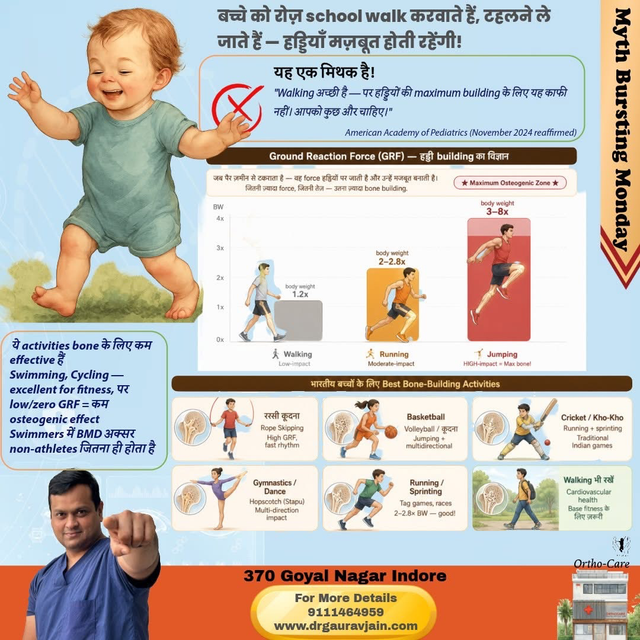
यह सुनकर मैं हमेशा कहता हूँ: "Walking अच्छी है — पर हड्डियों की maximum building के लिए यह काफी नहीं। आपको कुछ और चाहिए।"
और फिर माँ-बाप का चेहरा देखने लायक होता है — "और क्या करें?"
आज इस blog में हम पूरी science explain करेंगे — क्यों walking bone health के लिए एक starting point है, पर finish line नहीं। और कौन सी activities हैं जो बच्चे की हड्डियों को truly मज़बूत बनाती हैं।
हड्डियाँ बनती कैसे हैं? — Mechanostat Theory
पहले यह समझिए कि bones mechanical engineering का एक masterpiece हैं।
Mechanostat Theory (Harold Frost, 1987 — bone biology का cornerstone):
हड्डियाँ mechanical loading के response में adapt करती हैं। जब आप उन पर force डालते हैं, bone cells (osteoblasts) activate होती हैं और नई bone tissue बनाती हैं।
लेकिन एक critical catch है:
Bone cells एक ही magnitude की बार-बार loading से desensitize हो जाती हैं।
इसका मतलब: जब आप रोज़ एक ही speed से walking करते हैं, शुरुआत में benefit होती है — लेकिन धीरे-धीरे bone cells उस level को "normal baseline" मान लेती हैं और extra building बंद हो जाती है।
हड्डियाँ तभी maximum growth करती हैं जब:
- Force magnitude high हो (body weight से काफी ज़्यादा)
- Force तेज़ी से लगे (rapid rate of loading)
- Load novel हो (नई या varied stimulus)
- Loading bouts short and intense हों (न कि लंबे और moderate)
यही कारण है कि walking — हालांकि cardiovascular health के लिए excellent है — bone building के लिए limited है।
Ground Reaction Force (GRF) — सबसे ज़रूरी concept
जब पैर ज़मीन से टकराता है, एक force generate होती है जो वापस शरीर में जाती है। इसे Ground Reaction Force (GRF) कहते हैं।
यह GRF हड्डियों पर mechanical stress डालती है — जो bone remodeling को trigger करती है।
विभिन्न activities में GRF:
| Activity | GRF (Body Weight के गुना) | Osteogenic Potential |
|---|---|---|
| Walking | ~1.2× BW | Low |
| Running | ~2.0–2.8× BW | Moderate |
| Normal Jumping | ~2.5–5× BW | High |
| Drop Jump / Enhanced Jump | ~5–8.8× BW | Very High |
Research Standard (PMC, Physical Activity in Childhood):
"Activities with the most osteogenic potential have GRFs greater than 3.5× BW per leg with peak force occurring in less than 0.1 seconds."
Walking सिर्फ 1.2× BW generate करती है। यह threshold से बहुत कम है।
एक और important factor: Rate of force development
Walking में force धीरे-धीरे build होती है — heel strike से toe-off तक।
Running में यह faster होती है।
Jumping में — impact landing में force almost instantaneously peak पर पहुँचती है।
JBMR Plus (November 2024):
"Running और hopping में weightlessness के brief moments के बाद forceful ground impacts होते हैं — जो chronically over time significantly more osteogenic response देते हैं — walking की तुलना में।"
Research Data: किसने किसे beat किया?
PeerJ Meta-Analysis (June 2025)
12 studies, 940 participants, PubMed/Cochrane/Web of Science/Embase से
"Jumping अन्य moderate/low-impact exercises जैसे running और brisk walking की तुलना में सबसे effective form of osteogenic stimulation है।"
Regular jumps = GRF 2–5× BW Enhanced/reverse jumps = GRF 5× BW से अधिक
24-Week Jumping Program Study (PMC, 2025)
Prepubertal बच्चों पर conducted:
- 24-week structured jumping exercise program
- Femoral neck BMD में significant improvement
- Height gain में भी contribution
- Site-specific effect — hip और legs सबसे ज़्यादा benefit पाते हैं
Systematic Review — Bone Mineral Content
बच्चों में exercise programs की comparison:
"Exercise programs में participate करने वाले बच्चों में spine, hip और total body पर bone mineral content और density में significantly greater gains थे — inactive बच्चों की तुलना में।"
High-impact activities (jumping, running) = greatest gains।
Walking के limitations — पर "बुरी" नहीं है!
यह section बहुत ज़रूरी है। Walking के बारे में बात करते हुए हम यह clear करना चाहते हैं:
Walking के फायदे:
- Cardiovascular health
- Mental well-being
- General fitness base
- Weight management
- Post-injury rehabilitation
Walking की bone health में limitations:
- Low GRF (1.2× BW) — threshold से बहुत कम
- Slow rate of force development — bone cells पर inadequate stimulus
- Repetitive loading — desensitization होती है
- Non-novel stimulus — body adapt कर लेती है
Bottom line: Walking रखिए — पर bone health के लिए इसे complement करना ज़रूरी है, न कि replace।
Swimming और Cycling के बारे में एक ज़रूरी बात
बहुत से माँ-बाप बच्चों को swimming या cycling करवाते हैं और सोचते हैं — "best exercise है।"
Swimming और cycling cardiovascular fitness के लिए excellent हैं — पर हड्डियों के लिए?
International Journal of Research in Orthopaedics (2025):
"Non-weight-bearing activities like swimming or cycling, while excellent for cardiovascular fitness, have less osteogenic impact. Swimmers often have BMD similar to non-athletes, all else equal."
क्यों? क्योंकि water में body weight का GRF cancel हो जाता है। Bones पर mechanical loading नहीं पहुँचती।
Message: बच्चे को swimming सिखाइए — पर इसके अलावा jumping और running भी करवाइए।
Bone-Building Activities का Indian-Friendly Guide
🔥 Category 1: Maximum Impact (Best for Bone)
रस्सी कूदना (Rope Skipping)
- High repetitive impact loading
- Low cost, कहीं भी possible
- GRF: 3-5× BW (depending on intensity)
- 10 मिनट daily = significant bone benefit
कबड्डी
- Traditional Indian sport
- Explosive running, diving, grappling
- Multi-directional loading
- हड्डियों को multiple angles से load करता है
Basketball / Volleyball
- Jumping + landing = high GRF
- Multi-directional movements
- Social और fun — बच्चे regular खेलते हैं
Gymnastics
- सबसे high GRF activities
- Tumbling, vaulting, landing
- Research: gymnasts have highest BMD among all athletes
Hopscotch (Stappu / Pitthu)
- Traditional children's game
- Single-leg hopping = high impact per leg
- Free और equipment-free
🟡 Category 2: Moderate Impact (Good for Bone)
Running / Sprinting
- GRF: 2–2.8× BW
- Better than walking for bone
- Tag games, races, chase games
Cricket
- Running between wickets (sprinting)
- Fielding dives और jumps
- Bowling run-up (explosive)
Football / Soccer
- Running + jumping headers + kicking
- Multi-directional
- Bones get varied loading angles
Kho-Kho
- Explosive starts और direction changes
- Traditional Indian game
- Excellent for agility और bone loading
🟢 Category 3: Good for Fitness (Bone Building Moderate)
Walking — Base fitness, heart health (low osteogenic) Cycling — Cardiovascular (minimal bone loading) Swimming — Full body fitness (minimal bone loading) Yoga / Stretching — Flexibility (minimal bone loading)
Minimum Dose: कितना ज़रूरी है?
CDC Physical Activity Guidelines 2024:
Children (6–17 years): रोज़ 60 minutes physical activity इसमें Bone-Strengthening activities (jumping + running) — कम से कम हफ्ते में 3 दिन
Sports Medicine (Springer, 2025) का practical finding:
Jump-based exercises — सिर्फ 10 मिनट, 2–3 बार per week — बच्चों में BMD बढ़ाने के लिए effective हैं।
मतलब: आपको बच्चे को घंटों gym में रखने की ज़रूरत नहीं।
Simple routine:
- 10–15 मिनट rope skipping (3–4 दिन/week)
- रोज़ outdoor खेल में running + jumping शामिल
- हफ्ते में कम से कम एक "high-impact" sport
Age-wise Guide: क्या करें कब?
5–8 साल
Activities: Hopscotch, tag, jumping games, skip, jump rope Focus: Fun और movement — formal exercise की ज़रूरत नहीं Key: हर दिन 60 minutes active outdoor play
8–12 साल
Activities: Rope skipping, kabaddi, kho-kho, basketball, cricket Focus: Organized sports + free play mix Key: कम से कम 3 दिन high-impact activities
12–18 साल
Activities: All above + resistance training (supervised) Focus: Structured sports participation + gym Key: यह peak bone mass building का most important window है — 25 साल तक bone mass build होती है
Bone Building: Activity Synergy
सबसे effective combination:
High-impact activity + Resistance training + Calcium + Vitamin D + Sunlight
इनमें से कोई एक miss हो जाए तो पूरा effect कम हो जाता है।
| Component | Role |
|---|---|
| Jumping/Running | GRF — mechanical stimulus |
| Resistance training | Muscle pull on bone — additional loading |
| Calcium | Raw material for bone |
| Vitamin D | Calcium absorption का "दरवाज़ा" |
| Sunlight | Vitamin D production |
माँ-बाप के लिए practical tips
✅ घर पर:
- Rope skipping set लाएं — Rs 50–100, lifetime investment
- Stapu (Hopscotch) — footpath या garden पर chalk से बनाएं
- Dance / Bollywood dancing — music पर कूदना भी high-impact है!
- After-dinner 15 minutes — बच्चे के साथ jumping games
✅ School selection:
- Playgrounds वाले school prefer करें
- PE class को seriously लें
- "No outdoor play" policy वाले schools पर consider करें
✅ Weekend activities:
- हर weekend कम से कम 1 high-impact sport
- Family cricket / volleyball game
- Park में running races
✅ Screen time vs play time:
- WHO recommendation: School-age children — 1 hour max screen time/day
- हर 30 minute screen time के लिए 10 minute active break
- Active video games (dancing games) — better than sedentary games
Red flags — कब extra attention चाहिए?
कुछ बच्चों को extra bone protection चाहिए:
- Chronic illness बच्चे — kidney disease, IBD, celiac — bone में absorption कम
- Steroid-dependent बच्चे — steroids bone density कम करते हैं
- Very inactive बच्चे — screen time heavy, outdoor play minimal
- Vegetarian/vegan बच्चे — Vitamin D और Calcium कम हो सकता है
- Overweight बच्चे — high BMI + low activity = poor bone quality
इन बच्चों को Pediatric Orthopaedic Surgeon से specific guidance लेनी चाहिए।
निष्कर्ष: बचपन — Bone Bank का सबसे ज़रूरी समय
हड्डियों की peak bone mass 25–30 साल तक build होती है। उसके बाद सिर्फ maintenance possible है।
बचपन और किशोरावस्था में जो bone mass build होती है — वही 50 की उम्र में osteoporosis से बचाती है, 70 की उम्र में fracture से बचाती है।
Walking एक अच्छा start है। पर:
"Maximum bone benefit के लिए बच्चे को कूदने-दौड़ने का मौका दो — यही उसकी हड्डियों की असली factory है।"
रस्सी कूदो, kabaddi खेलो, hopscotch करो, basketball खेलो। यह सिर्फ खेल नहीं — यह lifelong bone health की नींव है।
References
- PMC — Physical Activity in Childhood May Be the Key to Optimizing Lifespan Skeletal Health [PMC3245809]
- JBMR Plus — Lower Limb Joint Loading During High-Impact Activities: Implication for Bone Health, November 2024 [PMC11481284]
- PeerJ — Effects of High-Impact Jumping versus Resistance Exercise on Bone Mineral Content in Children and Adolescents: Meta-Analysis, June 2025 [PMC12225634]
- PMC — Effects of 24-Week Jumping Exercise on Bone Mineral Density and Linear Growth in Children, 2025 [PMC12616931]
- Frontiers in Endocrinology — Vertical Ground Reaction Forces and Loading Rates During Typical Activities in Children and Adolescents, March 2026
- International Journal of Research in Orthopaedics — Bone Health from Infancy to Adolescence, November-December 2025
- CDC — Physical Activity Guidelines for Children and Adolescents (Updated 2024)
- Sports Medicine (Springer) — The Era of Resistance Training as a Primary Form of Physical Activity for Health in Youth, May 2025
- USU Extension — Understanding Physical Activity Guidelines for Children and Adolescents
यह blog post general health education के लिए है। बच्चे की specific exercise needs के लिए Pediatric Orthopaedic Surgeon या Sports Medicine Physician से परामर्श लें।
Dr. Gaurav Jain Associate Professor of Orthopaedics LNCT Medical College & Sewakunj Hospital, Indore Pediatric Orthopaedics & Clubfoot Specialist (Ponseti Technique) 🌐 drgauravjain.com | ✉ contact@drgauravjain.com