 Dr. Gaurav Jain
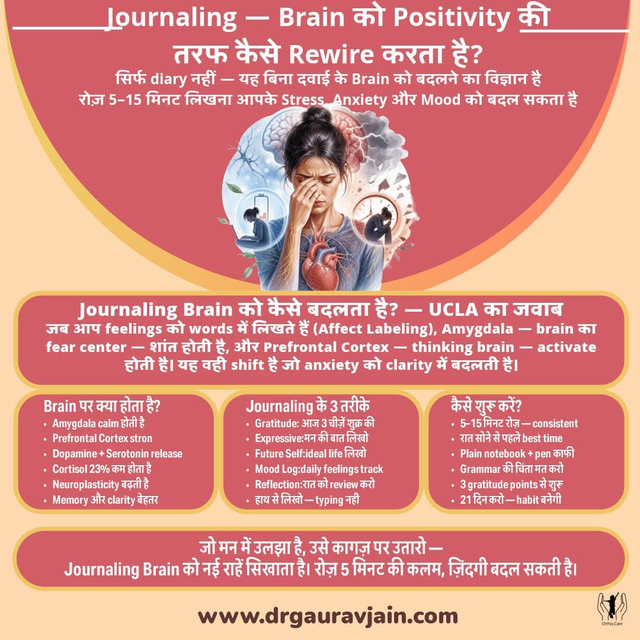
Journaling — Brain को Positivity की तरफ कैसे Rewire करता है?
लेखक: Dr. Gaurav Jain | Pediatric Orthopaedic Surgeon & Clubfoot Specialist विभाग: Orthopaedics, LNCT Medical College & Sewakunj Hospital, Indore विषय: Mental Health, Neuroscience, Journaling, Neuroplasticity पठन समय: ~10 मिनट
भूमिका: एक notebook और एक कलम — इतना काफी है?
"डायरी लिखना? वो तो बच्चे करते हैं!"
"मुझे time कहाँ है इन सब चीज़ों के लिए?"
"लिखने से क्या होगा — problem तो वही रहेगी ना?"
यह reactions common हैं। लेकिन science कुछ और कहती है।
Journaling — यानी नियमित रूप से अपने विचारों, feelings और experiences को लिखना — न सिर्फ एक emotional outlet है। यह एक neuroscientifically proven brain transformation tool है।
आज हम समझेंगे कि एक साधारण notebook और कलम आपके brain को literally कैसे rewire कर सकती है — positivity, clarity और emotional resilience की तरफ।
The Neuroscience: Brain में क्या होता है जब आप लिखते हैं?
Affect Labeling — UCLA की groundbreaking discovery
Matthew Lieberman और उनके colleagues at UCLA ने एक fascinating experiment किया।
Participants को threatening या disturbing images दिखाई गईं। एक group ने उनकी feelings को words में label किया ("I feel scared," "I feel angry")। दूसरे group ने नहीं।
fMRI scans ने दिखाया:
- जिन्होंने feelings को words में label किया — उनकी Amygdala activity significantly कम हुई
- साथ ही Right Ventrolateral Prefrontal Cortex की activity बढ़ी
यह क्यों important है?
Amygdala = brain का alarm center। यह fear, anxiety और stress response trigger करता है।
Prefrontal Cortex = rational thinking, emotional regulation, decision-making का center।
जब आप अपनी feelings लिखते हैं — thinking brain on होती है, और emotional alarm off होती है।
"यह एक neural dimmer switch की तरह है: जैसे ही thinking brain on होती है, emotional brain की intensity कम होती है। यही कारण है कि journaling तब भी relieving feel होती है जब circumstances नहीं बदले हों। आप problem नहीं मिटा रहे — आप उससे अपना relationship rewire कर रहे हैं।"
Neuroplasticity — Brain की remodeling
Brain एक static organ नहीं है। यह constantly नई neural connections बना सकता है और पुरानी को remodel कर सकता है — इसे neuroplasticity कहते हैं।
Regular journaling practice neuroplasticity को promote करती है:
- हर बार जब आप positive experience या gratitude लिखते हैं, वह neural pathway strengthen होती है
- Repeated activation → "neurons that fire together, wire together"
- Over time, brain automatically उन positive pathways को prefer करने लगता है
Hopper & Frewen, 2015:
"Regular journaling practice promotes neuroplasticity — the brain's ability to form new neural connections — which suggests that journaling may actually rewire the brain for better emotional regulation and stress management."
यानी journaling एक workout है — लेकिन brain के लिए।
Cortisol और Immune System
Chronic stress cortisol को chronically elevated रखता है — जो immune system को suppress करता है, inflammation बढ़ाता है और brain function impair करता है।
Clinical Research (Petrie et al., 2004):
Journaling regular practitioners में cortisol levels 23% तक कम हो सकते हैं।
Dr. James Pennebaker — Expressive Writing Pioneer:
University of Texas के Professor Pennebaker ने दशकों तक expressive writing research की।
उनका landmark finding:
"सिर्फ 4 consecutive दिनों तक 15–20 मिनट अपने deepest thoughts और feelings लिखने वाले participants में — improved immune function, reduced blood pressure, और fewer doctor visits देखे गए — control group की तुलना में।"
एक study में: participants ने अपने deepest thoughts 15 minutes/day — 3 दिन — लिखे। अगले साल उनके doctor visits कम थे। Lung function बेहतर था। Vaccine के antibody responses stronger थे।
यह सिर्फ psychology नहीं — यह physiology है।
जब आप mental load को unprocessed stress से free करते हैं, तो parasympathetic nervous system ("rest and digest" mode) activate होती है — और body repair करने लगती है।
Gratitude Journaling का खास Brain Science
Gratitude journaling regular journaling से अलग तरह से brain को rewire करती है।
Neuroscientists (Fox et al., 2015) ने पाया: Regular gratitude practice activate करती है:
- Ventral Striatum — reward और pleasure का center
- Medial Prefrontal Cortex — self-reflection और motivation का center
University of Rochester Medicine (November 2024):
"जब आप grateful चीज़ों पर focus करते हैं, brain dopamine और serotonin release करता है — दो feel-good chemicals जो anxiety और depression कम करने में मदद करते हैं।"
Journal of Personality and Social Psychology:
Gratitude journal रखने वाले participants ने report किया:
- 25% ज़्यादा खुश feel किया
- भविष्य के बारे में ज़्यादा optimistic
- अपनी ज़िंदगी के बारे में ज़्यादा satisfied
Specificity का जादू:
"मैं अपनी family का शुक्रगुज़ार हूँ" — good।
"मैं शुक्रगुज़ार हूँ कि आज रात dinner पर Maa ने मेरी बात बिना suggestion दिए सुनी" — much better।
जितनी vivid और specific memory — उतना stronger neural imprint।
Handwriting vs Typing — क्यों कलम better है?
Norway Study (Van der Weel & Van der Meer, 2024):
Handwriting typing की तुलना में कहीं ज़्यादा brain regions activate करता है — खासकर memory और sensory processing से जुड़े regions।
Marie Claire UK (2025 study citing):
Writing by hand strengthens connectivity between brain parts involved in memory and learning — exactly the kind of neural teamwork typing just doesn't compete with.
Neuroscientist Bianca Armitage का explanation:
"Handwriting takes more time and effort, which means we're forced to process meaning and summarise information rather than simply transcribing it."
Practical implication: अगर journaling करनी है — phone या laptop छोड़ो, notebook और कलम उठाओ। यह ज़्यादा effective है।
Numbers जो convince करते हैं
| Benefit | Research Finding |
|---|---|
| Cortisol reduction | 23% कम — regular journaling से |
| Happiness increase | 25% ज़्यादा — gratitude journal से |
| Anxiety/Depression reduction | 20–45% कम — clinical research |
| Immune function | Better antibody response — Pennebaker |
| Doctor visits | कम — 15 min/day expressive writing से |
| Memory & learning | Better connectivity — handwriting study 2025 |
Journaling के 5 प्रकार — कौन सा आपके लिए?
1. 🙏 Gratitude Journal (कृतज्ञता डायरी)
क्या लिखें: रोज़ 3–5 चीज़ें जिनके लिए आप grateful हैं — specific और vivid।
Brain effect: Dopamine + Serotonin release, ventral striatum activation।
Perfect for: Depression, negativity bias, life satisfaction कम लगना।
Example prompt: "आज किसने मेरी मदद की — और कैसे?"
2. 💭 Expressive Writing (भावनात्मक लेखन)
क्या लिखें: जो मन में है वो बिना filter के। Grammar, spelling की चिंता नहीं।
Brain effect: Amygdala calm, cortisol कम, cognitive processing बेहतर।
Perfect for: Anxiety, stress, unresolved emotions, trauma processing।
Example prompt: "आज मुझे किस बात ने disturb किया — और मैं सच में क्या feel कर रहा/रही हूँ?"
3. 🌟 Future Self Journal (भविष्य का खुद)
क्या लिखें: 5 साल बाद का आप कैसा है — career, health, relationships, daily life।
Brain effect: Positive neural pathways बनती हैं, motivation बढ़ती है।
Perfect for: Direction खो गई हो, demotivated feel हो।
Research backing: GoodTherapy.org: यह positive psychology intervention mood improve करती है और negative thinking patterns कम करती है।
4. 📊 Mood Tracking Journal (मूड लॉग)
क्या लिखें: रोज़ mood को 1–10 rate करो। कब अच्छा था, कब बुरा, क्यों।
Brain effect: Patterns identify होते हैं, triggers पता चलते हैं।
Perfect for: Emotional awareness बढ़ानी हो, therapy के साथ।
5. 🔄 Evening Reflection Journal (शाम की समीक्षा)
क्या लिखें: 3 चीज़ें जो अच्छी हुईं, 1 चीज़ जो सीखी, कल के लिए एक intention।
Brain effect: Prefrontal cortex strengthening, emotional reactivity कम।
Perfect for: Daily mental reset, sleep quality सुधारना।
21-Day Journaling Challenge — आज से शुरू करें
शोध कहती है कि 21 दिन consistent practice एक habit बनाने के लिए minimum threshold है।
Week 1: Foundation (दिन 1–7)
Theme: Gratitude Daily prompt: "आज 3 specific चीज़ें जिनका मैं शुक्रगुज़ार हूँ — और क्यों?" Time: 5 मिनट, रात सोने से पहले
Week 2: Exploration (दिन 8–14)
Theme: Emotions Daily prompt: "आज मैंने क्या feel किया — और उसके पीछे क्या था?" Time: 10 मिनट, किसी भी समय
Week 3: Vision (दिन 15–21)
Theme: Future Self Daily prompt: "एक साल बाद मैं कैसा/कैसी होना चाहता/चाहती हूँ — एक पल में?" Time: 10–15 मिनट, सुबह या शाम
Common mistakes जो journaling को ineffective बनाती हैं
1. सिर्फ events लिखना — feelings नहीं: "आज office गया, meeting हुई, lunch किया" — यह diary है, journaling नहीं। सही: "Meeting में जब मेरी बात ignore हुई, मुझे frustration के साथ-साथ thoda helpless feel हुआ।"
2. Judgment के साथ लिखना: "मैं इतना weak हूँ जो इतना upset हुआ" — यह self-compassion नहीं। अपने journaling को safe space मानो — कोई judge नहीं।
3. Perfect grammar और sentences की चिंता: यह essay नहीं है। बेतरतीब, टूटे हुए शब्द भी काम करते हैं।
4. Skip करना जब ज़रूरत सबसे ज़्यादा हो: जब सबसे बुरा feel हो — तब लिखना सबसे ज़्यादा ज़रूरी है।
5. Results तुरंत expect करना: Brain rewiring एक process है। कम से कम 3–4 हफ्ते consistent practice के बाद results दिखने लगते हैं।
Doctors और Healthcare Workers के लिए special note
As a physician, मैं यह personally feel करता हूँ — हम सबसे ज़्यादा emotionally exhausted profession में से एक में काम करते हैं।
Burnout, compassion fatigue, difficult cases का emotional load — यह सब बढ़ता रहता है।
Journaling एक science-backed tool है जो:
- Patient deaths और difficult outcomes को process करने में मदद करती है
- Moral injury को words में लाने से उसकी intensity कम होती है
- "Why I became a doctor" को याद दिलाती है — जो motivation का core है
Research (GoodTherapy.org citing clinical data):
Expressive writing PTSD symptoms, anxiety, और trauma processing में clinically proven effective है।
एक 5-minute journal — even during a busy day — can make a difference।
निष्कर्ष: कलम उठाओ — Brain बदलो
Journaling सिर्फ diary नहीं है। यह:
- ✅Brain की architecture बदलती है
- ✅Amygdala को calm करती है
- ✅Cortisol कम करती है
- ✅Dopamine और Serotonin release करती है
- ✅Immunity बेहतर करती है
- ✅Anxiety और depression को 20–45% कम कर सकती है
और इसके लिए चाहिए सिर्फ — एक notebook, एक कलम, और 5–15 मिनट।
"जो मन में उलझा है, उसे कागज़ पर उतारो। Journaling Brain को नई राहें सिखाता है।"
आज रात — सोने से पहले — एक page लिखो। कल की brain वही नहीं होगी।
References
- Lieberman MD et al. — Putting Feelings into Words: Affect Labeling Disrupts Amygdala Activity in Response to Affective Stimuli. Psychological Science, 2007
- Van der Weel & Van der Meer — Handwriting Activates More Brain Regions Than Typing, Norway Study, 2024
- Petrie KJ et al. — Disclosure of Trauma and Immune Response in Asthma Patients (Cortisol reduction), 2004
- Hopper JW & Frewen PA — Journaling and Neuroplasticity in Emotional Regulation, 2015
- Fox GR et al. — Neural Correlates of Gratitude, Frontiers in Psychology, 2015
- Dr. James Pennebaker — Writing About Emotional Experiences as a Therapeutic Process, Psychological Science
- Reflection.app — Science-Backed Benefits of Journaling: 16 Evidence-Based Studies, 2025
- University of Rochester Medicine — Gratitude and Brain Health (Gallegos, PhD), November 2024
- Grand Rising Behavioral Health — How Gratitude Journaling Improves Mental Health, March 2025
- GoodTherapy.org — Journal Therapy: Evidence-Based Writing Techniques for Mental Health, 2025
- Marie Claire UK — Can Journaling Rewire Your Brain? May 2026
यह blog post general health education और awareness के लिए है। Mental health conditions के लिए qualified mental health professional से परामर्श लें।
Dr. Gaurav Jain Associate Professor of Orthopaedics LNCT Medical College & Sewakunj Hospital, Indore Pediatric Orthopaedics & Clubfoot Specialist (Ponseti Technique) 🌐 drgauravjain.com | ✉ contact@drgauravjain.com