 Dr. Gaurav Jain
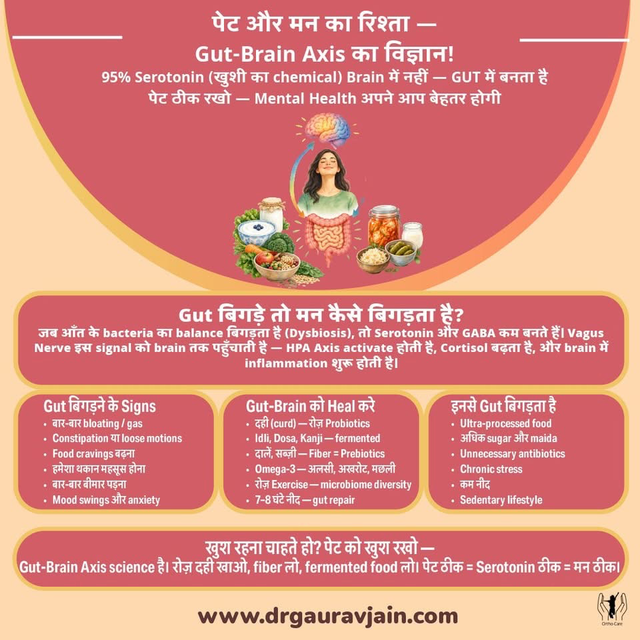
पेट और मन का रिश्ता — Gut-Brain Axis का पूरा विज्ञान
लेखक: Dr. Gaurav Jain | Pediatric Orthopaedic Surgeon & Clubfoot Specialist विभाग: Orthopaedics, LNCT Medical College & Sewakunj Hospital, Indore विषय: Gut Health, Mental Health, Gut-Brain Axis, Microbiome, Probiotics पठन समय: ~10 मिनट
भूमिका: एक सवाल जो सब पूछते हैं
"Doctor, मुझे हमेशा anxiety रहती है — क्या यह brain की problem है?"
अक्सर मरीज़ और उनके परिवार यही सोचते हैं। लेकिन science ने पिछले दशक में एक क्रांतिकारी खोज की है जो इस सोच को बदल देती है।
आपका पेट — आपकी आँत — उतनी ही ज़िम्मेदार है जितना आपका brain।
चौंकाने वाला तथ्य: शरीर का 95% Serotonin — वो chemical जो खुशी, calm और wellbeing के लिए ज़िम्मेदार है — Brain में नहीं, बल्कि GUT (आँत) में बनता है।
यही है Gut-Brain Axis का विज्ञान। और यह blog उसी की पूरी कहानी है।
Gut को "Second Brain" क्यों कहते हैं?
आपकी आँत में 500 million neurons हैं — एक पूरा nervous system जिसे Enteric Nervous System (ENS) कहते हैं।
यह ENS इतना independent है कि यह brain से बिना connection के भी काम कर सकता है। इसीलिए scientists इसे "Second Brain" कहते हैं।
Gut और Brain की communication कैसे होती है?
Vagus Nerve — एक superhighway जो gut से brain तक जाती है। यह bidirectional है — यानी gut से brain तक और brain से gut तक — दोनों तरफ signals जाते हैं।
Communication pathways:
- Neural: Vagus Nerve के ज़रिए direct nerve signals
- Endocrine: Hormones (serotonin, cortisol, etc.) bloodstream में
- Immune: Cytokines और inflammatory molecules के ज़रिए
- Metabolic: Short-chain fatty acids (SCFAs) और अन्य bacterial metabolites के ज़रिए
Latest Research — क्या कह रही है Science?
Springer Scoping Review (2025) — 2015–2025 का सबसे comprehensive review
शीर्षक: "The gut–brain axis in depression, anxiety, and schizophrenia"
Key finding:
"Recent human and high-quality animal studies have shown that gut microbiome alterations are associated with depression, anxiety, and schizophrenia, not just as correlates but possibly as mediators of disease processes."
यह critical distinction है। पहले यह माना जाता था कि depression होती है, इसलिए gut बिगड़ता है। अब science कह रही है: gut बिगड़ता है → depression का mediator बनता है।
Frontiers in Psychiatry (2025) — Gut-Brain-Circadian Axis
Key finding:
"Anxiety and depression are systemic conditions arising from integrated neural, immune, endocrine, metabolic, and circadian dysregulation, rather than isolated brain-based pathologies."
और:
"Gut microbes drive daily oscillations in tryptophan metabolism: microbial regulation is required for the diurnal production of serotonin and kynurenine metabolites that modulate mood-related neurotransmission."
यानी gut bacteria रोज़ाना serotonin production की timing को regulate करती हैं। दिन-रात का rhythm भी gut microbiome पर depend करता है।
Frontiers in Microbiology (2026) — Psychobiotics Clinical Trials
Key finding:
"Certain Lactobacillus and Bifidobacterium species are capable of synthesizing GABA, serotonin precursors, and indole-derived metabolites that modulate neural, immune, and endocrine pathways of gut-brain communication."
एक specific trial में:
"Bifidobacterium breve M-16 V reduced heart rate under stress, increased GABA-like metabolites in stool, and improved mood and sleep in participants with high anxiety."
2025 Umbrella Review — 34 Controlled Clinical Trials
Most important clinical finding:
"4-, 8-, and 12-week probiotic protocols can reduce depressive and anxiety symptoms in clinically diagnosed patients compared with placebo."
यह huge है। 34 RCTs का meta-analysis confirm करता है कि probiotics — दही, fermented foods — actually depression और anxiety को clinically reduce करते हैं।
Frontiers in Microbiomes (2026) — Depression में Microbial Signatures
Depression में gut का pattern:
- Reduced microbial diversity
- Decreased Lactobacillus और Bifidobacterium
- Increased inflammation
- Serotonin dysregulation
- Gut permeability ("Leaky Gut")
- Altered tryptophan-kynurenine metabolism
- Increased depressive symptoms
Specific probiotics जो help करते हैं:
- Lactobacillus rhamnosus — neurotransmitter levels regulate करता है
- Bifidobacterium longum — serotonin और GABA regulate करता है
Gut बिगड़ने का Chain Reaction
Step 1: Dysbiosis (Gut Imbalance) Poor diet, antibiotics, stress, lack of sleep → gut bacteria का balance बिगड़ता है
Step 2: Serotonin और GABA कम Lactobacillus और Bifidobacterium कम होते हैं → serotonin precursors और GABA production घटती है
Step 3: Vagus Nerve Signal Gut का distress signal Vagus Nerve के ज़रिए brain तक पहुँचता है
Step 4: HPA Axis Activation Hypothalamus-Pituitary-Adrenal axis activate → Cortisol बढ़ता है
Step 5: Brain Inflammation Gut permeability (Leaky Gut) → LPS (bacterial toxins) bloodstream में → brain inflammation
Step 6: Mental Health Impact Depression, anxiety, mood disorders, cognitive decline
Gut बिगड़ने के Signs — क्या आपमें ये हैं?
Physical signs:
- बार-बार bloating, gas, और discomfort
- Constipation या loose motions (IBS)
- Food intolerances बढ़ना
- हमेशा थकान और energy कम
- बार-बार infections (कमज़ोर immunity)
- Skin problems (acne, eczema)
Mental/Emotional signs:
- Mood swings बिना reason
- Anxiety और restlessness
- Brain fog — concentrate नहीं हो पाता
- Depression feelings
- नींद की quality खराब
- Cravings — खासकर sugar और junk food की
Medical truth: IBS (Irritable Bowel Syndrome) वाले 50-90% patients में anxiety या depression भी होती है — यह coincidence नहीं, Gut-Brain connection है।
भारतीय Solution — हमारी Traditional Foods में था जवाब
हम भारतीयों को यह नई discovery नहीं लगनी चाहिए।
हमारी दादी-नानी सदियों से gut-friendly foods खिलाती आई हैं — बिना science जाने। Science अब confirm कर रही है जो tradition जानती थी।
Probiotic Foods (Live Bacteria):
दही (Curd): सबसे आसान, सबसे accessible Indian probiotic। रोज़ एक कटोरी दही = Lactobacillus का daily dose।
Fermented Foods:
- इडली, डोसा, उत्तपम — fermented batter
- कांजी (गाजर की) — traditional probiotic drink
- Pickle (घर का, oil में) — natural fermentation
- Kanji vada, Ambali (Odia/Maharashtrian fermented rice water)
Prebiotic Foods (Bacteria का खाना):
Fiber-rich foods:
- दालें — chana, rajma, moong, masoor
- साबुत अनाज — बाजरा, जौ, ज्वार
- सब्ज़ियाँ — garlic, onion, banana, asparagus
- Fruits — apple (with skin)
Prebiotics वह fiber है जो gut bacteria को खिलाता है और उनकी growth support करता है।
Omega-3 Foods:
- अलसी के बीज (flaxseeds) — रोज़ 1 tbsp
- अखरोट
- मछली (जिनकी diet में है)
Gut को Heal करने के 7 Practical Steps
Step 1: रोज़ दही खाओ
Minimum: एक कटोरी (150-200 ml) plain curd, daily। Tip: Set curd (घर का जमाया हुआ दही) — commercial flavored yogurt में added sugar से बचो।
Step 2: Fermented Foods Include करो
हफ्ते में 3-4 बार fermented foods — idli/dosa for breakfast, घर का अचार with meals।
Step 3: Fiber Dramatically बढ़ाओ
Indian diet naturally fiber-rich हो सकती है:
- हर meal में एक दाल
- कम से कम दो सब्ज़ियाँ
- Refined maida को whole wheat से replace करो
Step 4: Sugar और Ultra-Processed Food कम करो
यह gut bacteria का सबसे बड़ा दुश्मन है।
- Packaged biscuits, chips, cold drinks — dramatically कम करो
- Sugar — bad bacteria को feed करती है, good bacteria को नहीं
Step 5: Antibiotics — Necessary हों तभी लो
Antibiotics gut microbiome को devastate करते हैं। Doctor की advice के बिना कभी नहीं। अगर लेने पड़ें — course complete करो और साथ में probiotic foods बढ़ाओ।
Step 6: Exercise — Microbiome Diversity बढ़ाती है
Research: Regular exercise gut microbiome की diversity increase करती है। रोज़ 30 मिनट walking भी significant impact करती है।
Step 7: 7-8 घंटे नींद
Gut repair mainly रात को होती है। कम नींद = gut bacteria का balance बिगड़ता है = cortisol बढ़ता है = cycle शुरू होती है।
एक Pediatric Orthopaedic Surgeon की Perspective
बच्चों में मैं अक्सर देखता हूँ:
जिन बच्चों को बार-बार antibiotics मिलती हैं (ear infections, throat infections) — उनमें बाद में gut-related problems और behavioral/mood issues ज़्यादा होते हैं।
यह Gut-Brain Axis का practical demonstration है।
Parents के लिए advice:
- बच्चों को antibiotics only when prescribed by doctor
- बच्चों को daily curd खिलाएं
- Fermented foods — idli, dosa — बच्चों के diet में include करें
- जंक food, packaged snacks — limit करें
- बच्चों की नींद protect करें
एक healthy gut से healthy mental development होता है।
Psychobiotics — Future of Mental Health Treatment
Psychobiotics — specific probiotic strains जो mental health को directly influence करती हैं — psychiatric research का next frontier हैं।
Current clinical evidence:
- Bifidobacterium breve CCFM1025 — 45 major depression patients में 4 weeks में significant improvement (2025 RCT)
- Lactobacillus rhamnosus — anxiety और stress markers reduce करता है
- Multi-strain probiotics — 8-week course में depression scores clinically significant कम
Future: Gut microbiome testing से depression का risk assess करना, targeted psychobiotic therapy।
निष्कर्ष: पेट ठीक = मन ठीक
Gut-Brain Axis का विज्ञान clearly कहता है:
Mental health सिर्फ brain की बात नहीं — पूरे शरीर की बात है।
Depression और anxiety के लिए सिर्फ brain पर focus करना — आधी तस्वीर देखना है। पूरी healing के लिए gut को भी heal करना ज़रूरी है।
Daily action plan:
- ✅ रोज़ एक कटोरी दही
- ✅ हफ्ते में 3-4 बार fermented foods
- ✅ हर meal में दाल और सब्ज़ी (fiber)
- ✅ Sugar और ultra-processed food कम
- ✅ Antibiotics सिर्फ doctor's advice पर
- ✅ रोज़ exercise
- ✅ 7-8 घंटे नींद
"95% सेरोटोनिन पेट में बनता है। पेट को खुश रखो — मन अपने आप खुश होगा।"
References
- Springer — The gut–brain axis in depression, anxiety, and schizophrenia: a scoping review of mechanisms, biomarkers, and therapeutic implications (2025)
- Frontiers in Psychiatry — The gut–brain–circadian axis in anxiety and depression: a critical review (2025)
- Frontiers in Microbiology — Psychobiotics in mental health: insights from human clinical trials via the gut-brain axis (2026)
- Frontiers in Microbiology — Gut microbiota as a novel target for treating anxiety and depression: from mechanisms to multimodal interventions (2025)
- PMC / International Journal of Microbiology — The Microbiota–Gut–Brain Axis in Depression: Mechanisms, Microbiota-Targeted Interventions, and Translational Challenges (2025)
- Frontiers in Microbiomes — The gut–brain connection: microbes' influence on mental health and psychological disorders (2026)
- PMC — Gut microbiota as a novel target for treating anxiety and depression (2025)
- Peppino.org — The Gut-Brain Connection: How Your Gut Shapes Mood & Mind (citing 2025 umbrella review of 34 RCTs)
- Frontiers in Immunology — The microbiota-gut-brain axis in depression: unraveling the relationships and therapeutic opportunities (2025)
यह blog post general health education और awareness के लिए है। यदि आप depression, anxiety या mental health challenges में हैं, तो qualified mental health professional से तुरंत संपर्क करें। Gut health संबंधी किसी भी intervention से पहले अपने doctor से consult करें।
Dr. Gaurav Jain Associate Professor of Orthopaedics LNCT Medical College & Sewakunj Hospital, Indore Pediatric Orthopaedics & Clubfoot Specialist (Ponseti Technique) 🌐 drgauravjain.com | ✉ contact@drgauravjain.com